

By Jeff Brumley
The American church, it seems, just can’t catch a break.
The “nones” won’t come in, the “dones” are … well, done, and the rest of the membership is slowly but surely dying off. Attendance and tithing are taking big hits.
And now congregational leaders can add another potential challenge: the positive physical characteristics of the regions in which they live.
It was a punch delivered in an Aug. 17 Washington Post blog suggesting that inspiring scenery and climate are factors negatively impacting worship attendance.
It led one pastor to jokingly throw his hands up in surrender.
“We’re already down and now you want to kick us?” said Alan Rudnick, an American Baptist minister and executive pastor at DeWitt Community Church in DeWitt, N.Y.

Rudnick posted the blog on his Facebook page with the comment, “this sorta makes sense.”
“It just adds to the growing list … people have for not coming to church,” he told Baptist News Global.
‘Why go?’
The blog by Christopher Ingraham features an interactive map that provides a “natural amenities” index for every American county.
Based on earlier rankings created by the federal government, it considers climate, topography and water area preferred by most people, Ingraham said.
“Those qualities, according to the U.S. Department of Agriculture, include mild, sunny winters, temperate summers, low humidity, topographic variation, and access to a body of water,” he wrote.
The map provides “natural aspects of attractiveness” for every American county, with communities in California, Colorado and most other Western communities scoring highest. Parts of Texas, most of Florida and a smattering of Southeastern counties do pretty well, also.
The least desirable counties, according to the map, are located in the Midwest with swaths also in the Southeast and Northeast.
It’s at the end of the blog that Ingraham cites a recent Baylor University study suggesting “a relationship between natural beauty and religious attendance.”
In other words, he writes, “Why go to church if you can hit the beach or the trailhead?”
Forest, mountains and streams
The study, published in the journal Sociology of Religion, found just that.
Baylor’s Told Ferguson and Jeffrey Tamburello said natural amenities can not only negatively impact church attendance but become sources of spiritual experiences and strength in and of themselves.
“Natural amenities may be more than an economic resource for a region,” their study said. “Beautiful weather, water, and mountains may also be a resource that meets the spiritual needs for a portion of the population.”
While perhaps new for some, this idea has been around for decades, said George Bullard, a church consultant and strategic coordinator with the South Carolina-based Columbia Partnership.

“Since World War II at least, Oregon and Washington have been two of the most unchurched areas in the country,” Bullard said. It’s been assumed “their forests and mountains and streams” have contributed to such statistics, Bullard said.
“You also wonder if that factors into not only how unchurched they are, but also how difficult it is to engage them in becoming churched,” he said.
It isn’t always nature itself that contributes to keeping both faithful Christians and the so-called “nones” out of sanctuaries on Sunday mornings, he said.
During the busy season in many resort towns, it’s common for church-going business owners to miss weeks and months of worship in order to keep their shops open seven days a week, Bullard said.
Find a spiritual high
Confirmation of the Baylor study and the Washington Post blog it inspired comes from living in the higher ranking areas presented on the map, said Bruce Gourley, a Bozeman, Mont., resident and past moderator of the Cooperative Baptist Fellowship West.
Bozeman is surrounded by the Rockies, and its vistas and hiking trails provide extraordinary opportunities for physical and spiritual exercise, Gourley said.
The region is rife with stories of Christians swapping worship for the outdoors. Gourley said he’s heard of a local Presbyterian church that voted to close during the summers for that very reason.
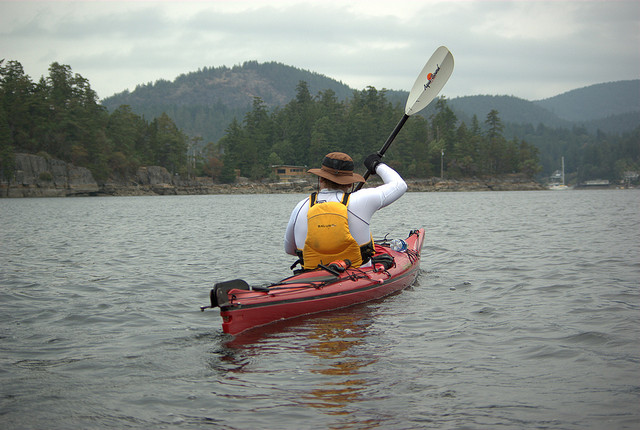
“Church people, oftentimes when the weather is nice, would rather be outdoors than sitting in the pews of a church,” Gourley said.
He admitted that even describes him at times.
“I can find a spiritual high on the trail,” he said.

But there are significant exceptions that undermine these observations, he added.
One of them is the Church of Jesus Christ of Latter-day Saints. Mormons in Utah and surrounding states post strong worship attendance figures in some of the most beautiful parts of the country — and in good weather and bad, Gourley said.
Also there are parts of California where religion is strong, producing not only strong church attendance numbers but also launching some of the nation’s most powerful megachurches, including Rick Warren’s Saddleback, he said.
“Otherwise attendance in the West is low,” Gourley said. “In Montana it’s said 80 percent are not involved in church.”
Gourley said it’s likely a spiritual view of nature is part of the reason. It’s common to hear such conversations in coffee shops and other venues around Bozeman.
“I think the Baylor study is onto something,” he said. “For many folks, nature evokes a spiritual connection of some sort.”