
Baptist News Global
Sections
  • News
  • Analysis
  • Opinion
  • Curated
  • Podcasts
    • Stuck in the Middle With You ↗
    • Madang with Grace Ji-Sun Kim ↗
    • Highest Power: Church + State ↗
    • Non-Disclosure: The Silenced Stories of Kanakuk Kamps Survivors ↗
    • Change-making Conversations ↗
  • Storytelling
    • Faith & Justice >
      • Charleston: Metanoia with Bill Stanfield
      • Charlotte: QC Family Tree with Greg and Helms Jarrell
      • Little Rock: Judge Wendell Griffen
      • North Carolina: Conetoe
    • Welcoming the Stranger >
      • Lost Boys of Sudan: St. John’s Baptist Charlotte
      • Awakening to Immigrant Justice: Myers Park Baptist Church
      • Hospitality on the corner: Gaston Christian Center
    • Signature Ministries >
      • Jake Hall: Gospel Gothic, Music and Radio
    • Singing Our Faith >
      • Hymns for a Lifetime: Ken Wilson and Knollwood Baptist Church
      • Norfolk Street Choir
    • Resilient Rural America >
      • Alabama: Perry County
      • Texas: Hidalgo County
      • Arkansas Delta
      • Southeast Kentucky
  • More
    • Contact
    • About
    • Donate
    • Associated Baptist Press Foundation
    • Planned Giving
    • Advertising
    • Ministry Jobs
    • Subscribe
    • Submissions and Permissions
Donate Subscribe
Search Search this site

Don’t panic, mom and dad: your kid’s tattoo may reinforce religious identity

NewsJeff Brumley  |  February 21, 2020

Parents are often disappointed when a teen or adult child acquires a tattoo.

But a newly published study led by Baylor University scholar Kevin Dougherty suggests Mom and Dad may want to go easy when the images are religious in nature.
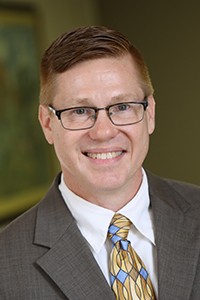
Kevin Dougherty

“This made me realize that a lot of people are using tattoos to express their faith,” said Dougherty, an associate professor of sociology.

The study, published recently in the journal Visual Studies, examined 752 tattoo photographs taken by sociology students on the Baylor campus in Waco, Texas. Close to 20% of students’ body art was religiously themed.

By studying the images, Dougherty said, he and co-author Jerome Koch of Texas Tech University were able to tease out some common denominators about faith-based body art.

One common denominator has to do with where a tattoo is on the body and who the intended audience seems to be.

“One of the most interesting findings for Dr. Koch and me was that religious tattoos were more likely than non-religious tattoos to face the owner,” Dougherty said.
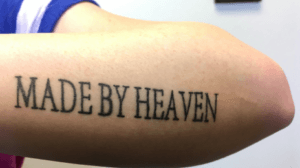
(Photo/Baylor University)

“They are more likely to look upside-down because they are intended to be viewed by the wearer,” he said.

Such images often are found on the inner wrist, forearm and bicep. Non-religious tattoos are more often inked into shoulders, backs, legs and the sides of the torso.

“Those are primarily for other people” to see, he said.

But there might be overlap in the visibility of tattoos, said Koch, a professor of sociology.

A subtle spiritual image on the wrist, say, may be intended to evoke curiosity in those who glimpse it.

“People are using tattoos the way they used to use other things before, such as jewelry, that provide a source of strength and perseverance,” he said.
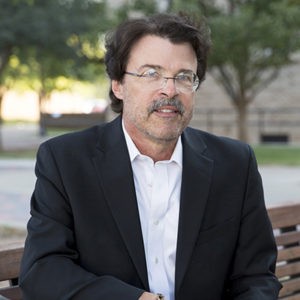
Jerome Koch (Photo/TTU)

“These decisions are strategic,” Koch added. “When someone chooses to wear a tattoo, they think of what they want it to say, if anything, to other people.”

Tattoos that are deliberately hidden can also be religious in nature and connected with deeply personal memories or emotional conflict, Koch said.

The motivations behind the selection and placement of religious tattoos will be the subject of coming studies, Dougherty said. Denominational breakdowns and other age groups also will be examined.

But just going by the photos from Baylor tells researchers that faith-motivated tattoos often are both a proclamation and a reminder of religious identity, Dougherty said.

“At Baylor, the most common depiction was some form of the Cross,” he said.

Those included simple, two-dimensional representations to complex, multi-colored tattoos that sometimes superimposed with images of Christ and other elements.
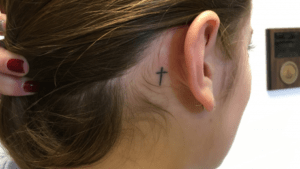
(Photo/Baylor University)

Altogether, 14 different books of the Bible were either referenced or quoted in some students’ tattoos, with the Psalms being the most popular source.

“We also saw entire verses tattooed on individuals,” Dougherty said.

It gets back to the notion that tattoos for many are a proclamation of identity and belonging to a particular faith tradition.

And given that more than a quarter of American adults, including half of millennials, have tattoos, it’s a trend that’s likely to continue.

“With the permanence of tattoos, people are very carefully choosing what they are putting on their bodies,” he said.

Share this:

  • Share on X (Opens in new window) X
  • Share on Threads (Opens in new window) Threads
  • Share on Facebook (Opens in new window) Facebook
  • Print (Opens in new window) Print
  • Email a link to a friend (Opens in new window) Email
  • Share on Bluesky (Opens in new window) Bluesky
  • More
  • Share on LinkedIn (Opens in new window) LinkedIn
  • Share on Reddit (Opens in new window) Reddit
  • Share on Tumblr (Opens in new window) Tumblr
  • Share on Pinterest (Opens in new window) Pinterest
  • Share on Telegram (Opens in new window) Telegram
  • Share on WhatsApp (Opens in new window) WhatsApp
Tags:Baylor UniversitytattooKevin DoughertyJerome KochTexas Tech Universityreligious art
More by
Jeff Brumley
  • This BNG series of articles on Christianity and democracy will lead toward the July 4 celebration of America’s 250th birthday. The series has been curated by Carol McEntyre, senior minister at First Baptist Church of Greenville, S.C.

    • What is democracy?
    • The church as school for democracy
    • Democracy as the practice of loving our neighbors
    • Democracy and religious freedom
    • Democracy as a moral practice, not just a system

  • Get BNG headlines in your inbox

  • Check out our podcasts


    Stuck in the Middle
    With You


    Madang
    With Grace Ji-Sun Kim


    Highest Power
    Church+State


    Non-Disclosure:
    The Silenced Stories
    of Kanakuk Kamps Survivors


    Change-making
    Conversations


  • Politics • Faith • Resistance: by Greg Garrett

    BNG interview series on the state of faith, politics and resistance in our nation.

    See also Greg’s series on Politics, Faith and Mission


  • Featured

    • ‘Be careful of Scripture heavy in law but light on grace,’ Wesley warns

      News

    • ‘Show up and do something,’ ACLU leader urges

      News

    • From the South Side to the South Lawn and back again

      Opinion

    • Democracy as a moral practice, not just a system

      Opinion


    Curated

    • JD Vance: Israeli Cabinet shouldn’t be criticizing ‘only powerful ally’ left in the world

      JD Vance: Israeli Cabinet shouldn’t be criticizing ‘only powerful ally’ left in the world

    • Church of England apologises for ‘pain and trauma’ from its role in historical adoption practices

      Church of England apologises for ‘pain and trauma’ from its role in historical adoption practices

    • In Richmond, churches retrace the path of the enslaved to confront their own history

      In Richmond, churches retrace the path of the enslaved to confront their own history

    • Parenting expert Michelle Icard helps Cooperative Baptists rethink discomfort, risk and growth

      Parenting expert Michelle Icard helps Cooperative Baptists rethink discomfort, risk and growth

    Conversations that Matter.

    © 2026 Baptist News Global. All rights reserved.

    Want to share a story? We hope you will! Read our republishing, terms of use and privacy policies here.

    • Facebook
    • Twitter
    • Instagram
    • LinkedIn
    • RSS
    • 129