

Is God behind the COVID-19 pandemic? Is God intervening to bring judgment on America? Does God bless gay marriage? Does God recognize a woman’s right to choose? Is God accepting of everyone? Does God welcome everyone into the body of Christ?
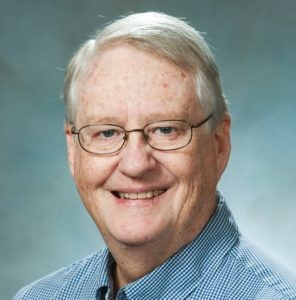
Bill Rosser
Fundamentalist Christianity and liberal Christianity both speak with equal confidence about the nature of God. But few persons would disagree that their respective depictions of God seem radically different and perhaps even opposed to one another. Both groups derive their conclusions from the same Bible. Both groups believe their understanding to be more biblical than the other. Both groups believe “their” God to be superior to the other.
For the liberals, the fundamentalist God is judgmental. For the fundamentalists, the liberal God is weak. For the liberals, the fundamentalist God excludes when God should include. For the fundamentalists, the liberal God includes when God should exclude. For the liberals, the fundamentalist God is too focused on individual sin to the exclusion of social injustice. For the fundamentalists, the liberal God is too focused on social injustice to the exclusion of personal sin. On and on, ad infinitum.
According to Paul, Christians have the “mind of Christ.” One must wonder why it is that the mind seems so divided. Surely, most people would agree that divisions are the result of the finiteness of the human mind, that none of us is able to know with perfection the mind of Christ. We perceive the reality of God through the lens of our finite minds. And our perceptions differ dramatically due to the infinite variety of qualitative unique traits in our minds.
Meet Ludwig Feuerbach
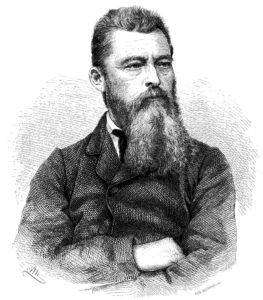
Ludwig Feuerbach
While in seminary, I remember discussing Ludwig Feuerbach, a 19th century German philosopher/theologian. Feuerbach famously said: “God did not, as the Bible says, make man in his image; on the contrary man, as I have shown in The Essence of Christianity, made God in his image.” Of course, we young theologians, owing to our theological acumen, quickly dismissed Feuerbach. (It’s amazing how much we knew in those younger days. Thankfully, I know less today.)
British author Stephen Batchelor summarized Feuerbach’s theological perspective: “Feuerbach argued that the function of religion was to project the essential human qualities of reason, love and will onto the nonhuman and transcendent figure of God, who then becomes an object of worship.”
As a professing Christian, I cannot accept that humans have “made God in his (human) image.” However, it is undoubtedly true that humans are continually projecting our highest ideals onto the figure of God. In this sense, the kind of God we profess results from our own subjective beliefs. But from where do these subjective views arise?
What is revelation?
Christians always have believed in some sort of revelation. We have used terms like “general revelation” and “particular revelation” to describe the ways God has revealed God’s self to our human understanding, “general” referring to the created order (see Romans 1) and “particular” referring to the Bible as God’s word. Christians have always asserted that Jesus, as God’s Son, is the highest form of God’s revelation of God’s self to humankind. Feuerbach, in his denial of the objective existence of God, denied, therefore, the concept of revelation.
“Pointing to Jesus as the supreme revelation of God does not solve the problem of interpretation.”
The difficulties arise with our interpretation of revelation. Even if one posits the Bible as objective revelation, as do fundamentalists, the interpretation of the Bible is not uniform, even among fundamentalists. And pointing to Jesus as the supreme revelation of God does not solve the problem of interpretation either, since our understanding of Jesus’ life and death vary widely. What kind of God, precisely, does Jesus reveal?
The answer to this question, of course, is arrived at subjectively. Unlike many other religions, Christians were not the recipients of a divine manifesto in which all doctrines necessary to a proper understanding of God were carefully and precisely delineated. For this reason, Christian doctrine developed over a period of centuries. But even so, the finished work of early church doctrine, including Trinitarian formulations, was not considered to be revelation.
Doctrine was only the human response to revelation, and “accepted” doctrines were arrived at only after considerable debate in which certain beliefs were categorized as heretical, while others found acceptance either by a majority of church leaders or by leaders who carried the most political weight.
The debate about whether the Bible is objective revelation or not is inconsequential. Even if it is considered to be the result of “plenary inspiration” and inerrant, its interpretation comes subjectively. And even fundamentalists would not assert that the Bible is revelation equal to that of Jesus himself (at least most would not). Ultimately, they, along with the mainstream of Christian believers, would consider that Jesus himself is the ultimate revelation of God.
The nature of God’s revelation to us
Which statement now brings us to the crux of the matter: In God’s infinite wisdom, God chose to reveal God’s self in person and in deed, not in words. Even though we must place great weight on the writers of the New Testament in their close proximity to the emerging gospel story, the primary revelation of God is Jesus.
Because God chose to reveal God’s self in person rather than in words, it follows that the fundamental purpose of revelation was not to inform. Evidently, humankind needed something more than to learn about God. That “something more” is the active work of God in Jesus, which is described in various ways throughout the New Testament. And even if one believes that these descriptions are inspired by the Holy Spirit, these writings are secondarily descriptive of that which is primary. The words of the Gospels and the epistles are penultimate to the revelation of God through Jesus, a revelation not in words but in deed.
“The primary revelation of God in Jesus is found in what Jesus did.”
Fundamental to our thinking about God is that the ultimate revelation of God comes to us in the presence and activity of Jesus. And it is important to remember that the revelation was more than information. The primary revelation of God in Jesus is found in what Jesus did — his life, death and resurrection. The incarnation came with a purpose. How we interpret that purpose informs our views about the very nature of God, and thusly about how we speak about God.
Proving Feuerbach right, or not
And now we are back to Feuerbach, who claimed that the subjective ideals of humankind were projected into an object of worship, that “man made God after his image.” Christians never can demonstrate objectively that Feuerbach was wrong regarding the existence of God, but Christians unknowingly may confirm Feuerbach partially, in that much of what we say about God is simply a projection of our own ideals.
Our interpretations of God’s active presence in Jesus vary considerably. Particular verses and themes of the New Testament are emphasized to the neglect of others, depending upon our subjective likes and dislikes. Even when quoting verses verbatim, however, words require definitions, and definitions require further delineation. Words function much like law: laws are in need of definition and interpretation, and the definitions and interpretations are also in need of further definitions and interpretation, ad infinitum.
Human ideals fall short of the perfection of God. And human ideals are subject to our sinful influence. To avoid Feuerbachian error, as Christians, we must recognize the subjectivity of our understanding of God. To put it succinctly: God is not simply who I want God to be.
Now, meet Jesus
The active presence of God in Jesus encompasses the full expression of God to us, but that expression is one which we can never fully fathom. As Christians, we may confidently affirm with John that “God so loved the world,” and with Paul that “God was in Christ reconciling the world to himself.” But when we attempt to describe precisely what these words mean, we diverge in our thinking, at which point we are subject to error.
“God is love, but how God’s love is expressed providentially is a mystery.”
It is a truism to affirm that God cannot act contrary to God’s nature. We affirm that God cannot act contrary to God’s love for us. But the love of God never can be fully understood by us. Human love is not a holy and pure love. We seek to speak of God’s love with our highest ideals, but our ideals are based on our human understanding of God as we interpret the Christ event.
What we are not able to fathom is the depth and holiness of God’s love. In the words of P.T. Forsyth: “Our gospel is not simply God is love, but God’s love is holy, for the Holy One is love.”
To presume that we know the form God’s love will take in any given historical situation or with any particular person assumes that the character of God’s love is fully known by us in its infinite complexity, an assumption that squarely places us among those of whom Feuerbach wrote. For if I claim to understand fully the active presence of God’s love, then that particular love that I attribute to God is necessarily a finite product of my own mind.
God is love, but how God’s love is expressed providentially is a mystery with which we dare not be dogmatically certain.
Did the life, death and resurrection of Jesus demonstrate love through acceptance? Love through judgment? Love through martyrdom? Love through sacrifice? Love through atoning sacrifice? Love through example? The way we answer these questions will inform how we will speak about God in today’s world. Because our different answers to these questions reveal our different and sometimes opposing views of the love of God.
“For now we see in a mirror, dimly, but then we will see face to face. Now I know only in part; then I will know fully, even as I have been fully known.”
Bill Rosser is a retired minister who most recently served First Baptist Church of Jefferson City, Tenn. He earned a bachelor of arts degree in music from the University of Tennessee, the master of divinity degree from Southeastern Baptist Theological Seminary and the doctor of philosophy degree from Southern Baptist Theological Seminary.