

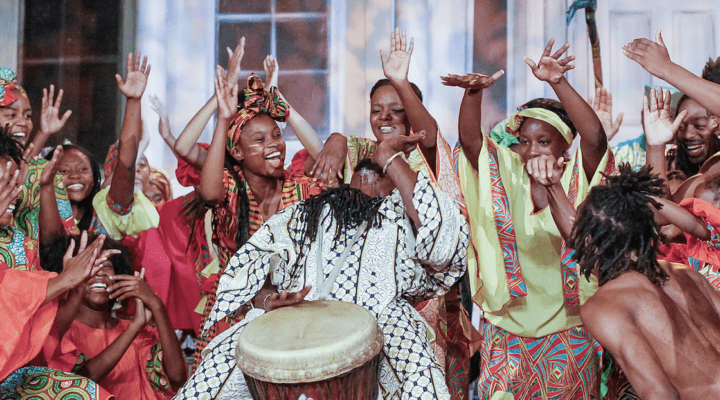
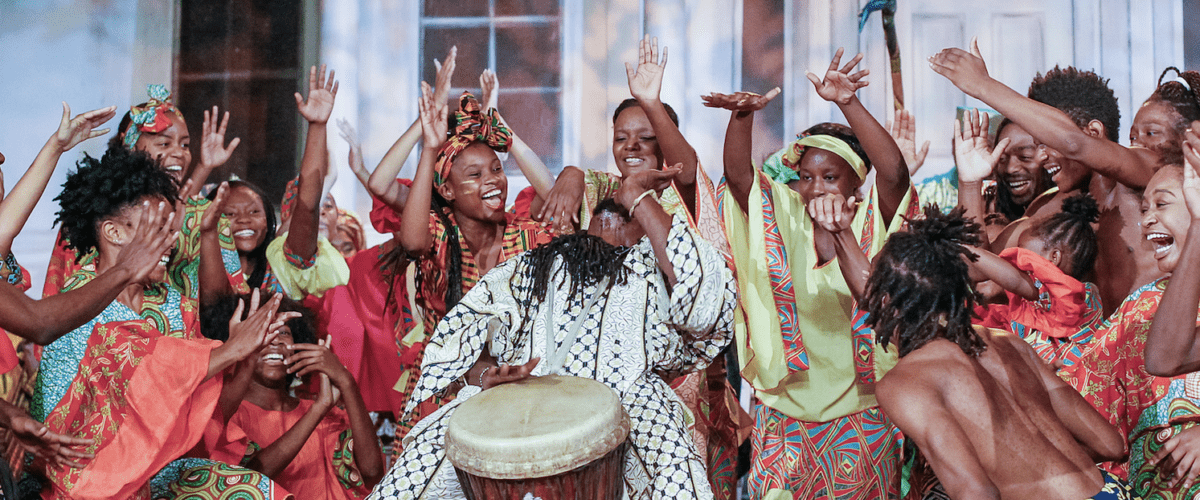
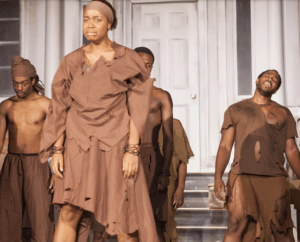
For 25 years, a Baptist congregation in Brooklyn, N.Y., staged a theatrical production exposing the trans-Atlantic slave trade in all-too tragic and graphic detail.
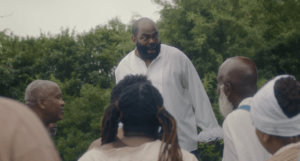
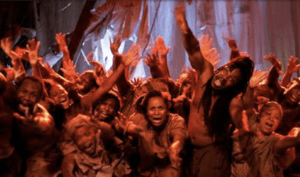
When the COVID-19 pandemic prevented the annual production of “The MAAFA: A Healing Journey,” St. Paul Community Baptist Church pivoted to make “MAAFA: The Movie.”
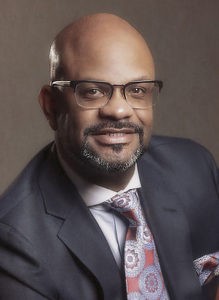
David K. Brawley
“The miracle in the story is that in a time of grave uncertainty, our congregation drew on its own institutional and sacred memory and was able to produce a quality film in six weeks,” Senior Pastor David K. Brawley said.
Drawing on memory is what the MAAFA (pronounced ma-awfa) itself is all about, he said. The word is a Kiswahili term encompassing the ordeal of millions of Africans brought to the U.S. as slaves or born into slavery, as well the captives who died in Africa or on the passage to North America.
While the theatrical version of the story always was performed during February to mark Black History Month, lessons from the drama continued to influence sermons, small-group sessions and other elements of worship throughout the year, Brawley said. “When we are at the table for Communion, we take the elements and say, ‘Do this in remembrance of me.’ Even that is an invitation to remember.”
The film adaptation of the MAAFA is now providing a boost to the year-round lesson that coming to terms with history is a prerequisite to healing the wounds of racism in America.
Brawley spoke with Baptist News Global about the MAAFA and the healing power it can have on those who listen to its message.
How and when did St. Paul come to produce “The MAAFA”?
It began 26 years ago when my predecessor, Johnny Ray Youngblood, posed a number of questions to leadership and to his staff, of which I was part. One of the questions he asked was, “What is wrong with Black folks?” The answer that came back was that we have yet to mourn our losses. This raised more questions about how we do ministry in a way that is redemptive and healing and prophetic. That led us down this path to the MAAFA, which today we consider a way of tapping into our sacred memory to bring healing.
 Is that to bring healing similar to working through the grieving process?
It is a redemptive and prophetic way of doing ministry sustained by a biblical model, specifically from passages that talk to us of lament. Scholarship shows us that lament has been excluded from our worship. Our current worship experiences usually are more celebration and praise, but with very little language of lament. This is true even in our hymnals. Yet in the biblical model, you see the language of lament. You see it in the writings of the prophets, and you hear it articulated especially in the Psalms. This needs to be reclaimed, and the MAAFA reclaims that for us and gives us a way to name the pain and articulate our losses.
By “pain” are you including later periods, such as the Jim Crow era and current events like the police killing of George Floyd and others?
The losses are still happening. We see that slavery, America’s original sin, morphed into Jim Crow, the cradle-to-prison pipeline and George Floyd. The MAAFA shows us how these systems have evolved over time, how they are connected, which enables us to begin the grief work. We need a way to identify and express the pain. You have to be able to name it in order to deal with it. Otherwise, you … start blaming the victim and the victim takes on a victim mentality. So, these systems have to be addressed and challenged — but how? First, we have to do the historic work, which provides the language of grief, which allows one to respond in healthy ways.
Has the MAAFA been impactful for white people?
In these 26 years, we’ve had white speakers and scholars, and part of our position is that whites have to do their own work, too. MAAFA is not a Black story; it’s America’s story. We have to deal with the truth if we are going to heal. When people ask why we need another story about slavery, my question is: Have we heard the previous stories? If we have, then why do we always find ourselves back in this moment, questioning systemic racism in America? We’re still here because we have yet to really hear the story the first time.
 In what ways have you seen the MAAFA bring about healing?
It’s definitely a moment of healing. People will say we have done “The MAAFA” 26 years in a row and every time our congregation goes through this sojourn it does bring a new level of healing. I have watched how this whole commemoration has helped individuals deal with their own personal trauma, too. They look back over their personal and familial history. They go back and name some of the pain and give voice to it, and it frees them from shame.
How has it impacted you as pastor?
To go through this process, it has helped my hermeneutic, my ability to see in the Scripture the possibilities of the reclamation of lament and the possibilities of prophetic ministry. And as a preacher, it has helped me to lead the forming of a prophetic community.
What kind of impact has the film had on the retelling of the story?
At the end of the day, we have just looked at this and said this is a miracle. For “The MAAFA” we would have 1,000 in our sanctuary; 5,000 would see it in a week. There were lines around the block. Now through efficacy of technology, this story can be seen and told again and again. We have heard of colleges using it in classroom settings, and we are now working to create a curriculum that can be shared.
 Do you see it being used as anti-racism training for white churches and other communities?
Yes, and we have done that at our church by offering diversity training and workshops. And we have had white cast members throughout the years to play slave owners, plantation owners and others. By the end of the process there is an amazing healing that seems to happen for them. A lot of actors will say they didn’t know this story or the history it’s about.
What does a film or theatrical telling of the MAAFA story offer that the written word or a sermon do not?
The oldest cast member in “The MAAFA” is in her 80s. I can tell you that and you can read about that. But when you hear her voice, and you hear the hurt in her voice, and you hear the passion — that is not something that can be captured so easily in the written text or in a sermon.
 How is your congregation incorporating the MAAFA now?
One way is by tying it to Women’s History Month, which is in March. Black women have oftentimes been muted in our society, and the MAAFA is another opportunity to hear and to see the impact Black women have had in our nation. We have got to find ways to teach that (U.S. Vice President) Kamala Harris is not an anomaly as a contributor to our culture. The MAAFA allows us to see that.
Learn more about the MAAFA project here. And watch the film version here.