

By Greg Warner
In past centuries, West Africans were forcibly exported as slaves to work in the New World and Europe. Today, that dangerous and desperate journey exists in a different form.
During the slave trade of the 1700s and 1800s, it is estimated that 12 million West Africans were kidnapped. The captured or purchased West Africans were loaded into floating wooden dungeons, many at the port town of Lomé in what is now Togo.
That notoriety gave the countries bordering the Bight of Benin their former name — the Slave Coast.
Today war and poverty in Sub-Saharan Africa drives residents, mostly men, to flee their homelands — by choice but still in desperation — to seek work in foreign lands, often to support their families back home. The result is a steady flow of emigrants, especially to Europe. Most travel illegally, at great expense and in fear for their lives.
Many Africans who make that treacherous journey first must travel across the deadly Sahara Desert to reach the Mediterranean coast. Some die or are robbed along the way. But even if they get to the coast, they must still find passage — typically by boat — to southern Europe and beyond, wherever the latest rumor says there is work to be had.
In the first four months of 2015, according to one credible international study, in Italy alone 21,000 illegal immigrants arrived by boat, while an estimated 900 died in the Mediterranean.
Those who survive the passage might make it to one of the great multiethnic cities of Europe where others from their country have settled and found a new life. Others languish in limbo, trapped by false hope and unable to find steady work or the fresh start they sought.
In a sense, Lynn and Mike Hutchinson, Cooperative Baptist Fellowship field personnel in Togo, have “followed” the West Africans on this modern-day journey.
Serving first as Baptist missionaries in Togo from 1986 to 2000, the couple learned the sordid history of slavery and the modern struggle of economic immigrants. “They were undertaking great risk to escape war or economic difficulty and trying desperately to get to Europe in hope of a better life,” Lynn Hutchinson said.
While serving as CBF field personnel in Paris from 2000 to 2006, the Hutchinsons ministered largely with immigrants searching for a new life — including the French-speaking West Africans.
“Because we had already lived in West Africa, we easily related to African migrants living in France,” Lynn said. “We understood what they had left behind and longed for, with insight into their frustrations and challenges as strangers in a different world.”
Their next assignment took them to the predominantly Muslim region of North Africa — across the Sahara from Togo and across the Mediterranean from Europe. This location was one of the stopovers for refugees and emigrants traveling from West Africa trying to get to Europe and beyond.
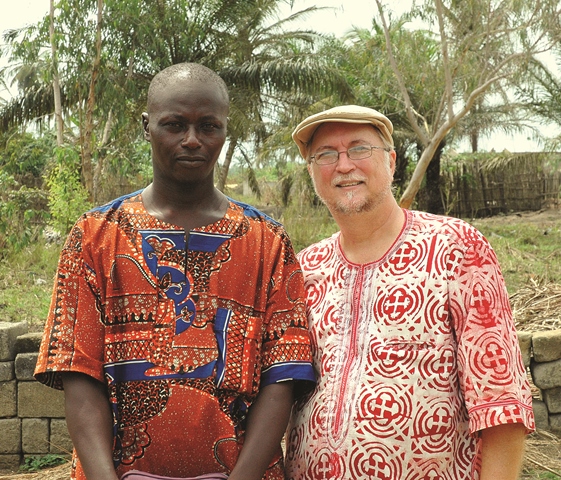
Each of the Hutchinsons’ mission postings brought them into contact with Africans along the “immigration highway,” Lynn Hutchinson noted. Observing that struggle at its beginning, middle and end gave the couple a rare perspective, and one thing seemed clear.
“If the conditions could be better in their home countries, most [African emigrants] would have loved to be there with their families, friends and support systems,” she said.
Then in 2013 — in perhaps the most unlikely twist of their journey — the Hutchinsons returned to Togo at the invitation of the CBF.
They arrived sobered by the harsh realities of poverty-driven emigration. But the experience also empowered the Hutchinsons with a new dream — to help the people of Togo bring about the changes needed to realize their dreams without leaving their homeland.
“… [W]hat would it mean to these individuals and families,” she asked, “if they could have a better quality of life in their own communities, if people did not have to leave their homes to find hope?”
To that end, the Hutchinsons now work to improve health and nutrition in Togo, to learn and teach better techniques for farming and raising livestock, to create new sustainable sources of income and to help people discover God’s bigger purpose for them.
“We have come full circle,” she said, “and come back to where the journey begins for our [West] African friends.”
This story originally appeared on the CBF Blog site.