

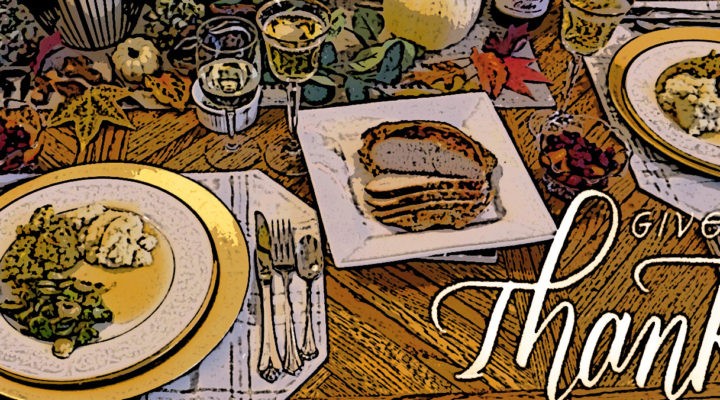
Thanksgiving is a holiday nearly every American can celebrate in some way. In the spirit of gratitude, one, 10 or more can gather at the table and acknowledge their many blessings. But after a closer look at its history, we’re taking down images of the 1621 community love fest with turkeys and stuffing, fractured as it was, to reimagine giving thanks in modern times, such as it is.
The fable of the first Thanksgiving, long taught to students, continues to be revised to be more accurate. Most poignantly, hearing from a Native American voice clarifies their story.
And a Smithsonian magazine article makes this important statement: “The Pilgrims did not introduce the concept of thanksgiving; the New England tribes already had autumn harvest feasts of thanksgiving. To the original people of this continent, each day is a day of thanksgiving to the Creator.”
Phawnda Moore
Since 1994, U.S. presidents have recognized the significant contributions of Native Americans, including declaring November as Native American Heritage month, and the day after Thanksgiving as Native American Heritage Day.
As for the holiday, let’s meet the influential woman who used the power of words to put Thanksgiving on the national calendar. Viewed as a modern blend of Martha Stewart and Oprah and called the Godmother of Thanksgiving, Sarah Josepha Hale was born in 1788 on her family’s farm in Newport, N.H.
Hale was editor of the popular women’s magazine Godey’s Lady’s Book and was considered a trendsetter for running a household. Beginning in 1827, she petitioned 13 presidents, the last of whom was Abraham Lincoln, to establish Thanksgiving “as a way to unite the country in the midst of the Civil War.” In 1863, Lincoln did just that.
The likely first menu included deer, fowl, seafood, lots of vegetables and berries — but no pumpkin pie.
Home schooled, Hale taught school before marrying David, an attorney. But in one of life’s defining moments, she was suddenly widowed with five children to provide for (the last child was born just weeks later). She began composing poetry, including Mary Had a Little Lamb, to illustrate kindness.
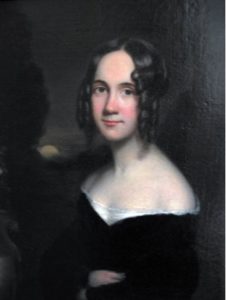
Sarah Josepha Hale
Then in 1827, her first novel, Northwood: Life North and South, was published. Few wrote about slavery, and Hale’s book supported relocating the nation’s African slaves to freedom in Liberia. It was a success.
In the second edition (1852), she stated: “The great error of those who would sever the Union rather than see a slave within its borders, is, that they forget the master is their brother, as well as the servant; and that the spirit which seeks to do good to all and evil to none is the only true Christian philanthropy.”
The book said that while slavery hurts and dehumanizes slaves themselves, it also dehumanizes the masters and retards their world’s psychological, moral and technological progress.
Hale’s voice gave her a place in the publishing world, and she became the founding editor of Ladies’ Magazine. With a vision for unity, she encouraged women to reach their full intellectual potential and to exercise moral leadership in defining the new American culture.
That magazine was purchased and revised into Godey’s Lady’s Book, which greatly surpassed other single publications in the 19th century. As editor (or “editress”, as she preferred) Hale produced literary talent in poetry and prose of men (Poe, Hawthorne, Bryant, Longfellow and Whittier) and women (Harriet Beecher Stowe, author of Uncle Tom’s Cabin, Frances Sargent Osgood, Eliza Cook, and Lydia Sigourney). She welcomed original material with an American theme and paid her authors well.
For 40 years, Hale persuaded women to influence their husbands for their own advancement and wrote of social justice and community involvement. And the unity happened: Women followed her lead in art, education, politics, fashion, parenting, cooking, domestic architecture and intellectual direction.
“A strong Christian, she was known as a woman who was independent, confident, relentless and committed to her causes.”
She also was a valued philanthropist who took on the successful completion of the Bunker Hill Monument. A strong Christian, she was known as a woman who was independent, confident, relentless and committed to her causes.
A newly released book reveals more of Hale’s accomplishments and fascinating life. Take a moment to listen to a great First Things podcast with Melanie Kirkpatrick, author of Lady Editor: Sarah Josepha Hale and the Making of the Modern American Woman. Sit by the fireplace to quietly reflect on the similarities of the times, as today women (still) struggle for equality, respect and opportunity. (And this issue continues to amaze me personally. When I wrote the list of authors a few paragraphs above, I readily recognized the men but not many of the very accomplished women; was that your experience as well?)
After 400 years, Thanksgiving conversations could include revisiting this event’s history to expand awareness of its true story and significance. Honoring the Wampanoag (“waam·puh·now·ag”) Native American culture and appreciating Sarah Josepha Hale’s contributions belong at our tables of abundance to heal a grateful, but still divided, nation.
“When you have more than you need, build a bigger table not a higher fence” (anonymous).
Blessings to you and yours!
Phawnda Moore is a Northern California artist and award-winning author of Lettering from A to Z: 12 Styles & Awesome Projects for a Creative Life. In living a creative life, she shares spiritual insights from traveling, gardening and cooking. Find her on Facebook at Calligraphy & Design by Phawnda and on Instagram at phawnda.moore.
Related articles:
Six ideas for decolonizing Thanksgiving | Opinion by Luhui Whitebear and Susan Shaw
Tips for having a Thanksgiving Dinner conversation about immigrants without choking