

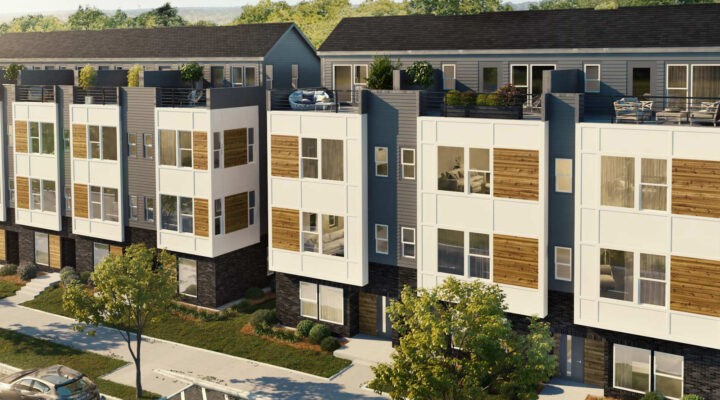
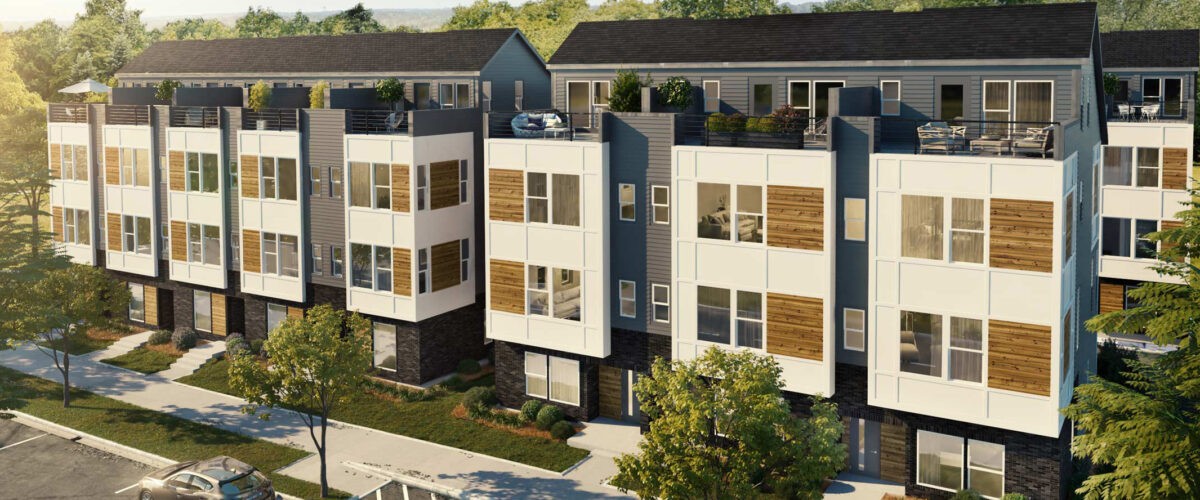
I started getting calls and emails a few months ago from a couple of development companies that were introducing new plans down the street. Their reps were looking for some combination of buy-in, or solidarity, or absolution, all of which I ran out of a while back. I’m not sure they’re mine to give anyway, but regardless, the tanks are dry.
The plans for which they were seeking forgiveness rather than permission involved a series of renovated and new buildings. The specific plots are centered around some commercial properties between my neighborhood, Enderly Park, and the next one over, Seversville. The plans fit squarely in the day’s trends: tall, airy warehouses turned into offices; five stories of apartments on top of a garage and a few commercial spaces. It’s all pleasant. In a neutral world, it’s the kind of place I might like to have an office for writing, with a coffee shop nearby, and the greenway just across the creek for a long walk when the words won’t come. But the world is decidedly not neutral, and pretending about its neutrality is to help drive the bulldozer your neighbors are standing in front of.
At some point in my conversation with the developer, I asked the hot-button question: With the apartments you are building, what portion are reserved for those being displaced by the rapidly rising costs of housing nearby?
“I asked the hot-button question: With the apartments you are building, what portion are reserved for those being displaced by the rapidly rising costs of housing nearby?”
The answer: “Sir, we decided to forego any affordable housing options with these structures.” This was no less distressing for being entirely predictable.
Landlords and portfolio holders, together with local government, have spent decades disinvesting in this ZIP Code. Now they’re ready to cash in. Charlotte is one of the hottest real estate markets in the country. Prices are soaring as institutional investors and their local agents search for rental housing and potential adaptive reuse projects.
One recent study by the real estate company Redfin found that 42% of homes sold in my 28208 ZIP Code in 2021 were purchased by investors. In nearby 28214 and 28216, more than 50% of home sales went to investors. The insatiable appetite for land — for that is what those investors value more than structures — will further destabilize neighborhoods, which is to say, people and the spaces that support them.
Most of those harmed in my ZIP Code will be Black, yet another injury in a centuries-long series of exploits for cheaper land and labor. Rents will be paid as tribute to faceless lords in far-off places, people accountable only to spreadsheets. The biblical image that comes to my mind is from Psalm 59: Speculators prowl the city like coyotes, and “each evening they come back … they roam about for food, and growl if they do not get their fill.”
Among the most eye-catching of the plans in the new nearby development is their idea to give the space a new name. It’s an in-between space, they said. It is neither Enderly Park nor Seversville. It needs some branding.
“Tossing a focus-group name onto something feels like an answer in search of a question.”
And perhaps it is in-between. But tossing a focus-group name onto something feels like an answer in search of a question. And it plows over the long story of how development and naming and the colonial project of extraction has worked.
A place name has layers of meaning inside it. Names form identity. They help to build solidarity among people. Names identify a set of shared experiences, even for those who do not know one another. They point to common spaces and geographical features. Place names sometimes elicit strong negative responses as a reaction to adverse experiences from people inside them, or as a reaction to prejudicial assumptions made by people outside them.
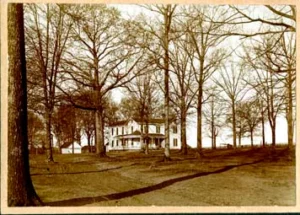
The original Enderly homestead.
Place names often call back history that helps illuminate the current conditions of the place. That is the case in Enderly Park, so named by the Alexander family when they sold off their father Syd’s farm, called Enderly.
There’s plenty that is troubling about the place’s history. Syd Alexander came from a family of enslavers and joined the Confederate Army to defend the institution of slavery. During the important 1898 and 1900 elections in North Carolina, he sided with the white supremacists seeking to establish Jim Crow, eventually landing a seat in the U.S. House of Representatives. A history like that might call for a name change. But only by the careful consideration of those who have suffered under years of white supremacist tyranny, and only with their collective vision in mind.
I talked with my neighbor Michelle Hagens about the planning under way and specifically about the naming. She is a Black woman who has lived here most of her 44 years. She knows the streetscape with the intimacy of an old friendship. Michelle speaks with authority. She is always insightful. She gave me permission to record her words and publish them here. Here’s what Michelle has to say, lightly edited for clarity:
“When you’re coming into my area, you need to hear me. No, it ain’t ‘you need to hear me.’ You’re gonna hear me. … If you want to change something, you need to talk to me. You need to go and talk to Dot (a long-time neighbor). You need to go talk to some of these families that’s been here 15, 20, 30 years before y’all want to come and change something.
“You need to go talk to some of these families that’s been here 15, 20, 30 years before y’all want to come and change something.”
“What I want to tell them — this is my ingredient: Where do you live? No, seriously? Do you live over here off Tuckaseegee? Your whole council, everybody that’s backing you. Do y’all live over here? Have you seen the blood, sweat, tears that’s been poured into this neighborhood? Have you seen the people that’s been here, living here, that’s fought and gave up because y’all didn’t want to do nothing for us?
“But let the lily white people with privilege come over here? Oh, that’s when you see the police around here. That’s when the police talk to you with some sense. But when we was fighting (for a better place), they didn’t give a shit about us. They talked to us like we was dogs.
“Have y’all experienced anything over here (in order) to change anything? What gives you the right to even ask? What gives you the right? Oh, because you bought something? Because you got some money in your pocket? Like, really, that’s what makes you feel like you could change something? You need to ask me if you can change anything. Because I live over here, I’ve lived the lifestyle of Tuckaseegee.”
Naming is power. Re-naming is an exertion of power that seeks to establish proprietorship and to draw new lines of exclusion and inclusion.
“Re-naming is an exertion of power that seeks to establish proprietorship and to draw new lines of exclusion and inclusion.”
In his book Conquest: How Societies Overwhelm Others, David Day points out that naming is one of the consistent strategies used by conquering groups across human history. Colonizing and settling groups establish legal justification, draw new maps, rename places, fortify borders, till the soil, tell new foundational stories, people the lands. The eventual end of conquest is always extraction. Sometimes it is complete expulsion, even genocide. The story of conquest is not foreign to this continent. It is not even foreign to this city, as the Catawba people can testify. Naming a space — or re-naming it — is part of an old story whose ending we already know.
Among the things that strike me in Michelle’s words is that she readily imagines a world of belonging that is defined outside economic possession. She can imagine what the propertied class cannot, namely a world where she belongs, along with her family and the neighbors she has loved.
That is precisely what the economics dominated by white supremacy cannot imagine. Naming a place is a cheap substitute for belonging to it. Nevertheless, the battle over what the place is called is now the site of a larger struggle that will help determine what kind of city this will become, and who it will be for.
Greg Jarrell
Greg Jarrell spends his days playing, working and conspiring with the family of disciples at QC Family Tree in Charlotte, N.C. His latest book is A Riff of Love: Notes on Community and Belonging.
Related articles:
It is impossible to afford rent almost anywhere in the U.S. with a minimum-wage job