

Melissa Browning was drawn deep into the anti-death penalty movement when the state of Georgia was trying to kill Kelly Gissendaner last year.
There were plenty of ups, including multiple delays in her execution date. And there were downs, too, as appeals were repeatedly denied before Gissendaner was finally executed last September.
And there have been more executions since, said Browning, visiting assistant professor of contextual ministry at Mercer University’s McAfee School of Theology.

Melissa Browning
“It’s a bloodbath in Georgia right now,” she said.
But what keeps Browning and others actively opposed to state-sponsored executions are several small signs, here and there, that capital punishment may be headed for its own execution date in the United States.
For Browning, one of those signs was a March 7 blog by George W. Truett Theological Seminary Professor Roger Olson. In it, he said Christianity and the death penalty are incompatible.
Reading the blog on the high-profile Patheos site was a shot in the arm, Browining said, because it will help chip away at Christian support for executions.
And there was another reason it was a boost: “Roger was my professor at Truett,” she explained.
Olson’s blog, “Why Authentic Christians Must Oppose the Death Penalty,” dismisses the traditional “eye for an eye” argument for capital punishment. Instead, Christians must remember that all individuals may be someone chosen for salvation and God’s service, he wrote.
Browning said she witnessed many instances of Christians actively supporting Kelly Gissendaner’s scheduled death. That included the Georgia board who denied her appeals.
“They all identified as Christians and had no problem giving her the death penalty,” Browning said. “Some of them said, in effect, ‘if she [Kelly] is a Christian, then she doesn’t have anything to worry about, anyway.’”
In efforts to recruit churches to appeal for Gissendaner’s life and, later, protest her execution, Browning said it was common to hear ministers who were torn over the issue.
“A lot of pastors said they didn’t want to see Kelly killed, but they didn’t want to make a public stand because they were afraid of how their congregations would respond.”
But there were many who did change their minds, she continued. These included McAfee faculty and students and others in the community who took the time to discover who Gissendaner was as a person.
Previously, some had assumed capital punishment was reserved only for the worst members of society. But Gissendaner had earned theology certificates, was a teacher and mentor behind bars and was a mom.
“They heard Kelly’s story and it totally changed their view of the death penalty,” Browning said. “It gives me hope.”
Re-thinking state-sponsored killing
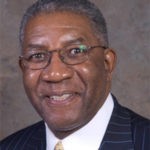
Wendell Griffen
Even some prosecutors are coming to disdain the death penalty, said Wendell Griffen, a judge in Arkansas’ Sixth Judicial Circuit and pastor of a Cooperative Baptist church in Little Rock.
Prosecutors bringing first-degree homicide cases before him have steadily dropped efforts to seek the death penalty, according to Griffen.
“I suspect that is going to happen more often than not,” he said.
That’s because most people involved in capital murder cases, including family members, have come to see capital punishment as a vendetta instead of justice. And many in society are recognizing the logical disconnect of claiming that violent executions teach Americans to avoid violence.
Prosecutors, meanwhile, know that seeking death means years of expensive, mandatory appeals.
“More and more people are rethinking the whole business of state-sponsored killing,” Griffin said. “They are asking, is this not a throwback to a period of time we could describe as barbaric?”
Watching opinions change
Browning points to recent court rulings that challenge aspects of some states’ capital punishment processes. A county judge in Alabama recently ruled the state’s death penalty system unconstitutional.
At the same time, a proposed bill would impose a temporary moratorium on executions to determine if there are any innocent prisoners on Alabama’s death row.
In January, the U.S. Supreme Court ruled a sentencing portion of Florida’s death penalty to be unconstitutional.
Meanwhile, the number of executions is steadily declining, as is the number of states with capital punishment that are conducting executions, according to the Death Penalty Information Center.
But it’s the attitudes Christians and other Americans have toward capital punishment that will be the big difference maker, Browning said.
And for this, she said she is optimistic.
“I have watched opinions change,” she said, adding that hers was one of them.
“I grew up in a congregation and a household that was very pro-death penalty.”