

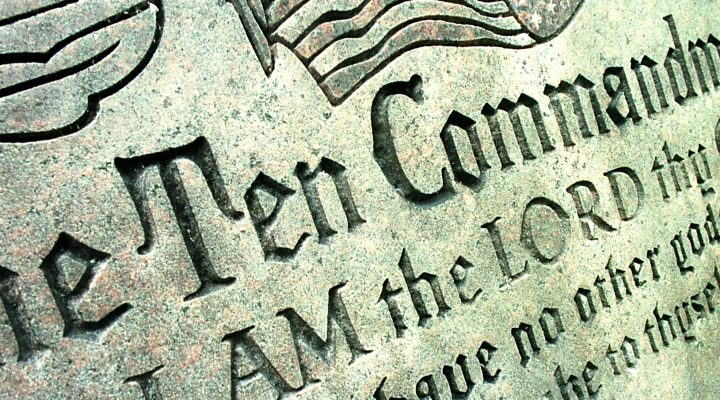
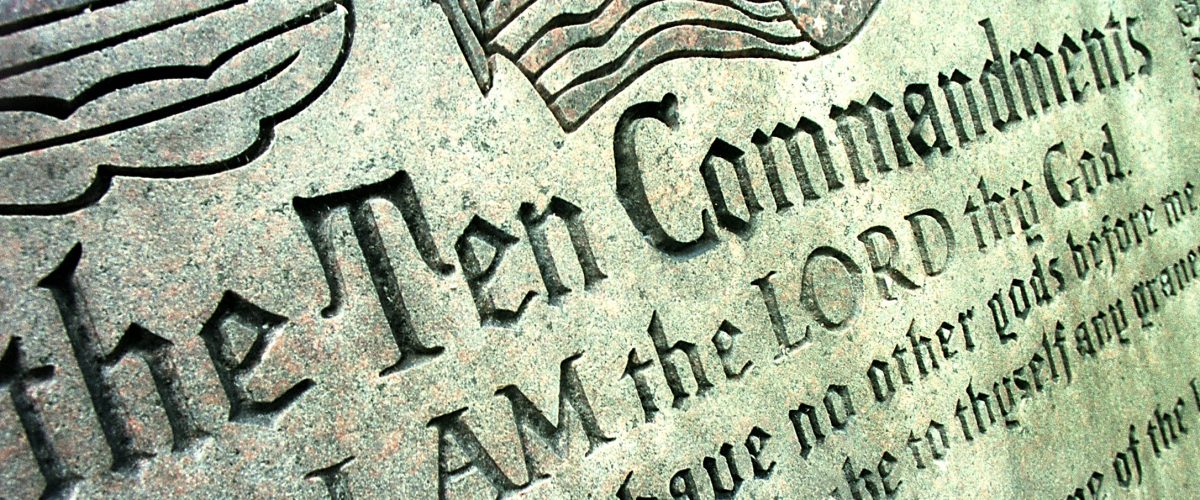
A three-judge panel last week heard oral arguments about a Louisiana law requiring Ten Commandments displays in K-12 and public college and university classrooms.
The Jan. 23 hearing in the Fifth U.S. Cricut Court of Appeals in New Orleans came just over two months after a federal judge declared the legislation “unconstitutional on its face” as well as “discriminatory” and “coercive” because it preferences Christianity over other faiths. The state immediately appealed the November injunction preventing the displays as litigation continues.
Roake v. Brumley was filed by a group of multi-faith and nonreligious families shortly after Louisiana Gov. Jeff Landry signed House Bill 71 into law June 19. The litigation targets five school districts and is led by the American Civil Liberties Union, ACLU of Louisiana, Americans United for Separation of Church and State and the Freedom from Religion Foundation.

Jorge Benjamin Aguinaga
During the virtual appellate hearing, Louisiana Solicitor General Benjamin Aguinaga said the injunction should be lifted because the lawsuit was filed before displays were installed in classrooms, meaning “the plaintiffs seek to challenge hypothetical displays that do not exist and that they have never seen,” Courthouse News Service reported.
Circuit Judge Catharina Haynes said the legislation calls for Ten Commandments displays to be no smaller than 11-by-14 inches but does not cap the size nor limit where the posters can be placed within a classroom.
Aguinaga said those issues can’t be addressed because no displays have been installed, according to CNS. “You don’t have the facts before you to actually answer the question, ‘What is the context of the display?’ And in fact, because the plaintiffs jumped the gun here and filed an unripe case, no court in this litigation will ever have that important context.”
When Haynes asked about the legislative intent of HB-71, Aguinaga cited the 2022 U.S. Supreme Court ruling in Kennedy vs. Bremerton, a decision favoring a high school football coach who held prayer gatherings at the 50-yard line after games. The decision shifted the focus of church-state separation cases from that of determining Establishment Clause violations to deciding if a disputed religious action has a connection to “historical practices and understandings.”
“As Kennedy says, you no longer ask about the purpose of law, which took effect Jan. 1. You ask about whether the challenged action reflects one of the hallmarks of an establishment of religion,” Aguinaga said.

Jonathan Youngwood
Representing the plaintiffs, attorney Jonathan Youngwood argued the suit was not prematurely filed because harm doesn’t have to take place when it will clearly happen, CNS reported.
Should the stay be lifted as litigation proceeds, the subsequent injury to students will include exposure to a Protestant Christian version of the commandments. “What makes this so significant is the requirement that it be in every single (classroom) throughout your 13 years in public school, 177 days a year. It can’t be avoided. It can’t be averted.”
Further harm would come from the inescapability of the religious messaging in the Decalogue displays, Youngwood said. “It is not possible that a little boy or little girl is going to go through even kindergarten without noticing this commonality of each classroom and is not going to come home and ask their parents about it. And that is that concern our parents bring both under establishment and free exercise clauses.”
Haynes expressed concern about why the Louisiana legislature passed the bill in the first place, according to a report by K-12 Dive, a digital publication providing analysis and news for educators. “I’m respectful of the Ten Commandments, and I think everybody is, but that doesn’t mean it has to be put in every classroom in a state under the First Amendment.”
The judicial panel did not set a date for a decision in the case.
Plaintiffs’ attorneys have consistently argued HB-71 is nothing more than an attempt to impose a conservative brand of Christianity on students and would serve to alienate those who adhere to different faith or no faith at all.
“Our lawsuit is necessary to protect the religious freedom of all Louisiana public schoolchildren and their families,” the civil rights groups said after the appellate hearing. “This law is a transparent attempt to pressure public-school students to convert to the state’s preferred brand of Christianity. Today we urged the court to block HB-71 from being implemented because it violates the Constitution’s promise of religious freedom and church-state separation.”

Liz Murrill
On Facebook, Louisiana Attorney General Liz Murrill said she was “proud” to defend the constitutionality of the proposed displays in public classrooms. “The Ten Commandments have historical significance as a foundation of our legal system. We look forward to the Fifth Circuit’s decision.”
Murrill and other Louisiana officials claim the law is constitutional because the Ten Commandments will be displayed alongside the Declaration of Independence and other historic documents, making them educational rather than religious in nature. The legislation also requires the posters include a statement describing the Decalogue as crucial to the founding of Western civilization and the United States.
But state leaders have admitted they were spoiling for a legal fight they hope will eventually land before a conservative U.S. Supreme Court. “I’m going home to sign a bill that places the Ten Commandments in public classrooms. And I can’t wait to be sued,” Gov. Landry said in a gathering of Tennessee Republicans three days before signing the bill.
Landry urged other states to follow his state’s lead in placing the displays in public school classrooms. In December, 18 states filed a friend of the court brief with the Fifth Circuit in support of Louisiana. Among them are Kentucky, Florida, Indiana, Mississippi, Tennessee, Texas and Utah.
Related articles:
Battle continues over Louisiana Ten Commandments law
Court strikes down Louisiana Ten Commandments law
Baptists oppose Louisiana Ten Commandments bill
If you want to post the Ten Commandments in schools, you ought to learn more about them | Analysis by Rick Pidcock