

Truth be told, we as a nation, in our rage against immigrants, no longer trust in the great “I AM,” the Lord God who sponsored the Hebrews’ extrication from Pharaoh’s Egyptian servitude. We as a nation have become inhabited by evil spirits, whose name is “Legion,” both because they are many and varied but also because legionnaires were the most feared warriors in the ancient world which Rome dominated.
We are a people drenched in piety but drought-stricken by injustice and dereliction. Every feint of mercy is rebuked. Every declaration of peace comes at the price of much rancor.
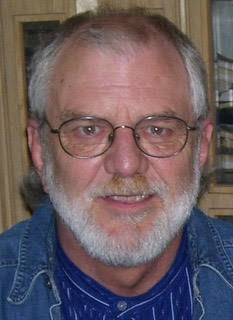
Ken Sehested
We are not in need of amendment; we are in need of an exorcism.
To whom shall the vulnerable turn for relief? To whom for recompense? Whose ears will hear the refugees’ cry? Whose hands will catch LGBTQ children’s tears?
When and how will love scatter the loan sharks of every heart held in pawn?
“No one leaves home,” says the poet and seer Warsan Shire, “unless home is the mouth of a shark.”
“We are not in need of amendment; we are in need of an exorcism.”
It is we, declaimed the psalmist (55:21), whose souls are warped: “With speech smoother than butter, but with a heart set on war; with words that were softer than oil, but in fact were drawn swords.”
What the Bible says
It was a moment of revelation when I first noticed in Hebrew Scripture (carried over in the Newer Testament) that Yahweh’s passion repeatedly returned to the fate of “strangers (aliens), widows and orphans.” What was it about such people that galvanized heaven’s attention? Did they exhibit exceptional moral character? Was their piety more heartfelt? Were their genuflections more remarkable?
In the Newer Testament, children received similar attention in Jesus’ regard. So what was the factor for such singling out? Was it the innocence of children? Or of strangers, widows, orphans?
No. In each case, it was their vulnerability. Each category (among others — see Matthew 25 for a listing of additional vulnerable classes) was defenseless in ancient Palestinian society. Such as these were expendable and had no claim on social/economic security.
Rationing
The rationing of security guarantees is at the heart of all small-p politics: who gets what, when, where and how. And such fleshly, material concerns are also at the heart of spiritual formation (or deformation).
The Spirit traffics in human affairs. This should be no surprise. It’s a consistent theme throughout Hebrew Scripture. And Jesus’ most concise — and most unequivocal — theological assertion was “You cannot serve God and mammon.” Mammon was not the name of a first century deity competing with Yahweh for the loyalty of the people, but the common word for security arrangements: wealth, power, influence.
Such forces have generated human-constructed institutions since creation and were intended for the common good. But they, seemingly inevitably, have “fallen,” have become warped and twisted and weaponized by the strong to control the weak. This is original sin.
But their sway in human affairs is not fated, is not inevitable, is not irrevocable. A new earth and a new heaven have been promised. This is the goodness of the gospel word. This is the good word spoken to strangers, widows and orphans; to the mourners, the meek, the pure in heart; to the hungry, the thirsty, the ill-clothed, the prisoners — and, yes, those “strangers” appear again in this list.
“Jesus scandalously identified his ‘sake’ with the sake of these humbled ones.”
Jesus scandalously identified his “sake” with the sake of these humbled ones.
Therefore, we may rightly claim that when God is manifest in human affairs, it almost always is done incognito: in disguise, in out-of-the-way places, in the womb of an adolescent peasant (or those of barren women, long since able to bear children), drawing emissaries from a distant land who are not a part of the covenant community, mixing with low-wage shepherds from nearby fields, all testifying to starry encounters.
However, the gospel word is seen as bad news by some, those who have much at stake in maintaining current arrangements. And when the assorted Herods controlling the extant security order feel threatened, they lash out with heinous, bloody force against the unprotected.
‘Preferential option’
Such were the convictions of the Conference of Latin American Bishops, meeting in Colombia in September 1968, in their “Medellín Statement,” lifting up the language of God’s “preferential option for the poor.”
That document, and the environment in which it surfaces, is what prompted the Council on Inter-American Security, in the so-called “Santa Fe Document” of 1980 prepared to advise the incoming Reagan administration that American foreign policy must directly attack the rise of liberation theology in Latin America for its critique of hoarded private property and the growing economic inequality of capitalism. The Catholic Church, a long-time bulwark justifying colonizing forces in Latin America, was showing signs of treachery to U.S. interests by “raising the consciousness of the people,” a phrase used in an earlier letter from Republican scion Nelson Rockefeller.
When Chilean military dictator Augustine Pinochet came to power in 1973 (in a coup orchestrated by the U.S. government), he forbade use of Mary’s “Magnificat” as a public prayer because of its subversive prediction of the coming age when “the mighty would be pulled down from their thrones.” During the 1980s, dictatorial rulers in both El Salvador and Guatemala judged Mary’s proclamation of God’s special concern for the poor to be so dangerous they banned any public recitation of this text. Argentina’s ruling junta banned Mary’s song after the Mothers of the Disappeared displayed its words on placards in the capital plaza.
“He forbade use of Mary’s ‘Magnificat’ as a public prayer because of its subversive prediction of the coming age.”
During Britain’s rule of the Indian subcontinent, the singing of the Magnificat in church was prohibited because of its incendiary lyrics. So, on the final day of British rule in India, Gandhi, who was not a Christian, requested that this text be read in all places where the British flag was being lowered.
These 20th-century narratives remind me of similar ones from the early 17th century. Thomas Helwys, co-founder of the first “Baptist” congregation, was thrown in English King James I’s prison for daring to challenge the state’s control of the church. King James retorted: “It would be only half a king who controlled his subjects’ bodies but not their souls.”
A few decades later, the Puritan pastor (turned “Baptist” advocate) Roger Williams was expelled by the Puritan leaders of the Massachusetts Bay Colony on several charges, one being that Williams was considered “an incendiary of the commonwealth” for his conviction that state and church must be separated. (Moreover, he said that settlers’ land had been stolen from the indigenous population.)
Taking presidential offense
Only when we take in this historical context can we understand why our new president was so offended at Bishop Mariann Budde’s encouragement to offer mercy to the unprotected. Why one congressman urged that she be deported. Why the right-wing media went berserk over such kindly comments offered in the mildest mannered tone. Why the nation seems on a course leading to a full-blown oligarchy: government of the rich, by the rich, and for the rich.
We must remember that in his earlier term, Trump claimed that as president he “could do anything he wants.” And was earlier recorded saying the same thing about committing sexual assault — “When you’re a star, (women) let you do anything.”
“This week, I feel sullied just listening to the news.”
My expectations of integrity — not to mention mercy — from elected officials never has been high, regardless of party. This week, though, I feel sullied just listening to the news. And in some ways, that’s exactly what existing authorities want from dissenters: Just ignore what’s going on; find some distractions; accentuate the positive; occupy yourselves with the quest for inner peace.
Why I’ll fight
I say these things as a member of the majority caste, someone who likely will not experience the worst effects of this bedeviling moment in our nation’s history. But I am vowed to this struggle come what may, for three reasons.
First, this is a fundamental matter of faith. Coming alongside the “little ones” mangled in this sordid world is not merely an act of moral heroism. It is participation in God’s holiness. The “sake” of Jesus is at stake, as is the enlivening presence of the Holy Spirit.
Second, I have friends and acquaintances who are among the vulnerable population, both here and abroad. This is how I learn about God’s incognito presence. In these inglorious days, such connections are all the more vital to maintain and strengthen — for the sake of our own souls, not theirs.
Third, I am rooted in a community of conviction — actually, a number of communities, in ever expanding concentric circles — which hold my heart when I grow weary, allowing me to rest, to heal, to be reinvigorated as needed. And my primary community gathers weekly around the table of eucharistic remembrance, patterning a ritual originating in the midst of betrayal and the coming bereft hope of Jesus’ followers.
I am not the center of these circles. It is our shared vocation that is centered: the hallowing work, in small and large ways, of repenting, repairing, renewing and restoring every corner of creation, beginning at our own thresholds and neighborhoods and out into the uttermost parts of the world.
In J.R.R. Tolkien’s The Lord of the Rings, Galadriel (Lady of Lorien) says, “For the world has grown full of peril. And in all lands, love is now mingled with grief.”
Her partner Lord Celeborn responds, “What now becomes of this Fellowship? Without Gandalf, hope is lost.”
To which Galadriel replies, “The Quest stands upon the edge of a knife. Stray but a little, and it will fail, to the ruin of all. Yet hope remains while the Company is true.”
Ken Sehested is the author and editor of prayerandpolitiks.org, an online journal at the intersection of spiritual formation and prophetic action.
Related articles:
Politics, faith and mission: A conversation with Bishop Mariann Edgar Budde | Opinion by Greg Garrett
At prayer service, Episcopal bishop calls on Trump to show mercy