


What precisely is so bad about racism? Part of me hopes I ask this question to a sympathetic audience who knows something is wrong with how we view race. But perhaps you can’t quite put your finger on what is so diabolical about the construct.
Your first thoughts might be that it is unfair, that it leads to prejudging others without knowing them, that it breaks people apart, that it precipitates violence, and that when you really interrogate it, it’s just a made-up concept.
 All these thoughts are generally true, and their corresponding realities are bad, but they are disparate. They can be summarized, as so many things can be, by a threefold recognition: that race and racism lie, kill and steal, not unlike the thief Jesus speaks of in John 10. That is, race and acts of racism are enemies of truth, enemies of life and enemies of material equality and flourishing.
In these three sins, however, we also find that, at the very least, seven of the Ten Commandments are implicated, and this ought to blow our minds. But the effect should not stop there. By seeing the extent of the evil, we also ought to steel ourselves for battle against the powers and principalities that seek to bring us into subjection. That work begins with addressing lies.
“The lies of race and racism take multiple forms.”
The lies of race and racism take multiple forms. The lie of superiority and inferiority is the easiest for the Christian to dispel, at least in theory. Racist ideas, especially as we commonly think of them, encourage us to believe members of a particular racial group (most often but not exclusively Blacks) are inferior to members of another racial group (most often but not exclusively whites).
While this is not the most dangerous element of race and racism, it is the one most Christians like to focus on, perhaps because it appears to us to be the easiest to address. Particularly in evangelical circles, it is common to respond to issues of race and racism by referring to Ephesians 2. Christ has broken down the walls of separation, we are told. Just as Christ’s redemption brought together Jew and Gentile, so it also reaches across the lines of race.
Christ has done such things. Christ’s redemption is that powerful. But those truths do not tell us anything about how race actually functions in society — that is, they tell us little about what race has done or continues to do. If racism were only about lies, then truth-telling would be adequate. Yet no amount of truth-telling will close the economic gaps that still seem to give race meaning. Nor will truth-telling stop the police officer’s bullet from piercing the disabled Black person’s body. Nor will truth-telling alone remove the shackles from the unjustly incarcerated.
It is, however, very important that we address and recognize lies as lies. If we assume or argue that a causal relationship exists between the made-up category of race and anything about a person besides the way they are treated, we reveal ourselves to be subject to lies. According to the brilliant work of Adolph Reed Jr., race is “a taxonomy of ascriptive difference, that is, an ideology that constructs populations as groups and sorts them into hierarchies of capacity, civic worth and desert based on ‘natural’ or essential characteristics attributed to them.”
“If racism were only about lies, then truth telling would be adequate.”
Said another way, race is a series of lies: the hierarchies of capacity are untrue, the hierarchies of civic worth are untrue, and the hierarchies of desert are untrue. Still, despite its untruths, race remains persuasive and powerful.
For the Christian, race as a construct violates the ninth commandment: “You shall not give false testimony against your neighbor” (Exodus 20:16).
The Westminster Larger Catechism reminds us the Ten Commandments bear within them both prohibitions and duties. The catechism teaches us not only not to lie about one another but also to love one another by rejoicing in others’ good reputation, by promoting and rejoicing in the truth, and by distancing ourselves from and discouraging lies, slander and injustice. Race as a construct, however, creates and justifies difference, gives credence to unjust states of affairs and encourages suffering people to swallow their pain rather than seek liberation.
Truth is important and will set us free. But it is insufficient. And that is because those who seek to construct race and mobilize racism do more than just lie to us. They kill and steal from us too.
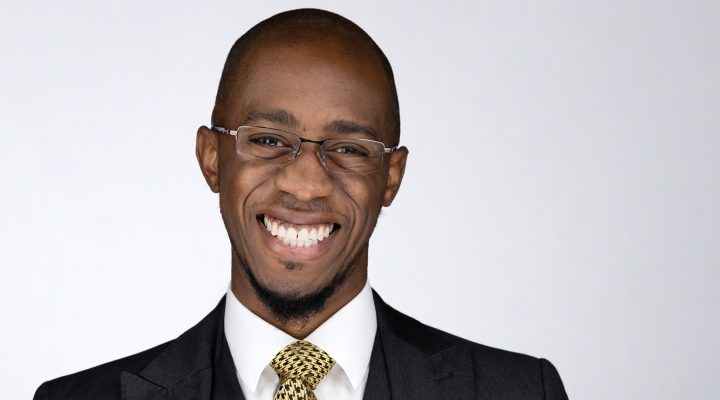
Malcolm Foley serves as special advisor to the president for equity and campus engagement at Baylor University. He earned a bachelor of arts degree in religious studies with a second major in finance and a minor in Classics from Washington University in St. Louis. He then completed a master of divinity degree at Yale Divinity School and a Ph.D. in religion from Baylor. He is the former director of Black Church Studies at George W. Truett Theological Seminary and currently serves as a pastor at Mosaic Waco.
This article is excerpted from The Anti Greed Gospel by Malcolm Foley ©2025 and is used by permission of Brazos Press.