


Since delivering a sermon at the inaugural prayer service at Washington National Cathedral, Bishop Mariann Edgar Budde has faced a firestorm of backlash from far-right forces. Pointing to her calls for mercy — especially for LGBTQ people and immigrants — critics have accused her of inappropriately bringing politics into church and being a mouthpiece for radical leftist policies.
On the flip side, many Americans of faith have expressed gratitude for her impassioned defense of marginalized communities. They felt her call for mercy resonated deeply with their Christian beliefs — but was all too rare in today’s political climate.
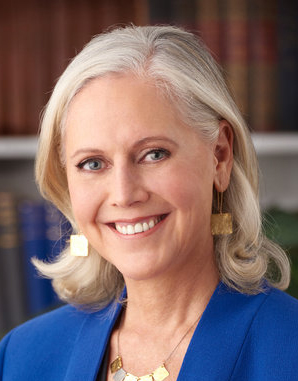
Serene Jones

Frederick A. Davie
Bishop Budde, for her part, has insisted her sermon was not meant to be partisan. It was meant to apply the core messages of faith to our lives — just as all faith leaders and people of faith should aspire to do.
This mindset is needed now more than ever. Many in our country are trapped in deep political siloes, fueling hatred and division. Marginalized communities are facing an unprecedented array of attacks from government leaders.
It’s crucial for faith leaders and faith-based organizations — who have a long history of promoting peace, harmony and care — to step into the public square and boldly advocate for a nation that supports the most vulnerable.
First, as Bishop Budde exemplified, faith leaders should speak to public policy from a theological and faith perspective — in both places of worship and other public forums.
“It’s critical to understand how deeply theology informs public life.”
It’s critical to understand how deeply theology informs public life. Understandably, people can be skeptical when faith leaders bring policy to the forefront. When community members might not be ready to engage with charged political issues, providing theological context can help them understand how to connect the issues to the core of their faith and how to put it into practice in their everyday lives.
Understanding the theological underpinning is crucial for another reason, as well: Nefarious politicians often use warped interpretations of sacred texts to pursue their own agendas. The Bible, for example, has been used to justify racism, hated for LGBTQ people, anti-immigrant policies and other attacks on vulnerable communities. Faith leaders — not unscrupulous politicians — have a duty to provide guidance on how to authentically apply theology to our lives.
Next, faith leaders should open the doors of places of worship to serve as sanctuaries for the most vulnerable. Many places already are doing so. But some houses of worship, especially Christian churches, sit empty from one sabbath to the next. Leaders and community members should explore more ways to make them more active centers of hope and service.
Finally, people of faith should continue to cultivate and develop moral leadership in new and innovative ways, including making effective and meaningful use of our rapid technological advances.
Many faith leaders and communities already are seeing the power of digital tools and social media to expand their reach and make a bigger impact. Here at Union Theological Seminary, we worked with a series of partners to create a Technology, Innovation, and Digital Engagement Lab that includes a fellowship program to enable faith and social justice leaders to explore how to use technology, human-centered design and new innovations to advance their missions. Right now, our inaugural cohort — which includes leaders from across the country with an array of faith traditions, racial backgrounds, careers and experience levels — is working on projects to integrate their missions with new technology.
Crucially, in all their work, faith leaders never should diminish the inherent value of anyone, including those with whom we disagree. Every life is precious and deserves to be treated as such. Demeaning groups only fuels polarization and disagreement. Instead, faith leaders should show understanding and empathy for all perspectives.
There’s no question our political climate is riddled with challenges. But faith leaders and faith-based organizations are well-positioned to bridge gaps and protect vulnerable communities. They should do everything in their power to do just that.
Serene Jones serves as president of Union Theological Seminary, a globally recognized seminary and graduate school of theology where faith, spirituality and scholarship meet to reimagine the work of peace and justice. Frederick Davie serves as senior executive vice president for public theology and civic engagement at Union.
Related articles:
Pope Francis calls US Catholics to listen to Jesus, not Trump, on immigration
Politics, faith and mission: A conversation with Jonathan Eig | Opinion by Greg Garrett
Pastors, now what? | Opinion by Alden Gallimore