


Americans opposed to the Trump administration’s attacks against religious institutions and its attempts to radically reshape the federal government must take heart and speak out now, said U.S. Rep. Jamie Raskin, D-Md.
Catholic and Lutheran relief groups have been denied previously approved funds for immigration and humanitarian services and verbally assaulted in the process, while American houses of worship have been targeted for immigration raids. Ongoing lawsuits alone do not provide the full support these organizations need, Raskin said during a Feb. 20 webinar hosted by Interfaith Alliance.
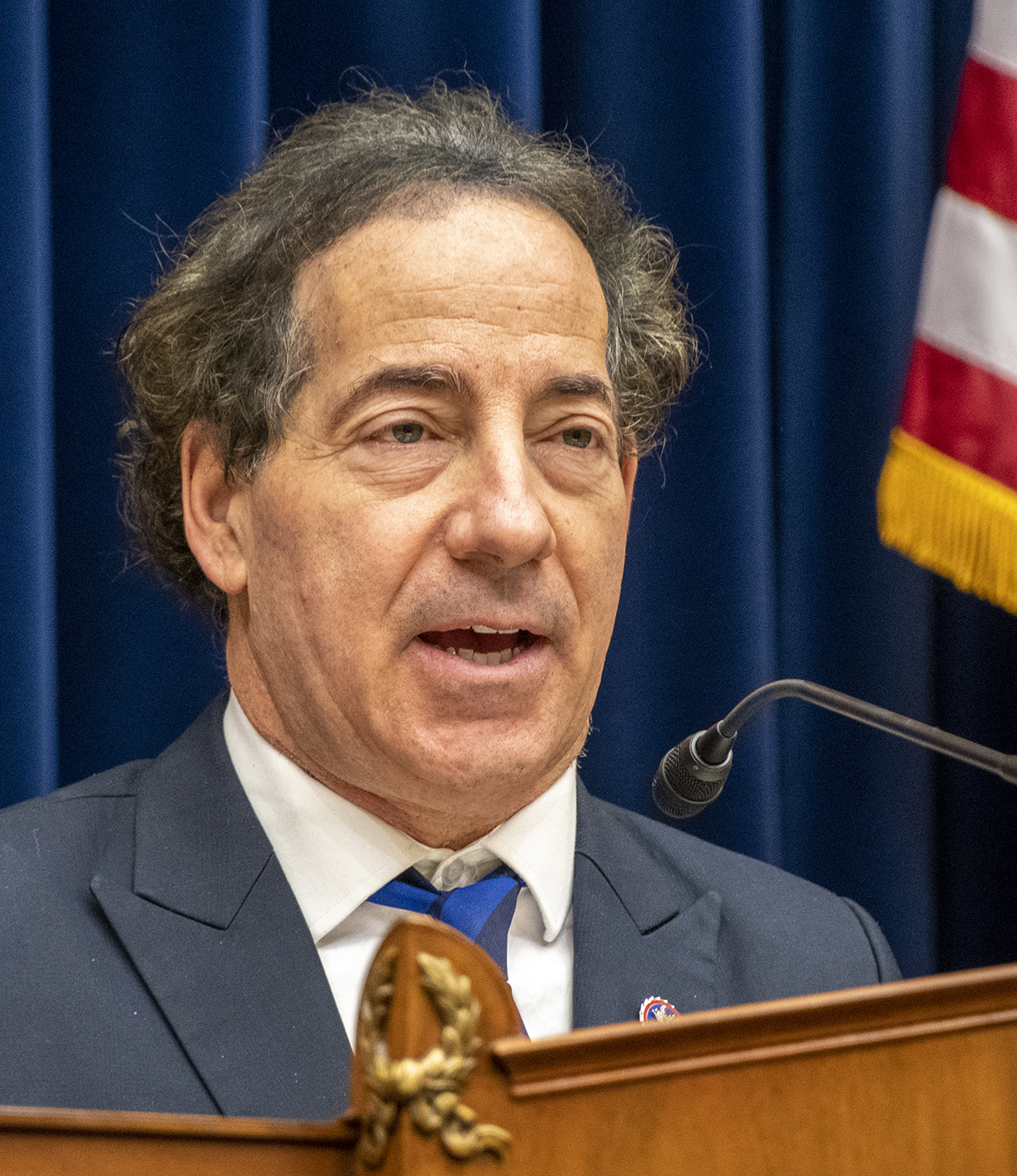
Jamie Raskin
“We need to have everybody else stand up for these groups, but we need an Interfaith Alliance standing up for all of the religiously inspired groups that are engaged in such crucial humanitarian relief and social reconstruction all over the world,” he said.
Faith-based relief work has been instrumental in feeding and housing the hungry at home and abroad, fighting HIV/AIDS, promoting democracy and literacy and standing up for the rights of girls and women. But the Trump administration has chosen to deny the religious authenticity of these organizations and accuse them of misusing federal funds, Raskin said.
“It is the real religious community that is under attack by these people, and we have got to stand up and defend all of these positive projects that religious organizations have been engaged in.”
Call to awareness
Interfaith Alliance President Paul Raushenbush said the briefing was called to focus awareness on the numerous ways the administration is undermining religious communities and leaders, faith-based charities and religious freedom, and to provide people of all faiths and of none with the tools to take needed action.
Other speakers included Democracy Forward President Skye Perryman, Faith in Democracy founder Jennifer Butler and Melissa Rogers, former executive director of the White House Office of Faith-Based and Neighborhood Partnerships.
“I’ve never seen anything like this moment in American democracy before,” Raushenbush said. “I truly believe this is a moment for American religious communities to show up for one another. It is time for us to truly show up with our full beliefs our full selves and be part of the pro-democracy faith movement.”

Paul Raushenbush (Photo by Shannon Finney)
The disruption and ongoing attempted shut-down of the U.S. Agency for International Development also denies people of faith the opportunity to live out their religious beliefs, Raskin added.
Numerous religious groups “are out delivering food and goods and housing and humanitarian relief to people all over the world — not along sectarian lines,” he noted. “There are no religious tests for who gets served, and they’re not evangelizing or proselytizing. They’re not propagandizing anybody. They’re just serving humanity.”
Identifying themes
Interfaith Alliance Senior Fellow Maggie Siddiqi said the organization has discerned several themes in how the Trump administration is assaulting religious communities and has launched an online tracker to monitor developments.
One theme is the attempt to induce a chilling effect on faith communities by allowing immigration raids in houses of worship, she said. “At best, this throws our houses of worship into chaos as they try to develop protocols for what to do with worship and, at worst, families and communities might stay home if they’re afraid and they won’t be able to engage in the free exercise of religion.”
Another theme is using the full weight of the federal government to attack individual clergy and institutions by accusing them of wrongdoing, Siddiqi said. Examples include accusing the U.S. Conference of Catholic Bishops and Evangelical Lutheran Church in America of padding their bottom lines with federal grants, and the condemnation of Episcopal Bishop Mariann Budde for pleading with Trump to have mercy on marginalized communities.
Third, religious discrimination is promoted through the elimination of federal diversity, equity and inclusion programs while the president’s order and related fact sheet combatting antisemitism pits faiths against each other by singling out Muslims as enemies, Siddiqi said.
“The Trump administration uses distorted theology as a cover for all of these misdeeds.”
“The theme I want to highlight is the Trump administration uses distorted theology as a cover for all of these misdeeds. Trump continues to blasphemously allege he was chosen by God for this role, and Trump also established a White House faith office aimed at addressing anti-Christian bias despite the fact the bias appears to be coming from within his own administration.”
Speak up and show up
Perryman urged people to stay on top of developments, speak up in local community settings and contact congressional representatives to oppose ongoing attacks against faith groups, immigrants and civil service employees.

Skye Perryman (Photo by Shannon Finney)
“One of the tools this administration is seeking to use and that extremists seek to use all the time — it’s like the oldest trick in the playbook — is to try to flood the zone and to put people in a situation where they feel as if they can’t do anything, that it’s all hopeless,” said Perryman, an Interfaith Alliance board member. Her organization, Democracy Forward, is active in challenging executive branch corruption and defending democracy from extremism.
Despite these challenges, there have been some bright spots on the legal front, Perryman reported. These include filing more than 60 lawsuits challenging Trump executive orders and actions like allowing immigration agents into churches and other sensitive spaces, the attempted closure of USAID, and allowing Elon Musk’s Department of Government Efficiency access to taxpayer data.
While the Trump administration has scored some legal wins, so have its opponents, including injunctions on limitations to birthright citizenship, Musk’s access to sensitive Treasury Department computer systems, the executive order to end all federal diversity, equity and inclusion programs and the effort to dismantle USAID.
Meanwhile, federal judges appointed by presidents Bush, Obama and Trump have described many of the new policies as “blatantly unconstitutional,” Perryman added.
“The president doesn’t get to denounce the Constitution or take away constitutional rights with the stroke of a pen.”
“The courts are really the front lines for a lot of the defenses we’re seeing in this country. The president doesn’t get to denounce the Constitution or take away constitutional rights with the stroke of a pen or with the signing of an executive order. And he doesn’t get to ignore the will of Congress and he doesn’t get to ignore what people need without legal consequences, because we have laws that protect us.”
Yet the courts are not a panacea for the nation’s challenges, which also require citizen action, she said. Democracy Forward has launched initiatives to track responses to executive orders, to help protect the jobs of federal civil service employees and to follow actions taken against Project 2025.
‘Presidents are not kings’
Americans can take heart by remembering how the U.S. Constitution structures government, Rogers said. “Presidents are not kings, and thus the federal executive branch must have legal authority for its actions, and that’s why numerous executive actions are currently being challenged in court.”

Melissa Rogers
And that’s why there is power in people contacting their representatives on these issues because Congress holds or shares the authority needed to override certain executive actions, she added.
A case in point is a new bill in Congress to reinstate the longtime bipartisan prohibition against conducting immigration raids in churches, schools and health care facilities. “If that bill becomes law, it would take precedence over a contrary (Department of Homeland Security) decision. So, Congress took action in part because they heard from you that this was important to do,” Rogers said.
Americans also can push back by documenting, in writing or with video, the effects of administration policies in their local communities, for example detailing how cuts in federal grants resulted in the elimination of Meals on Wheels, job training or Head Start programs, and then to provide that information to media and representatives, she suggested.
She also urged people to file comments on forthcoming proposed federal rules during open public comment periods, and to write op-eds and letters to the editor to local media outlets. Such actions are “really powerful, especially when folks do so in unison across religious, ideological and political beliefs. So, remember to always look out and see wherever you can make common cause with others in your community.”
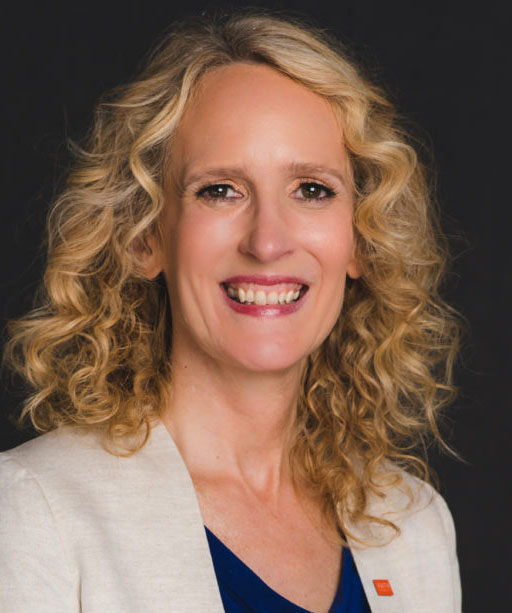
Jennifer Butler
Butler said her organization has waged petition drives and calling campaigns in opposition to Trump’s cabinet nominees and will continue to hold senators accountable for their votes.
“But I hope that none of us despair over this outcome because we’re in this for the long haul. Against all odds, we nearly defeated some of these nominations and at a time when others were flat footed or lacked courage, we as the faith community made sure American citizens knew what this administration was doing.”
Raushenbush outlined an ongoing petition effort demanding the president end his attacks on religious communities and leaders. And he said the American faith community is not yet in a “Bonhoeffer moment,” in reference to the German minister Dietrich Bonhoeffer executed in 1945 for resisting the Nazis.
“We represent the mainstream pluralistic, multireligious, multiracial movement for democracy in America. We are not an underground church. We are not a resistance church. We are the majority, and we should act that way.”