


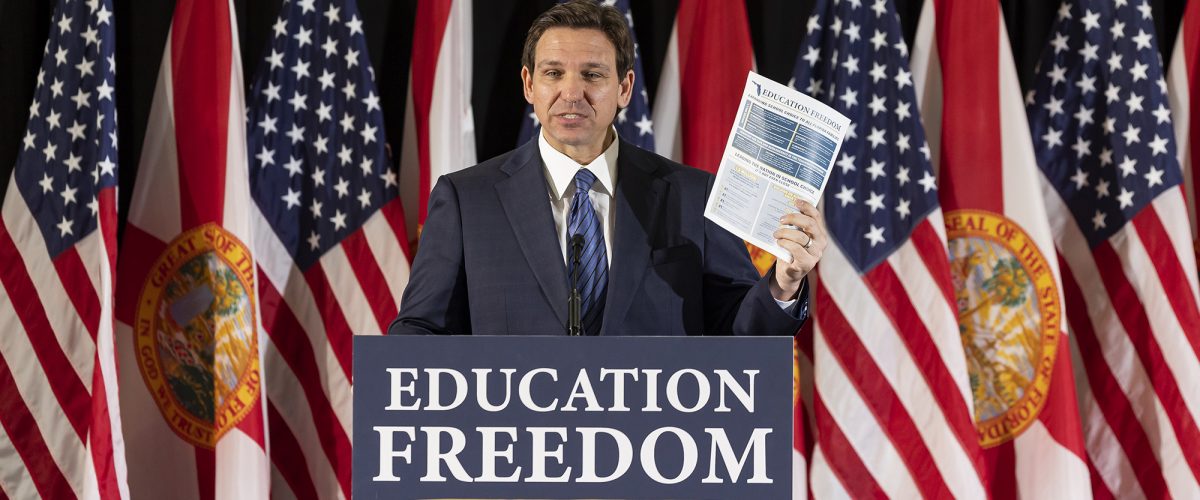
Donald Trump and congressional Republicans already intent on spending tax dollars on private education want to go even further by creating billions in new federal tax credits to school voucher programs.
Newly introduced legislation would provide $10 billion in annual tax credits to businesses and individuals who give donations to charitable groups that would in turn provide scholarships for public or private K-12 education, including homeschooling and vouchers.
As has been the case in numerous state-level voucher campaigns, the Educational Choice for Children Act claims simply to give parents options in educating their children.
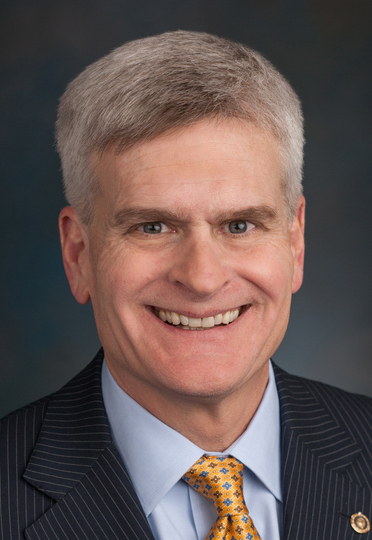
Bill Cassady
“Parents want to see their child succeed. Giving them the ability to make decisions over their child’s education puts that child’s needs first,” said U.S. Sen. Bill Cassidy, R-La., a co-sponsor of the measure. “More freedom empowers parents and allows American children to thrive in school.”
The legislation is not the sole effort to expand the use of federal tax dollars to pay for private education, including religious schools.
President Donald Trump signed an executive order Jan. 29 directing the government to “improve” education by transferring power in the matter to parents. The order also was highly critical of public education.
“Parents want and deserve the best education for their children. But too many children do not thrive in their assigned, government-run K-12 school,” the order states. “When our public education system fails such a large segment of society, it hinders our national competitiveness and devastates families and communities.”
This executive order plays directly into the hopes of Trump’s most ardent conservative evangelical base, who have worked for decades to discredit public schools as liberal while seeking public funding for their private schools.
This executive order plays directly into the hopes of Trump’s most ardent conservative evangelical base.
The action gives Secretary of Education Linda McMahon two months to issue guidance to the states on using federal funds to pay for school-choice programs. The order also directs the use of existing discretionary grant dollars to finance private education.
An anticipated executive order to close the U.S. Department of Education is considered by critics as a ploy to further privatize learning and to launch government-funded religious education.
Project 2025
Both the legislative and White House-directed promotions of private education are taken from the pages of Project 2025, the white Christian nationalist playbook for dismantling much of the federal government.
“Ultimately, every parent should have the option to direct his or her child’s share of education funding through an education savings account, funded overwhelmingly by state and local taxpayers, which would empower parents to choose a set of education options that meet their child’s unique needs,” Project 2025 proclaims.
The plan also recommends an existing federal voucher program for low-income students in Washington, D.C., “be expanded into a universal program, formula-funded and moved to the Department of Health and Human Services.”
State programs
According to EdChoice, 16 states have adopted voucher programs, including Idaho and Tennessee, where new legislation was signed into law in February. The Associated Press reported 13 of those states provide “universal” vouchers which can be used by families regardless of income level.
But those wide-open programs are raising concerns in some states that the wealthy are unfairly benefitting from what used to be programs for low-income and handicapped people.
“Campuses that advertise annual tuition of $15,000 or more added more than 30,000 voucher students last year.”
That’s become an issue in Florida since a 2023 law opened the state’s voucher system to all residents, the Orlando Sentinel reported.
“Voucher use has jumped by 67% since the new law was approved” and a “significant amount of the money is flowing to Florida’s most expensive private schools, many of which served few voucher students in the past: Campuses that advertise annual tuition of $15,000 or more added more than 30,000 voucher students last year,” the paper reported.
More than 122,000 new students began using vouchers the year the law was passed, the Sentinel explained. “The proportion of private school students with state scholarships has topped 70% this school year. Ten years ago, it was less than a third.”
In other words, the expanded publicly funded vouchers did not bring new students into private schools so much as pay for students already attending private schools or whose families could afford tuition without public assistance.
Oklahoma’s Parental Choice Tax Credit also has drawn scrutiny because roughly a quarter of its voucher funds, about $22.6 million, has gone to households earning $225,000 or more per year, KFOR-4 in Oklahoma City reported.
The remainder was spread across families with incomes up to $75,000, between $75,000 and $150,000 and between $150,000 and $225,000 annually. The 2023 program was billed as a way to help low-income students, critics observed.
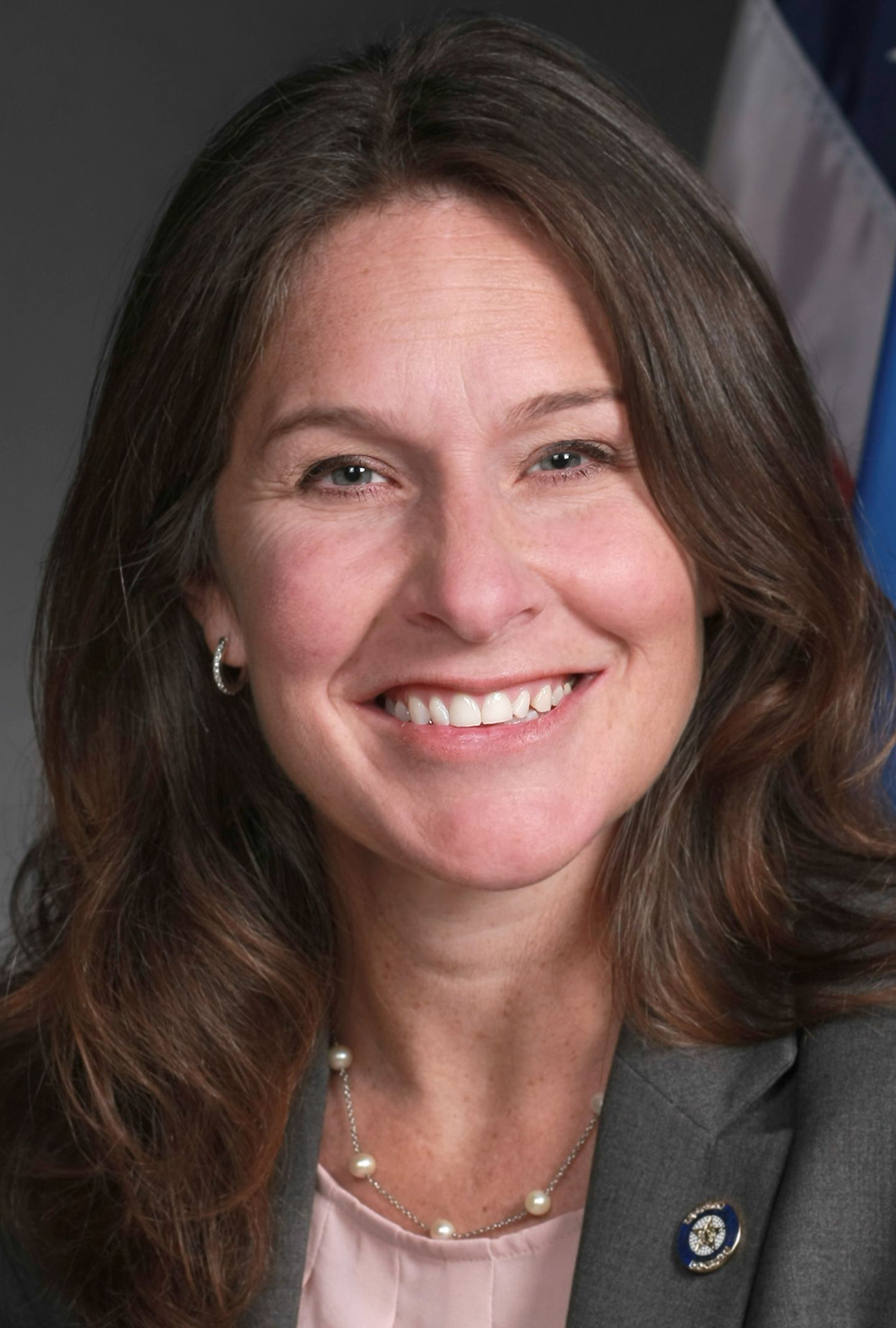
Melissa Provenzano
“When you’re saying school choice for all, what do you mean?” said state Rep. Melissa Provenzano, D-Tulsa. “And what we’ve discovered is overwhelmingly … tax credits went to families that are already attending private school.”
Meanwhile, Texas Gov. Greg Abbott’s long-desired voucher program is moving forward but is not considered a slam dunk. The state Senate passed HB-3 in early February and a slim majority in the House has signed on to the measure. The two chambers are currently working to reconcile the measures, the Texas Tribune reported.
But Forbes recently found some Texas Republicans are reluctant to back vouchers because they do not come with the transparency and accountability required of public school funding.
Hugh Shine
“The last thing we need to do is to dismantle a public education system by taking funding away without any real clear accountability in that process,” said Rep. Hugh Shine, R-Temple.
A lot of that skittishness emanates from rural areas in Texas, Forbes added. “Though Abbott — backed by several deep-pocketed voucher fans from across the country according to OpenSecrets data — has replaced some of the GOP representatives that opposed vouchers, the opposition still exists in the grassroots.”
Meanwhile, ballot measures for vouchers and school privatization failed in three states in the November general election.
In pro-Trump Kentucky, 67% of voters opposed a constitutional amendment to use tax dollars for private schools. A majority of Nebraskans (57%) turned down a measure to use public funds to divert low-income students to private schools. And in Colorado, proponents of a “school choice” amendment failed to get the required 55% support.
Prognosis for federal bill
Nor is the new push for federal vouchers out of the woods.
“Supporters hope the tax credit will be included in the massive budget reconciliation bill that is moving through Congress using a procedure that allows passage in the Senate with a simple majority. It’s not a given,” the Washington Post reported. “The budget bill’s primary purpose is to extend trillions of dollars in tax cuts set to expire, and lawmakers are searching for savings to fill that hole. The tax credit would make the hole deeper.”
And any executive order to dismantle the Department of Education would not be an automatic victory for proponents of publicly funded private education. That would no doubt face federal litigation right along with more than 110 other suits filed against the administration.
Related articles:
Five ways the Texas school voucher bill is cruel | Opinion by Mark Wingfield
‘School choice’ expected to grow under Trump
Vouchers damage religion | Opinion by Bill Bruster