



In what may be his final book, theologian/ethicist Stanley Hauerwas remains true to the principle he’s taught and preached across almost six decades — a call to unflinching obedience to Jesus embodied in the church.
At 84, Hauerwas still knows how to afflict the comfortable who populate the theological and political spectrum. In Jesus Changes Everything: A New World Made Possible, Hauerwas insists Christians of all stripes must center their lives on obeying the teachings and following the sacrifice of Jesus.
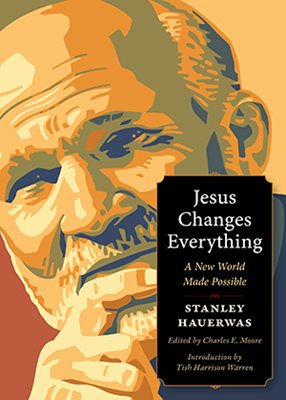 Jesus Changes Everything, Hauerwas’ 49th book, debuts today from Plough Publishing Group. The publisher calls it “his last book … a grand finale of sorts.” The volume offers 25 readings. They provide a collection of greatest hits for readers who have followed Hauerwas for years and a focused introduction for others encountering him for the first time.
Hauerwas is professor emeritus of theological ethics and of law at Duke University. The son of a bricklayer from Dallas, he earned an undergraduate degree from Southwestern University and graduate degrees, including a Ph.D., from Yale University. Before joining Duke, he taught at the University of Notre Dame.
In 2001, Time magazine named Hauerwas “America’s best theologian.” Characteristically, he pointed out “best” is not a theological category.
A call to follow Jesus
True to form, Jesus Changes Everything challenges evangelical and liberal Christians alike to let go of their ideological and political aspirations and just obey Jesus. He offers specific advice — and unexpected hope — to Christians who moan about being persecuted, looked down upon and discounted.
“As a people with nothing to lose, we might as well go ahead and live the way Jesus wants us to.”
“One of the good things that is happening today is precisely the loss as Christians of our status and power in the wider society,” Hauerwas notes. “That loss makes us free. … That’s a great advantage because, as a people with nothing to lose, we might as well go ahead and live the way Jesus wants us to.”
To be faithful, Christians must participate in “the kingdom of God’s love” by modeling their lives after Jesus, he says. That’s because “Jesus represents, embodies and is the supreme agent of (God’s) kingdom.”
For Hauerwas, the standard of following Jesus is obedience.
“The gospel is about this man, Jesus the Christ. It is not about love, … but a call of adherence to this man, God’s very Son, who has bound our destiny to his,” he explains.
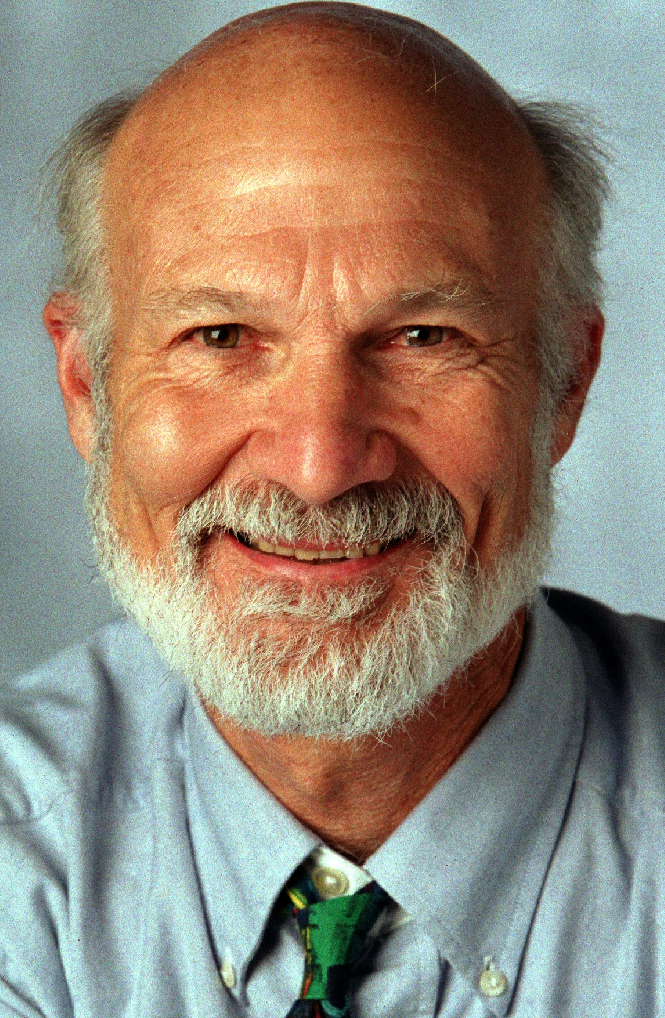
Stanley Hauerwas
“In the gospels, we see what is required if we are to be followers rather than admirers of Jesus. Following Jesus requires repentance, turning away from the familiar to a training called discipleship. … We are not Christians because of what we believe but because we obey the call of Jesus: ‘Come, follow me.’”
Right living
That means mirroring professed belief in daily action, he adds: “Our beliefs cannot be separated from how we live. … There is no other foundation for living truthfully than to obey Jesus. Those who hear his words and act on them have lives founded on a foundation capable of weathering any storm.”
And storms will come, Hauerwas promises, pointing to Jesus’ own suffering: “The Cross, more than any other event, reveals the character of Jesus’ mission.”
“The kingdom of God’s love (is) a kingdom that releases the power of self-sacrifice, giving and service,” he writes. “The powers of this world cannot comprehend such a kingdom. They oppose it. … If we are to follow him, we must suffer and lose our lives for ‘his sake.’”
God’s love is not romantic or idealistic; it is tenacious and exacting, Hauerwas insists.
“Real love acknowledges that estranged condition in which we find ourselves.”
“Real love acknowledges that estranged condition in which we find ourselves and our need for repentance and forgiveness,” he says. “Love is not the saving of others from suffering, but the willingness to continue to love them in their suffering and patiently hold the pain and guilt that such love cannot help but bring.”
Sermon on the Mount
Hauerwas warns against watering down Jesus’ teachings in order to make them easier to follow. For example, he urges Christians to take seriously Jesus’ Sermon on the Mount. It includes numerous “hard sayings” or teachings that seem almost impossible to follow. But Christians intent on following/obeying Jesus should take him at his word.
“The Sermon on the Mount presumes the inauguration of a world in which God in Christ has taken matters in hand,” Hauerwas advises. “The Sermon on the Mount is God’s possible impossibility, because we are now empowered to live in a world fashioned in accordance with God’s peace. … The basic message of the Sermon on the Mount is not about what works but rather about the way God is.”
He adds: “The most interesting question about the Sermon on the Mount is not, ‘Is this really a practical way to live in the world?’ but rather, ‘Is this really the way the world is?’”
Grace and nurture
Reflecting his emphasis from across the decades, Hauerwas drives home the absolute necessity of living the Christian life within the communal grace and nurture of the church.
“The teachings of Jesus appear to be either utterly impractical or utterly burdensome unless they are set within the proper context — an eschatological messianic community, which knows something the world does not and structures its life accordingly,” he notes. “It is our destiny that we should be such people. The church is the vessel that carries us there.”
“The church enables us to be better people than we could be if left to our own devices,” he stresses. “We must … be a people who are formed by community habits that those who do not worship Jesus cannot be expected to have. Individuals divorced from the community made possible by Christ are incapable of living the life that Jesus proclaims.”
Typical of his clear-eyed honesty, Hauerwas acknowledges the difficulty of living as community in the church. It requires selflessness, commitment and courage.
“As Christians, we are no longer to regard our lives as our own,” he writes. “When our brother or sister has sinned against us, such an affront is not just against us but against the whole community. … We must learn to see wrongs as ‘personal,’ because we are part of a community where the ‘personal’ is crucial to the common good. …
“When we fail to challenge someone we know who sins, we in fact abandon them to their sin and the consequences that follow.”
“When we fail to challenge someone we know who sins, we in fact abandon them to their sin and the consequences that follow. … Confrontation assumes that forgiveness is also to be offered.”
Hauerwas reprimands Christians who fail to call out sinful behavior within the church because they want to present a winsome picture of Christianity that invites outsiders into the faith. “Bad Christianity is very bad, and we need to be more up front about that,” he says.
Modeling another way
Even though the church’s beliefs and values run counter to the world’s, the church must courageously model another path for the world, he advises. “The church … is not anti-world, but rather an attempt to show what the world is meant to be as God’s good creation. We serve the world by showing it something that it is not; namely, a place where God is forming a family out of strangers.”
“The church must never cease from being a community of peace and truth in a world of mendacity and fear,” he says. “The deepest and most painful divisions afflicting the church are those based on class, race and nationality that we have sinfully accepted as written into the nature of things.”
Although the church is divided along theological and political lines, Hauerwas cites common ground between the factions.
Conservative and liberal Christians “are one in our agreement that we should use our democratic power in a responsible way to make the world a better place,” he notes.
But this leads to civil religion, he adds, explaining, “We presume that there is no way for the gospel to be present in our world without asking, and if necessary, pressuring the world to support our convictions through its own social and political institutions.”
Consequently, he criticizes conservatives and liberals for their commonality: “People rightly complain that the political agenda of conservative Christians looks suspiciously like the political agenda of secular conservatives, while liberal Christians espouse the same position as secular liberals. In its effort to be relevant and noticed, to be ‘in the world,’ the church becomes ‘of the world.’”
The church must resist such idolatry, Hauerwas warns.
“Following Jesus is never safe. … The whole point of Christianity is to produce the right kind of enemies,” he writes. “We are people who Jesus says will be hated and even put to death. But if Jesus is who he says he is, what choice do we have? After all, we did not elect Jesus. He elected us.”
Marv Knox retired as the founder of Fellowship Southwest, a role he took on after a storied career in Baptist journalism, including tenures as editor of the Kentucky Western Recorder and the Texas Baptist Standard. He was a founding board member of Associated Baptist Press, predecessor to BNG. He lives in Durham, N.C.