

A coalition of Democratic legislators has reintroduced the “Do No Harm Act” in the U.S. Congress with hopes of clarifying that the Religious Freedom Restoration Act cannot be used to harm others.
The bill has been reintroduced every year since 2016 but has not been passed by Congress.
This legislation seeks to clarify a landmark 1993 known as RFRA that prohibits the federal government from “substantially burdening” a person’s religious exercise unless doing so is the least restrictive means of furthering a compelling governmental interest. RFRA was spearheaded by Baptist Joint Committee on Religious Liberty with a broad coalition of religious liberty and civil rights organizations. It was signed into law by then-President Bill Clinton.
Over the past two decades, other court rulings and an upsurge in Christian nationalist ideology have stretched the boundaries of RFRA, according to some civil libertarians.
“Individuals and businesses have worked to distort RFRA into a blank check to discriminate or to impose their religious beliefs on others.”
The Human Rights Campaign, for example, says “individuals and businesses have worked to distort RFRA into a blank check to discriminate or to impose their religious beliefs on others.”
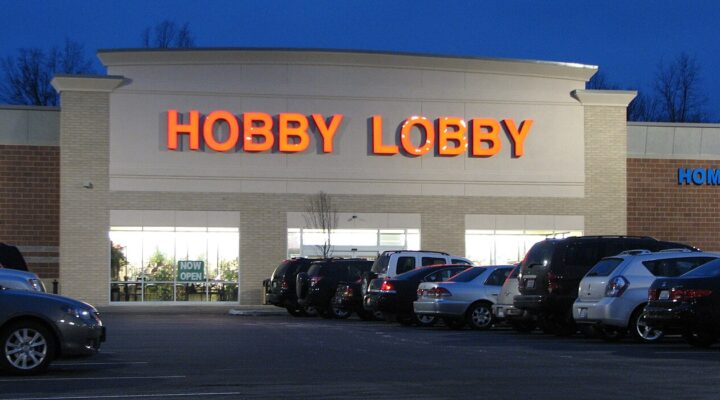
In one 2014 case before the U.S. Supreme Court, Burwell v. Hobby Lobby Stores, justices were asked to decide whether requiring a corporation to provide insurance coverage that includes contraception under the Affordable Care Act created a “substantial burden” on the corporation with religious objections and whether corporations are covered by RFRA. The court ruled that closely held for-profit corporations such as Hobby Lobby are exempt from complying with the ACA contraception mandate based on the company’s religious belief under RFRA.
“RFRA was never intended to be a license to use religion to harm others,” according to a statement from the American Civil Liberties Union. “Misusing RFRA harms vulnerable groups — such as LGBTQ individuals, women, religious minorities and nonreligious people — undermining the principles of fairness and equality. For instance, federally funded child welfare agencies in South Carolina were allowed to discriminate against Catholic, Jewish and LGBTQ folks, making it harder for children to find loving homes. Under RFRA, corporations are attempting to refuse employees insurance coverage for contraceptives, PrEP, and HIV treatments based on religious objections, restricting access to vital health care.”
Not everyone in the original RFRA coalition supports the “Do No Harm Act,” however, because some say the needed fix is not legislation but more faithful verdicts from the courts.
Under the bill, RFRA would be declared inapplicable to laws or the implementation of laws that:
- Protect against discrimination or require the promotion of equal opportunity (such as the Civil Rights Act of 1964)
- Require employers to provide wages, other compensation or benefits, including leave
- Protect collective activity in the workplace
- Protect against child labor, abuse or exploitation
- Provide for access to, information about, referrals for, provision of, or coverage for any health care item or service
The bill also would prevent RFRA from being used to deny goods or services the government has agreed to provide to a beneficiary or a person’s full and equal enjoyment of a government-provided benefit.
Critics of the Do No Harm Act say it would limit the right of religious individuals and institutions to go to court to protect their religious exercise — thereby having the opposite effect intended by RFRA.
In the current Congress, the bill was reintroduced last week by U.S. Reps. Bobby Scott, D-Va.; Jamie Raskin, D-Md.; Steve Cohen, D-Tenn.; Mary Gay Scanlon, D-Pa.; and U.S. Sen. Cory Booker, D-N.J.
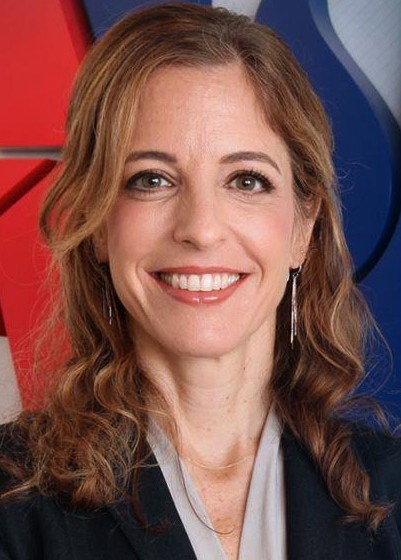
Rachel Laser
Rachel Laser, president of Americans United, is among the advocates for the Do No Harm Act, which she says will “ensure that religious freedom — one of our country’s founding principles — is not misused as a sword to harm others and instead remains a shield that protects everyone’s freedom to live as themselves and believe as they choose.”
The problem, she contends, is that Christian nationalists and their political allies have exploited RFRA “to license discrimination against LGBTQ people, women, religious minorities, nonreligious people and other vulnerable communities. … RFRA was never meant to be weaponized as a tool to circumvent nondiscrimination protections and deny people access to health care, jobs and government-funded services.”
More than 100 civil rights, LGBTQ, reproductive rights, health, labor and faith groups have endorsed the Do No Harm Act. That includes The United Methodist Church General Board of Church and Society; T’ruah: The Rabbinic Call for Human Rights; United Church of Christ Justice and Witness Ministry; Uri L’Tzedek: Orthodox Social Justice; Presbyterian Church (USA); American Baptist Home Mission Society; Circle Sanctuary; Disciples Center for Public Witness; Global Justice Institute, Metropolitan Community Churches; KARAMAH; and the National Council of Churches.
Related articles:
Does landmark religious freedom legislation need a fix or is it fine as is? | Analysis by Mark Wingfield
Do No Harm Act seeks to rein in RFRA claims