

Brent Laytham, a former professor of theology at North Park Theological Seminary in Chicago and currently running the ecumenical division of America’s first Catholic seminary, has edited a fascinating book titled God Is Not … . The book — written by members of The Ekklesia Project who are committed to promoting genuine Christian discipleship — identifies who “God is not.”
Laytham’s final chapter summarizes who they all believe God is, based upon the Nicene Creed’s confession that God is “one, holy, catholic and apostolic.” The intriguing topics these scholars have chosen describe the divine who is not religious, nice, “one of us,” an American or a capitalist.
God is not
In his introduction, Laytham explains the idea for this volume was prompted by his seminary’s decision to launch a campus-wide discussion in the 2002 school year addressing the question, “Who is God?” During that year of fruitful reflections, he recalled Thomas Aquinas’ assertion that we cannot know who God is without recognizing who God is not.
Robert Sellers
The 13th-century philosophical atmosphere at the University of Paris led Aquinas to claim that “God is not embodied, God is not material, God is not contained within the world, and so forth.” Appropriating Aquinas’ “strategy of negation,” but addressing the political atmosphere of 21st-century America, The Ekklesia Project friends decided upon the five negative identities for God they would explore.
Laytham recognizes that “God is not male” and “God is not white” are powerfully true statements, but they have been addressed in other places so were left out of their book.
Twenty years later, God Is Not … remains relevant and important. Many Christians still misunderstand who God is, or worse, misrepresent the nature and mission of God. Misunderstanding may be attributed to the Apostle Paul’s acknowledgement that we do not grasp things of the Spirit clearly: “For now we see only a reflection, as in a mirror, but then we will see face to face. Now I know only in part; then I will know fully, even as I have been fully known.”
“Misrepresenting is more serious than misunderstanding.”
It is logical for finite human beings not to understand everything about the infinite God. But misrepresenting is more serious than misunderstanding. The apostle confesses that as children we speak, think and reason like a child, yet when we are adults it is time to begin seeing God, ourselves and the world like adults. Misrepresenting the truth about God, then, may indicate not just our inability but our blatant refusal to understand the divine properly.
A flagrant misrepresentation of what it means to identify with and follow after God is spreading throughout Christian America, perhaps most especially in the evangelical world. Recently, it has been termed “Christian nationalism.” There are numerous helpful articles and books available that explain and engage this issue.
It seems important to me, however, that another assertion must be made about who God is not. Thus, I am addressing the topic, “God is not … a Christian.” I am certainly not the first Christian to reach this conclusion. Influential books by three professional Christian ministers from diverse backgrounds make this claim.
God is not … a Christian
Carlton Pearson
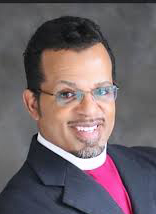
Bishop Carlton Pearson was a pastor and gospel music artist who once led the Higher Dimension Family Church, one of the largest congregations in Tulsa, Okla. His theological ideas — especially his belief in universal reconciliation — brought him into conflict with the Joint College of African American Pentecostal Bishops who declared him a heretic in 2004. He ultimately left the church and later became interim senior minister of Christ Universal Temple in Chicago, a New Thought congregation. Returning to Tulsa, he then became an affiliate minister at All Souls Unitarian Church.
In his book God is Not a Christan, Nor a Jew, Muslim, Hindu, Pearson contends that “God belongs to no particular religion but is an ever-loving presence available to all.”
Pearson says he is a Christian, but God is not. In a sermon at All Souls in 2010, he said:
God is not a Christian. God is not a Jew, Muslim, Hindu, Buddhist, Shintoist, Agnostic. … God cannot be defined by or confined to any of those disciplines. You can express yourself as a Christian or as an agnostic, or as a Jew, Hindu or Muslim. But you can’t confine God to that expression and deprive others of their experience of God.
God is bigger than any one religious or spiritual understanding. God is known throughout the world by different names.
“God is bigger than any one religious or spiritual understanding.”
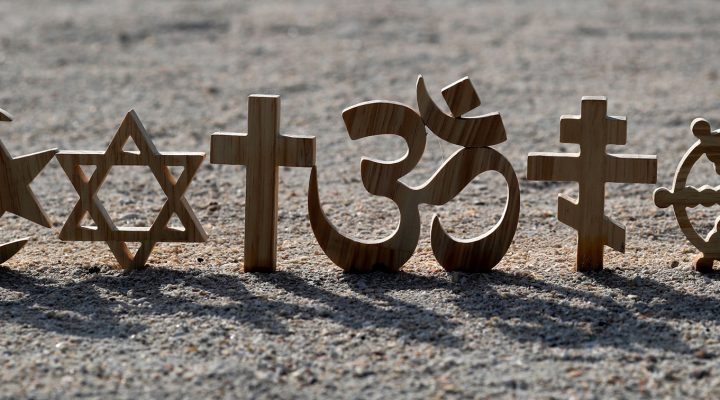
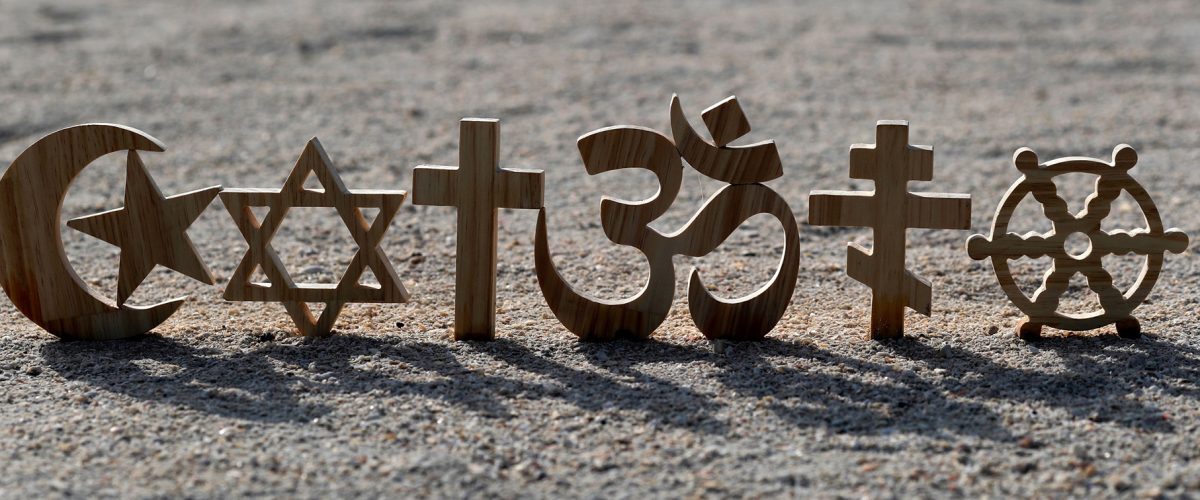
God is not a Native American or African religionist, nor a Sikh, Zoroastrian, Hindu, Muslim, Jew or Christian. God is none of these and all of them.
The Jewish Shema speaks of the unity of the one God: “Hear, O Israel: The Lord our God, the Lord is one.” But this one God is pleased to be honored and followed by people from all these religious traditions, and more.
A beautiful coffee table book is the National Geographic presentation of photos and texts of places where humans have connected with the divine, titled Sacred Places of a Lifetime: 500 of the World’s Most Peaceful and Powerful Destinations. Introducing the “Cradles of Faith,” the editors write:
Every religion has its own sacred geography — the places where the founders of the great faiths were born or buried, sites of purported revelations, vital landmarks on personal and collective journeys, shrines where holy texts and images have been created or preserved. While sacred to their followers, many of these places offer inspiration and insight to travelers of many faiths, or none.
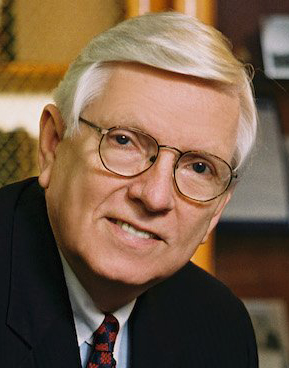
Kirby Godsey
Kirby Godsey, a retired educator, author and former president of Mercer University for 27 years, is a member of a church in Macon, Ga., associated with the Cooperative Baptist Fellowship. In his controversial book, Is God a Christian?, Godsey clarifies that out of the world’s almost 7 billion people, about 2.2 billion claim to be Christian. Although Christianity is growing at a modest rate, other world religions are expanding more quickly, thus it is possible that Islam will become the world’s largest religion by the end of the 21st century. Yet, he contends, in this spiritual competition “Christians seem certain that God is on their side.” God, they are convinced, is a Christian.
No, he says. God is not a Christian, for God is everywhere.
“We are more likely to meet God in our tattered-and-torn ordinary places with their broken shutters and rusted pipes than in the most high holy of holies,” he wrote. “God lives on the street, on the subway, even inside the barbed-wire fence of Guantanamo. God has never been a captive of our sanctuaries.”
While God is in the centers of power and privilege, God is also at the margins, on the edges of powerlessness and disadvantage, as theologian Aimée Upjohn Light argues in God at the Margins: Making Theological Sense of Religious Plurality.
Continuing this thought, Godsey explains that throughout human history many people have encountered “the ineffable presence of the holy and framed that encounter in many languages.” Our problem, however, is that “we find ourselves seeking to contain God within a specific religious tradition and to tame an otherwise elusive God with catacombs of doctrine and theological systems.”
We are plagued by our own certainty about who we believe God is. Our fear and arrogance “make it difficult to open a creative dialogue with other religions.” For Christians to speak honestly and listen respectfully in conversations with persons of other religious traditions is important because “it is possible, and even likely, that all of the major religions can become sources of light and truth if we have the courage to listen.”
“The plague of certainty leads to the peril of exclusivity,” Godsey contends. This exclusivity is a problem for Christians, because God loves the whole world and makes godself known in many faces. That is why — perhaps most radically to many of his fellow Baptists — he writes:
Christians need to get over it. Jesus is not God’s only word. That reality does not diminish for Christians that Jesus is the Word that has set them free. Creation itself is also God’s word. Adam is God’s word. Mother Teresa, Muhammad, Pope John XXIII, Mahatma Gandhi, Albert Schweitzer, Martin Buber, Billy Graham, Martin Luther King Jr. are surely words from God. Every person is a word from God that has never before been spoken and will never be spoken again in exactly the same way. The clarity and the purity of God’s word spoken in each of us can become so twisted and distorted that God’s real presence, which is God’s word incarnated in our lives, becomes unrecognizable.
My wife and I were part of the missionary movement of the church for 25 years. I have heard, all my life, that unless Christians are able to win others to faith in Jesus, the “unsaved” are destined to spend eternity suffering in separation from God. But it doesn’t reflect the nature of a loving God to think that only one-third of God’s children in the world — the Christians — are acceptable to God, or that God has only revealed godself salvifically through a Jewish teacher 2,000 years ago from a backwater town in the Middle East.
In fact, as missionaries we always were aware that before we spoke to people whom we assumed needed to know God, they already recognized that the divine — by whatever name they knew — had been working in their lives.
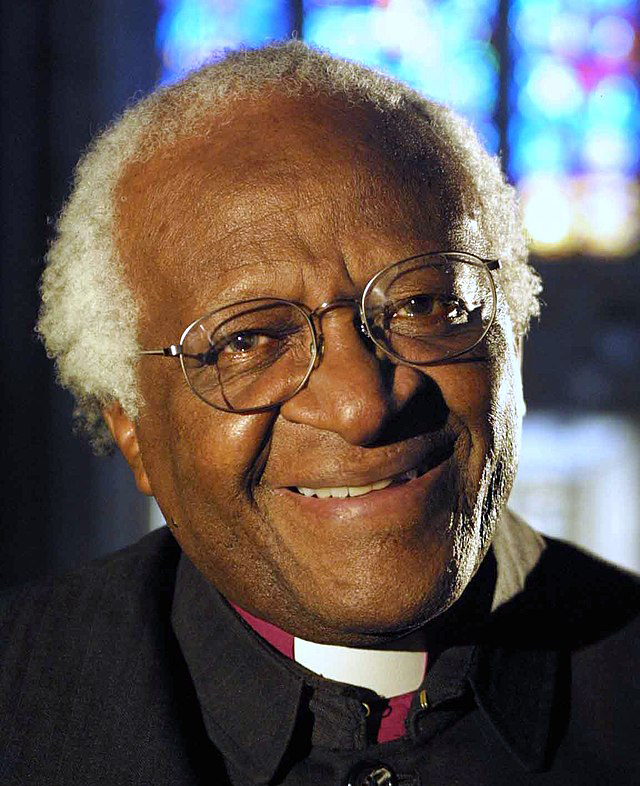
Desmond Tutu
Desmond Mpilo Tutu, the late Anglican archbishop of Cape Town, South Africa, won the Nobel Peace Prize for his efforts to end apartheid and was awarded the U.S. Presidential Medal of Freedom in 2009 by Barack Obama. His dear friend, the Dalai Lama, said of Tutu: “His unofficial legacy will be his life and the story of how this tiny pastor with a huge laugh from South Africa became our global guardian.”
In his book God is Not a Christian and Other Provocations is recorded a 1989 address Tutu delivered at a forum for leaders of different faiths, held in Birmingham, England. He said: “Our perspective differs with our context, the things that have helped to form us; and religion is one of the most potent of these formative influences, helping to determine how and what we apprehend of reality and how we operate in our own specific context.”
Then Tutu makes declarations.
First, he says, “The accidents of birth and geography determine to a very large extent to what faith we belong.” In other words, if I had been born an Indonesian, I likely would have been a Muslim, but if I came from India then I probably would be a Hindu. Thus, he suggests that “we should not succumb too easily to the temptation to exclusiveness and dogmatic claims (about) the truth of our particular faith,” because if it were not for the accident of our birth, we might be a follower of the very religious path we are now denigrating.
“Christians must welcome and respect the Religious Others, with their differences rather than trying to make them compatible with our own religious identity.”
Second, Tutu warns “not to insult the adherents of other faiths by suggesting, as sometimes has happened, that for instance when you are a Christian the adherents of other faiths are really Christians without knowing it.” Rather, he insists, Christians must welcome and respect the Religious Others, with their differences rather than trying to make them compatible with our own religious identity.
Finally, the archbishop writes:
Surely it is good to know that God (in the Christian tradition) created us all (not just Christians) in his image, thus investing us all with infinite worth, and that it was with all humankind that God entered into a covenant relationship, depicted in the covenant with Noah when God promised he would not destroy his creation again with water. Surely we can rejoice … that what we call the Spirit of God is not a Christian preserve, for the Spirit of God existed long before there were Christians, inspiring and nurturing women and men in the ways of holiness, bringing them to fruition, bringing to fruition what was best in all.
In teaching my university Bible and theology classes, when I began to suggest that God speaks to people of other faiths, even redemptively, I often had undergraduate students who would quote John 14:6 — “I am the way and the truth, and the life. No one comes to the Father except through me” — or Acts 4:12 — “There is salvation in no one else, for there is no other name under heaven given among mortals by which we must be saved.” That is precisely the implication of the opening of the Gospel of John, however, which says: “In the beginning was the Word, and the Word was with God, and the Word was God. … In him was life, and the life was the light of all people. … The true light, which enlightens everyone, was coming into the world.”
Given these verses from the fourth Gospel, Tutu concludes: “To claim God exclusively for Christians is to make God too small and in a real sense is blasphemous. God is bigger than Christianity and cares for more than Christians only. … God is not the special preserve of Christians and is the God of all human beings.”
What then?
I believe Aquinas was correct in asserting that affirming who God is not will help us better understand who God is. Recognizing that God is not a Christian is an important way to more clearly grasp the nature and mission of the all-loving God we worship.
God cannot be confined to only one religious expression, for God is bigger than that. To constrain God in that way discounts the experience others have had with the divine. God reveals godself in unexpected places and ways, and so we must not think God is only found where we anticipate God to be.
We must not submit to the plague of certainty or the peril of exclusivity as we think about God’s identity and purpose. Because the place and time of our birth in large measure shapes, even determines, how we encounter the divine, we cannot judge the religious understanding of others whose context differs from our own. Scriptures themselves attest to the universal love of God and that God engages in the lives of all peoples throughout the world.
I, for one, am grateful God is not bound by the limitations and judgments of Christian exclusivism. I believe I know more fully who God is when I understand that God is not a Christian.
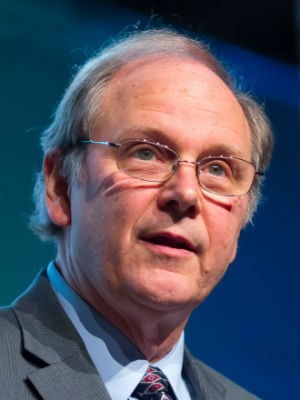
Rob Sellers is professor of theology and missions emeritus at Hardin-Simmons University’s Logsdon Seminary in Abilene, Texas. He is a past chair of the board of the Parliament of the World’s Religions in Chicago. He and his wife, Janie, served a quarter century as missionary teachers in Indonesia. They have two children and five grandchildren.
Related articles:
Walking a Christian pluralist path | Opinion by Robert Sellers
To understand pluralism, think of a potluck
The one thing that unites the world’s religions | Opinion by Robert Sellers