

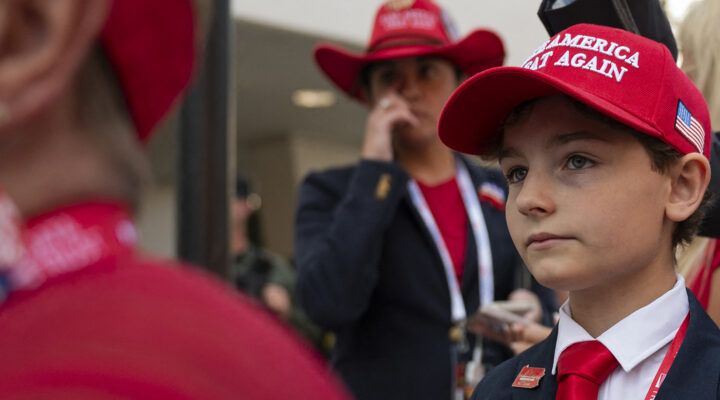
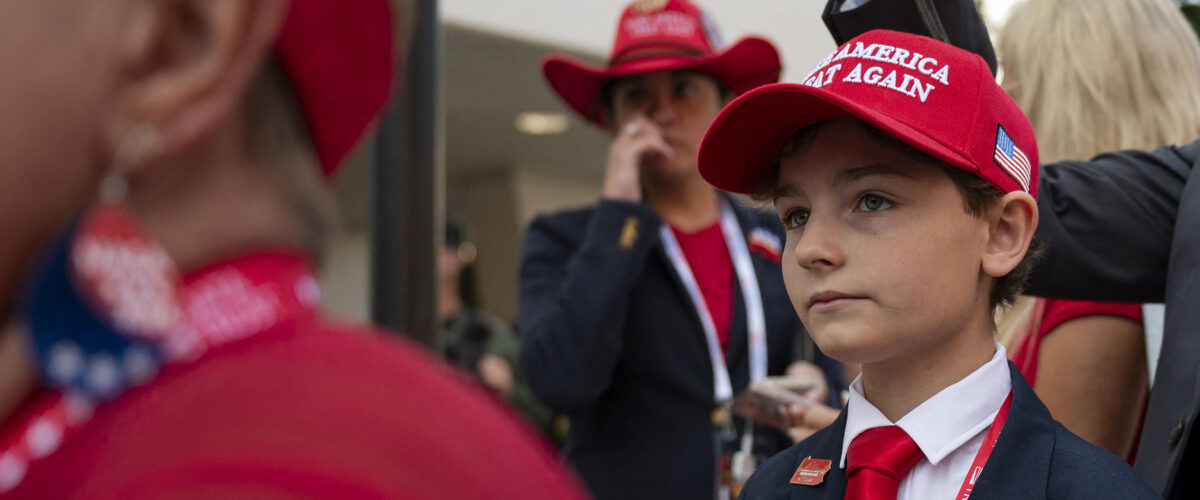
Walking into my son’s Atlanta-based Jewish school, I was immediately confronted with a sight that left me unsettled: a child dressed as President Donald Trump, complete with a white MAGA hat, for Purim.
As I processed my reaction, I considered the broader psychological and social ramifications of the Make America Great Again slogan and ideology, particularly within diverse communities, religious schools and workplaces. This politically charged phrase extends far beyond simple partisan support and has lasting mental health implications, especially for those who do not align with its ideology or have been directly affected by policies associated with it.
Psychological and social ramifications

Nicole Wiesen
The presence of MAGA in public and private educational spaces — especially religious schools — poses significant psychological risks for children and families from historically marginalized backgrounds. The politicization of this slogan has led to emotional distress, re-traumatization and a sense of alienation among Jewish, Hispanic, immigrant and other vulnerable communities.
For many Jewish families, the rise of nationalism linked to MAGA ideology echoes deeply painful historical memories. The Trump administration’s associations with white nationalist groups and controversial policies regarding immigration and religious liberties have heightened anxiety among Jewish voters, many of whom did not support him.
“For many Jewish families, the rise of nationalism linked to MAGA ideology echoes deeply painful historical memories.”
For Jewish businesses that employ Hispanic workers — one of the groups frequently targeted by MAGA rhetoric — the presence of this ideology in educational settings can create an atmosphere of unease and fear. The Anti-Defamation League has documented an increase in antisemitic incidents coinciding with the rise of MAGA-related political activity.
Additionally, families affected by federal government cuts, restrictions on birthright citizenship and opposition to interfaith and interracial marriages face heightened stress due to policies pushed under the MAGA banner.
The targeting of immigrants and marginalized groups is not just a political issue; it is deeply personal for those who see their loved ones impacted daily. Studies have shown that exposure to political symbols linked to exclusionary policies can trigger symptoms of anxiety and depression among individuals from affected groups.
Origins and weaponization of MAGA
While slogans similar to “Make America Great Again” have been used in past political campaigns — most notably in 1980 by Ronald Reagan — its modern iteration has taken on a highly politicized and divisive connotation. Under the Trump administration, the phrase has become more than just a campaign slogan; for many, it symbolizes exclusion rather than unity.
This is especially true for immigrants, people of color and Jewish communities who have faced direct consequences from the administration’s policies.
When MAGA is introduced into school environments, it exacerbates tensions, making some students feel unwelcome or unsafe. This is particularly evident in religious schools, where students of diverse backgrounds — including Palestinian Jews — should feel protected and valued. If a school takes issue with a Palestinian child displaying their national flag, then it also must recognize the emotional harm of allowing another student to openly wear MAGA branding. Both are political symbols that evoke strong emotions, and permitting one while banning the other reflects an inconsistency that fosters division.
“When schools permit students to wear symbols of a deeply polarizing movement, they risk normalizing a divisive ideology while marginalizing others.”
The historical parallels of nationalism and exclusionary rhetoric should not be ignored. Research indicates nationalist slogans, when incorporated into mainstream discourse without critical discussion, can foster an “us vs. them” mentality that alienates minority populations. When schools permit students to wear symbols of a deeply polarizing movement, they risk normalizing a divisive ideology while marginalizing others.
Ethical and educational responsibility
Educational institutions have an ethical responsibility to prioritize the well-being of all students, regardless of their families’ political affiliations. The argument that ignorance of political nuances excuses the use of MAGA in schools is flawed. The phrase carries clear ideological implications, and whether intended or not, its presence can alienate students from Jewish, Hispanic, immigrant and other minority communities.
A core principle of education is to foster a safe and inclusive environment. The presence of MAGA-related attire and rhetoric in schools undermines this mission by normalizing a phrase that has been used to justify xenophobic, antisemitic and exclusionary policies. The National Association of School Psychologists emphasizes that schools must be spaces where all students feel emotionally and physically safe.
Promoting inclusivity means recognizing when certain slogans, symbols or rhetoric contribute to historical and ongoing oppression. It is not about silencing political beliefs but about acknowledging the weight of words and the mental health toll they carry.
Schools must balance free expression with their responsibility to provide an inclusive learning environment. The presence of politically charged slogans in educational settings forces marginalized students into a space of discomfort, where they must navigate the trauma and fear associated with a movement that has actively worked against their communities.
Addressing the harm and moving forward
A school’s refusal to acknowledge the harm caused by allowing MAGA attire on campus exemplifies a broader issue in American society: the failure to recognize how certain political movements disproportionately affect marginalized groups.
One solution is to implement clearer policies regarding political attire in schools, ensuring all students feel safe and included. This means having transparent guidelines about what constitutes politically charged imagery and fostering open discussions about how different communities perceive these symbols.
Furthermore, mental health support must be made available for students who feel alienated by such political expressions in school settings. Counselors and school psychologists can play a vital role in helping students process their emotions and advocate for a school culture that prioritizes mental well-being over political expression that divides.
The psychological and social ramifications of the MAGA slogan extend far beyond political affiliations. Schools have an ethical and educational responsibility to foster inclusive environments where all students feel respected and valued. Ignoring the concerns of families affected by MAGA’s divisive legacy only perpetuates the cycle of trauma and exclusion.
Moving forward, we must challenge institutions to acknowledge the weight of political symbols and take active steps toward ensuring schools remain safe spaces for all students.
Nicole Wiesen serves as director of communications for Georgians for Alternatives to the Death Penalty and is a a Public Voices Fellow on racial justice in early childhood with the OpEd Project in partnership with the National Black Child Development Institute. She advocates for advancing mental health resources for previously incarcerated individuals