

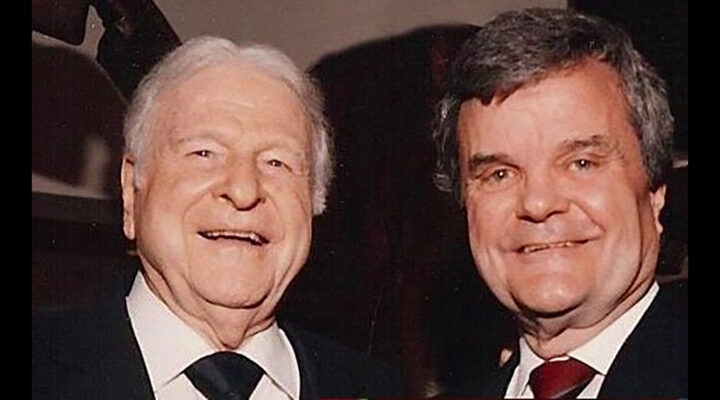
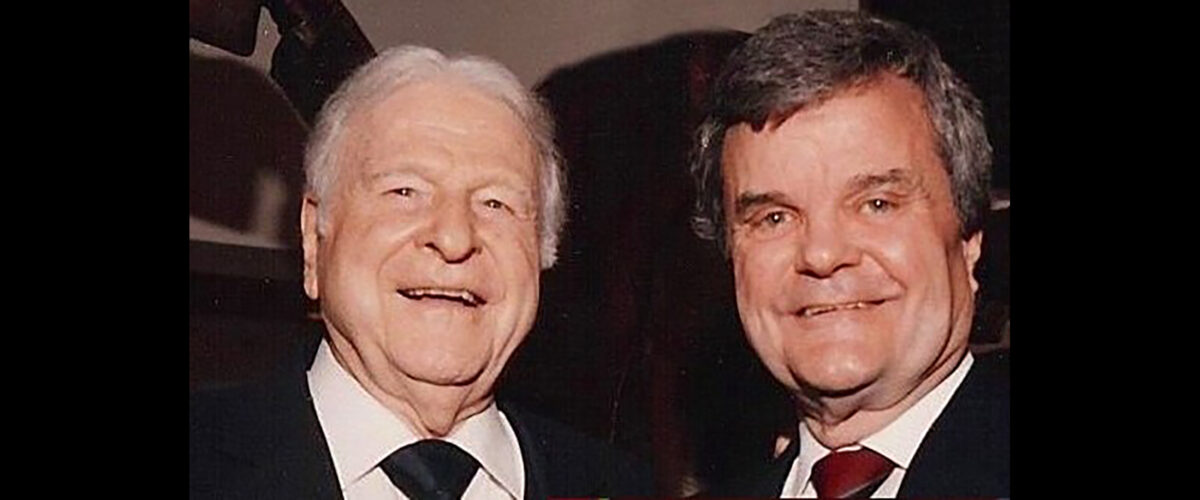
Tuesday evening, March 18, we received word from a mutual friend that Jack Pogue, the faithful Baptist layman, Dallas-area real estate developer and quiet denominational benefactor, had passed at age 90.
At the time of his death, untold scores of millions of his personal wealth had financed building campaigns across the Southern Baptist Convention, underwritten one of the most successful private evangelical foundations, endowed countless seminary scholarships and professorial chairs, and infused much-needed cash into convention entities, one of which was increasingly desperate to offset successive years of administrative malfeasance.

Benjamin Cole
I first learned of Jack Pogue when reading Joel Gregory’s tell-all book, Too Great A Temptation, a captivating saga of his own rise and fall as one of the most sought-after preachers in modern evangelicalism.
“A leprechaun of a man” is how Gregory described Pogue in the book.
Indeed, there was something gnomish about Pogue, who was by far the most territorial protector of the W.A. Criswell legacy, both as a layman at First Baptist Dallas and eventually as Criswell’s closest personal friend and final caretaker when Criswell’s wife expelled the aging pastor from their spacious home on Swiss Avenue.
In the mid 1990s, as I began a year of studies at Criswell College, I had the chance to meet both Pogue and W.A. Criswell, even sharing a meal with the two of them in the private dining room underneath Ruth Ray Hunt Chapel in the newly renovated campus of what had been the Gaston Avenue Baptist Church. It was clear from that first meeting that everything about Pogue revolved around his devotion to Criswell.
Over the years, his business acumen had helped Criswell amass his own private fortune, much of which was used to fill Betty Criswell’s home with expensive European artwork and antiques. At other times, Pogue’s keen real estate brokering single-handedly rescued First Dallas from indebtedness and near disaster. The move, which secured lucrative rental contracts, managed to keep at bay a gaggle of disgruntled deacons who sought Criswell’s ouster from a pastorate then surpassing four decades.
Literally no one, neither usurpative ministry associates nor conspiring church officers nor avaricious denominational powerbrokers nor a bitter and contentious spouse, could touch Criswell or his legacy so long as Pogue was standing guard.
“No one could touch Criswell or his legacy so long as Pogue was standing guard.”
Those who attempted to snipe at Criswell, or poach his wealth, or undermine his leadership, would find Pogue in their path. If a cause or program or campaign would extend the ministry reach of Criswell’s pulpit, Pogue would be there with a generous check in hand. If not, no amount of harassing entreaty, Machiavellian bullying or spiritual manipulation could move him.
And this is how we really got to know Jack Pogue.
Beginning in 2006 at a concierge lounge during the SBC annual meeting in Greensboro, N.C., we sat with Pogue and a young pastor friend for more than an hour listening to him tell stories of how he had protected Criswell from the nastiest years of spousal abuse. He even overrode Betty Criswell’s adamant refusal to allow a Bible to be placed in Criswell’s hands when he was buried.

Jack Pogue
The stories he told over the years shocked and enraged me. Yet he made me promise — as he had promised Criswell himself — never to write negatively about those matters until both he and Mrs. Criswell were dead.
I’ve kept that promise.
From 2006 forward, I’ve kept up with Pogue with occasional phone calls, postcards and lunch appointments. Every time I would drive through Texline, Texas, I would send Pogue a postcard or letter from Criswell’s hometown.
When I moved back to Texas in 2019, Pogue and I started meeting occasionally for lunch, either at the Dallas Country Club (where Pogue would drive his old Mercedes) or at a nearby Mexican restaurant. One day during the COVID lockdown, Pogue tried to sneak me into the Dallas Country Club for lunch because they were not allowing nonmembers to come. Our sneak attack failed, and we ended up driving to nearby Highland Park for enchiladas and nachos at Mi Cocina. That day, he let me pay.
“The stories he told over the years shocked and enraged me.”
Pogue told me stories of being alone with Criswell for months on end as the elder pastor was in failing health. He told me of Criswell sitting at the breakfast table, thick reading glasses perched on his nose, trying to write just one last sermon. He told me about the backstory of Criswell’s last outside preaching engagement at the Jacksonville Pastor’s Conference, which I got to attend in person and hear Criswell rise from feeble and weakened capacity to thunder from the pulpit about the Bible and its “old, old story.”
Pogue told me about the efforts Dorothy Patterson made to solicit his financial backing for the acquisition of fake Dead Sea Scrolls, and how he refused her petitions. And then he told me a story that had us both rolling with laughter.
More than a decade ago, Pogue decided to give $1 million each to Southeastern Seminary in Wake Forest, N.C., New Orleans Seminary, Southern Seminary in Louisville, Ky., and Southwestern Seminary in Fort Worth. He had all the paperwork drawn up and the gift agreements executed.
Then, unannounced, he received a surprise visitor from Fort Worth to his office on McKinney Avenue in Dallas. Behatted, boisterous and summoning all her fundraising charms, Dorothy Patterson told Pogue she’d “been in the area” and decided to drop by and see him. Soon into their visit, Patterson told Pogue he was dishonoring Criswell’s legacy by giving money to Southern Seminary, due to the school’s “Calvinist leanings.”
Pogue told me he listened to Dorothy Patterson’s grievances about his charitable decisions, and then told her flatly: “Mrs. Patterson, I can either do what God tells me to do or I can do what you tell me to do. God told me to give that money, and I’m going to do what he says.”
At that point, according to Pogue’s on-the-record narrative, Dorothy Patterson stood up, leaned over the desk, and screamed at him. “She looked like she had a demon,” Pogue told me.
“Pogue and I both laughed so hard the wait staff wondered if we’d gone mad.”
I replied, “Well, Jack, I’ve never seen a Dorothy that had a demon. But I think I’ve seen some demons that had a Dorothy.”
Pogue and I both laughed so hard the wait staff wondered if we’d gone mad. It was a lighthearted moment but deepened my appreciation for Pogue, his discernment and his singular focus on obedience to God’s guidance.
“You can’t tell that story until I’m dead,” Pogue reminded me as he had so many other times.
As I’ve reflected on Pogue’s death, I’ve thought about one of the great tragedies of the so-called “conservative resurgence” in the Southern Baptist Convention. Despite all the hopefulness about the movement’s evangelical success, the convention has been thus far unable to replace its most legendary pulpit giants.
Gifted orators like Adrian Rogers and W.A. Criswell have left voids no pastor has been able to fill. Their evangelistic fervor and expository prowess, which are appreciated even by those whose denominational and theological alignments have taken them out of fellowship with Southern Baptists’ increasingly conservative confession, have not transferred to a second generation.
Even the churches those men served, Bellevue Baptist in Memphis and First Baptist Dallas, have struggled with something akin to Second Temple Judaism after their passing. Like Zerubbabel of old, their successors have maintained so many of the rites and rituals, but something of the glory has departed. For those of us who sat under their preaching, enjoyed private fellowship with them, and even sensed God’s call to ministry service in their shadows, the grief is both real and profound.
Similarly, the conservative resurgence has failed to produce laymen like Jack Pogue, men so singularly focused on channeling their private fortunes into gospel advance. For the last two decades of his life, Pogue spent most of his days listening over and over to Criswell’s sermons, editing transcripts, ensuring that Scripture references were accurate, and funding their translation into countless foreign languages.
“The conservative resurgence has failed to produce laymen like Jack Pogue.”
A few years ago, I interviewed a Southern Seminary graduate who had chaperoned and chauffeured Criswell during his last visit to the campus. Late at night, he told me, he could hear Criswell in the next room on the phone with Jack Pogue. He was telling him about his day, about what he’d seen and heard on campus, about his impressions of its young president, Albert Mohler, and about his desire to return home to Dallas.
“It was odd,” Criswell’s young aide told me. “It was the kind of conversation you ordinarily expect to hear a man having with his wife. It was tender, loving and transparent.”
I was struck by that description, because ours is a generation that knows little of the kind of love — biblically defined and properly expressed — that Jonathan had for David, or Jesus had for John. We are unaccustomed to seeing, hearing or expressing that kind of love without assuming something prurient, unholy or perverse.
Yet Jack Pogue knew that love. Criswell knew that love. And because of their shared love for Jesus, the Bible and the consistent, unyielding and unapologetic preaching of the unsearchable mysteries of Christ, generations hence will be able to hear firsthand through wacriswell.com an irrefutable proof that there once was a giant among Southern Baptists.
And behind that giant was a tireless leprechaun of a man whose guardianship, generosity, determination and relentless love for his pastor now warrants those oft-expressed but seldom deserved words, “Well done, thou good and faithful servant.”
Rest in peace, Jack. Your work on earth may have finished. But its fruit will remain for generations to come.
Benjamin S. Cole is a crisis communications consultant who lives in Plano, Texas, and tweets about SBC life under the pen name The Baptist Blogger. He is co-host with Mark Wingfield of BNG’s podcast, “Stuck in the Middle with You.” He is nearing completion of a 20-year writing project with the working title, The Fall of the Red Bishop.