

Seventy days into President Donald J. Trump’s second administration, the United States already has seen sweeping changes to its domestic and foreign policy. With Project 2025, Agenda 47 and an aggressive Republican-led Congress, Trump has pushed forward a vision that supporters call a restoration of American greatness — while critics argue it is a rollback of democracy and civil rights.

Edmond W. Davis
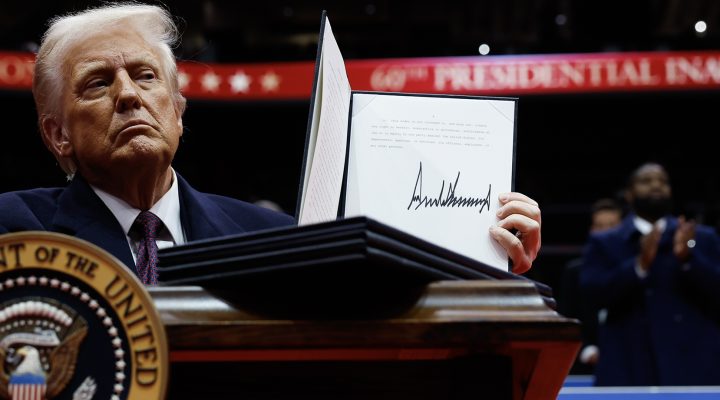
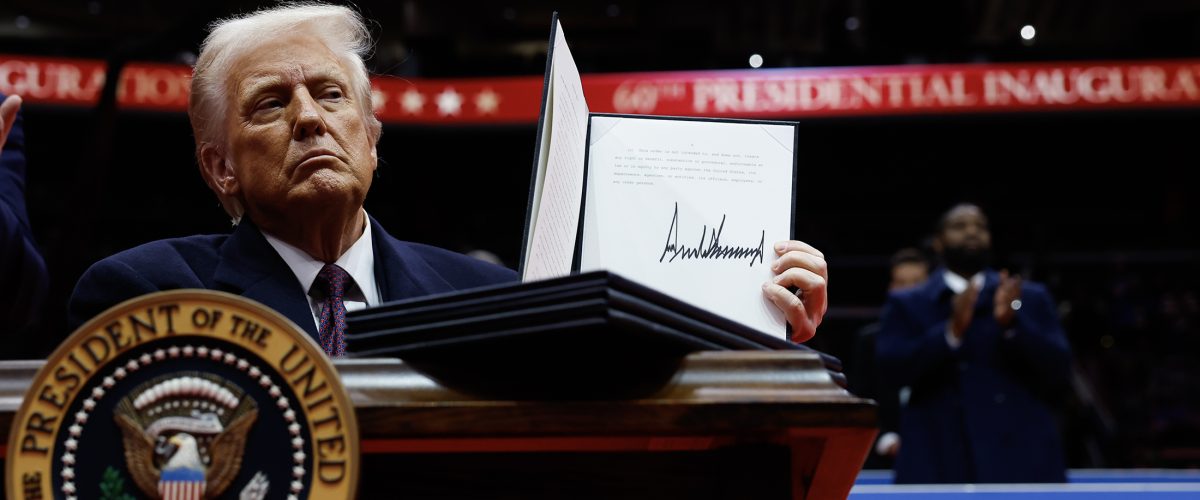
Hours after returning to the White House, Trump signed a record-breaking 78 executive actions, effectively dismantling key policies enacted under President Joe Biden. The most immediate and controversial decisions included:
- Revoking anti-discrimination protections: Repealing Biden’s executive orders on workplace discrimination, LGBTQ rights and Title IX protections for transgender students.
- Immigration crackdown: Declaring a national emergency at the southern border, greenlighting military deployment and reinstating child separation policies at detention centers.
- U.S. withdrawal from global agreements: Trump officially withdrew the U.S. from the Paris Climate Agreement and the World Health Organization, citing “American sovereignty.”
- Government workforce overhaul: Reinstating Schedule F, a measure that gives Trump the power to fire thousands of career civil servants.
- Elimination of diversity, equity and inclusion programs: Defunding federal programs related to racial equity and social justice initiatives.
In one of the most divisive actions of his presidency, Trump pardoned 1,500 individuals charged in the January 6 assault on the U.S. Capitol. Among those released were convicted leaders of the Proud Boys and Oath Keepers, as well as individuals serving lengthy sentences for seditious conspiracy.
Trump’s justification? He labeled them “J6 hostages” and accused the Biden administration of persecuting “true patriots.”
This move already has triggered protests in Washington, D.C., and has led to legal battles over the limits of presidential pardon powers.
“On foreign policy, Trump has made us a nation turning inward.”
Trump’s administration, with strong backing from JD Vance and Project 2025 architects, has proposed a massive tax overhaul that critics claim will disproportionately benefit corporations and high-income earners. Meanwhile, cuts to government assistance programs are expected to hit America’s most vulnerable populations hardest:
- Massive cuts to Social Security and Medicare: Trump’s budget proposal suggests raising the retirement age and reducing disability benefits.
- SNAP and WIC funding slashed: The Supplemental Nutrition Assistance Program (food stamps) and Women, Infants and Children (WIC) programs face $40 billion in funding cuts.
- Privatizing education: Federal funding for public schools has been slashed, funneling billions into school voucher programs and religious charter schools.
On foreign policy, Trump has made us a nation turning inward.
- Tariffs and trade wars: Trump imposed a 25% tariff on imported cars, sparking retaliation from Canada and Mexico. Global markets are bracing for a potential trade war.
- Mass deportations and mega-prisons: The administration has aggressively ramped up deportations, sending thousands of asylum seekers and alleged gang members to new mega-prison facilities in El Salvador.
- Military and defense moves: Trump’s Department of Defense reportedly has scaled back support for Ukraine while proposing an increase in military presence at the U.S.-Mexico border.
Trump has publicly vowed to exact retribution against those who opposed him during his first term. So far, actions include:
- Launching investigations into opponents: His Department of Justice has reopened investigations into Hunter Biden, Hillary Clinton and top Democratic donors.
- Defunding legal aid groups: Organizations that previously pursued legal action against Trump — such as the ACLU and NAACP Legal Defense Fund — have lost federal funding streams.
- Lawsuits against media outlets: The Trump campaign has initiated defamation lawsuits against major news outlets, including CNN and the Washington Post.
- State-level crackdowns: Reports indicate the administration is exploring ways to pressure states to roll back voting rights protections and implement strict voter ID laws.
The public response has been celebrations and protests.
“America under Trump 2.0 is moving full speed ahead.”
The country is deeply divided. While Trump’s supporters are hailing the “Golden Age of America,” massive protests have erupted in cities across the nation. Civil rights groups, environmental activists and immigrant advocacy organizations are mobilizing to challenge Trump’s policies in court.
Meanwhile, Wall Street is watching closely. The stock market has shown signs of volatility, with companies in tech, green energy and international trade sectors expressing concerns about economic instability.
What’s next? With Trump’s aggressive push to consolidate power, legal challenges are mounting. Democrats and civil rights organizations already filed more than 50 lawsuits contesting his executive orders. However, with a conservative-leaning Supreme Court and GOP-controlled House and Senate, many of Trump’s policies could survive legal scrutiny.
In the coming weeks, expect major fights over:
- The constitutionality of eliminating birthright citizenship
- A potential federal ban on abortion medication
- Further military actions on the border
- The future of federal election laws and voting rights
One thing is clear: America under Trump 2.0 is moving full speed ahead — whether for better or worse remains to be seen.
Edmond W. Davis is a journalist, social historian, Tuskegee Airmen global scholar and emotional intelligence expert.
Related articles:
You’ve heard of Project 2025? Now meet Agenda 47
Second Trump term: ‘We’re gonna put kids in cages. It’s gonna be glorious’ | Analysis by Kristen Thomason
No crystal ball needed to see a second Trump term: Look at Israel | Analysis by Rodney Kennedy
Project 2025, Elon Musk and the American coup d’état | Opinion by J. Basil Dannebohm