

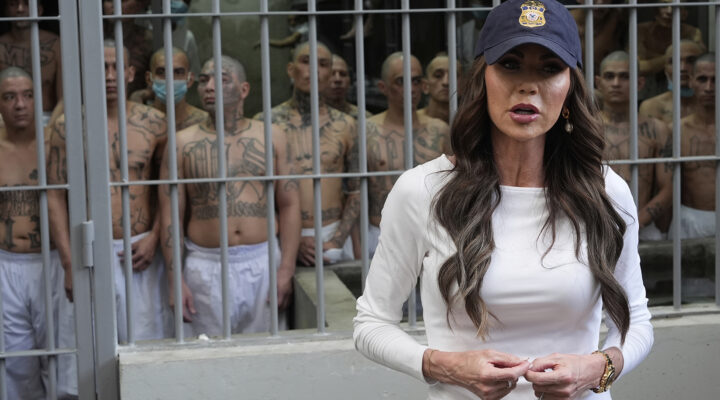

A federal judge has blocked the Trump administration from revoking the Temporary Protective Status of about 350,000 Venezuelans as a lawsuit against the federal government continues.
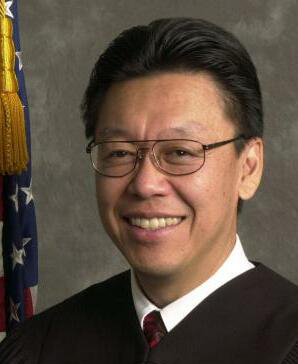
Edward Milton Chen
U.S. District Judge Edward Chen issued a 78-page decision March 31 declaring the revocation ordered by Secretary of Homeland Security Kristi Noem would be extremely harmful and unlikely to meet constitutional standards.
Rescinding TPS will likely “inflict irreparable harm on hundreds of thousands of persons whose lives, families and livelihoods will be severely disrupted, cost the United States billions in economic activity, and injure public health and safety in communities throughout the United States,” he said. “At the same time, the government has failed to identify any real countervailing harm in continuing TPS for Venezuelan beneficiaries.”
The judge also rejected Noem’s accusation that Venezuelans with TPS are criminals and gang members.
“The secretary’s rationale is entirely lacking in evidentiary support.”
“The secretary’s rationale is entirely lacking in evidentiary support. For example, there is no evidence that Venezuelan TPS holders are members of the (Tren de Aragua) gang, have connections to the gang, and/or commit crimes. Venezuelan TPS holders have lower rates of criminality than the general population. Generalization of criminality to the Venezuelan TPS population as a whole is baseless and smacks of racism predicated on generalized false stereotypes.”
At issue is former President Joe Biden’s January approval of an 18-month TPS extension for undocumented Venezuelans, enabling them to continue working and to avoid deportation through October 2026. But that move was countered by Noem, who in early February announced her intention to vacate the extension, thereby ending Venezuelans’ work authorizations April 3 and deportation protections April 7.
In response, seven Venezuelan TPS holders and the National TPS Alliance on Feb. 19 sued DHS in the U.S. District Court for the Northern District of California. The suit argues the Trump administration made its decision without undergoing the review process required by law.
“TPS holders are mothers, fathers, workers and contributing members of our community. The Trump administration has stripped TPS holders of their rights and undermined the program,” said the American Civil Liberties Union of Northern California, one of several legal groups handling the case.
The “racial animus” behind the administration’s action also violates plaintiffs’ Fifth Amendment right to equal protection, the suit contends.
“During the (presidential) campaign, and in announcing the new TPS decision, Secretary Noem and President Trump have consistently used racist tropes to dehumanize nonwhite immigrants including Venezuelans,” ACLU said.
“Secretary Noem and President Trump have consistently used racist tropes to dehumanize nonwhite immigrants.”
Chen predicted plaintiffs “will likely succeed in demonstrating that the actions taken by the secretary are unauthorized by law, arbitrary and capricious, and motivated by unconstitutional animus.”
A separate federal case filed by a group of Venezuelan and Haitian TPS holders and two advocacy organizations seeks to block the administration’s attempt to end protected status from nationals who would face persecution and extreme poverty if deported to their home countries.
“Both nations are in collapse — beset by political violence and without functioning governments or basic infrastructure. For thousands of Haitian and Venezuelan nationals living in the United States, TPS is thus literally lifesaving, allowing them to remain here instead of returning to the immense dangers of their home countries,” the complaint states.

Richard Stearns
However, a federal judge in Boston announced April 1 he would not hear arguments in the case because doing so is unnecessary given Chen’s decision on the other lawsuit, according to a report by MassLive.com.
U.S. District Court Judge Richard Stearns said the federal government “was likely to appeal the case, likely all the way to the Supreme Court, and he did not want to further complicate things by adding a separate case to the mix,” the report explains.
TPS was created by Congress in 1990 to provide temporary refuge to immigrants from countries troubled by environmental and economic crises and other disasters too dangerous for deportees. The status does not provide pathways to citizenship but does allow them to work without concern for deportation.
According to the American Immigration Council, nationals from more than 15 countries currently have TPS status with varying expiration dates, including El Salvador (September 2026), Nicaragua (July 2025) Somalia (March 2026), Syria (September 2025) and Ukraine (October 2025). The National Immigration Forum reports more than 863,880 immigrants have received the status.
So far, the Trump administration has targeted only the TPS status of Haitians, extended by Biden until next February, and Venezuelans. Last month, President Trump said he is considering rolling back TPS protections for Ukrainians.
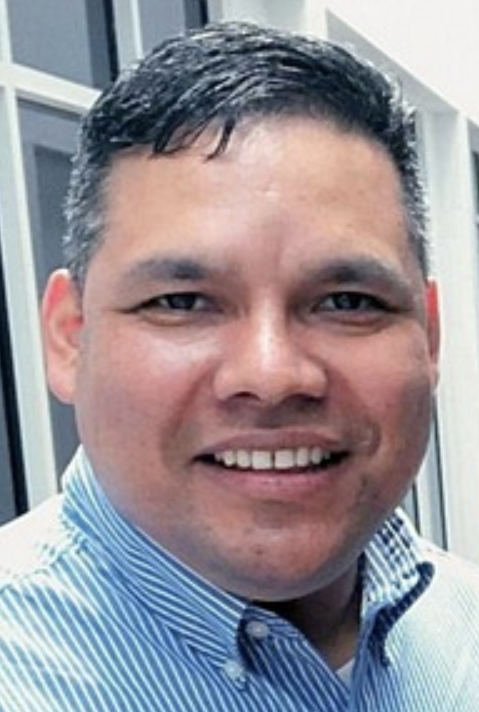
Jose Palma
Immigrants and their advocates will present a united front throughout the legal process, the TPS Alliance vowed after Chen’s ruling.
“Today’s victory is not just a legal win, but a testament to the strength of the TPS community and all who fight alongside us,” alliance Coordinator Jose Palma said. “We will continue this fight with unwavering resolve, not only to protect the future of 350,000 Venezuelans, but to defend all TPS holders in this country. Together, we will ensure that the voices of those who seek safety and opportunity are heard, and that no one is unjustly torn from their families.”