


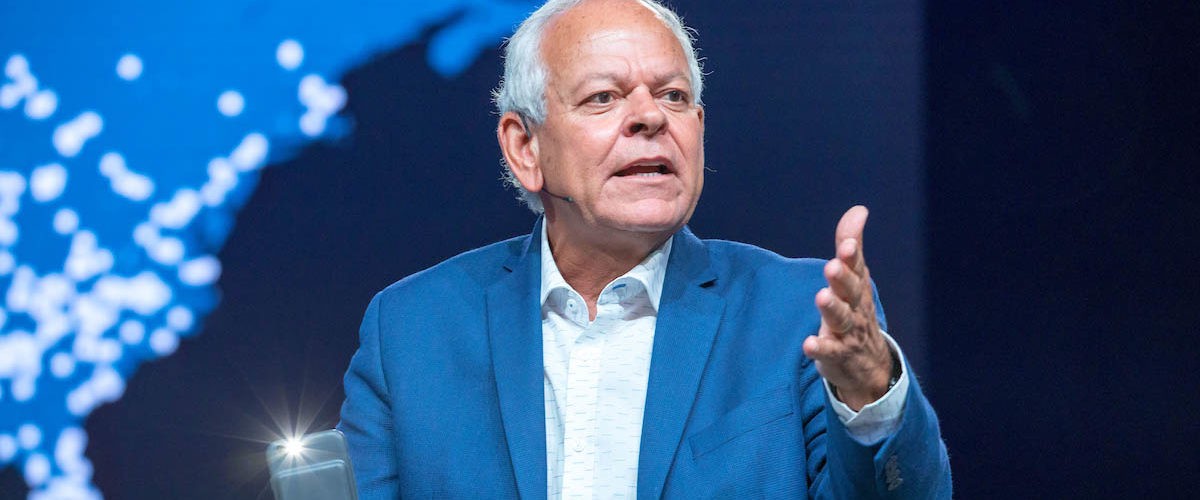
With academic precision, a federal judge’s 74-page opinion picks apart Johnny Hunt’s lawsuit against the Southern Baptist Convention, SBC Executive Committee and Guidepost Solutions.
The full decision was published April 1, the day after Judge William Campbell granted summary judgment relief to the defendants on all but one count he said requires further research. Based on the language of the full opinion, it appears unlikely that claim — a tweet by former SBC President Bart Barber — will be found actionable either.
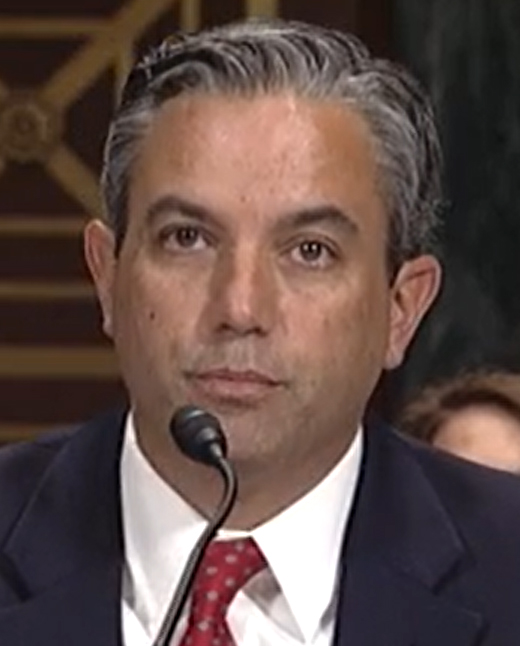
Judge William Campbell (Source: Wikipedia)
Writing for the U.S. District Court for the Middle District of Tennessee, Campbell not only found Hunt’s claims unsuitable for trial but also blessed the investigation produced by Guidepost Solutions that has been a source of controversy within the SBC.
Hunt is a former SBC president and former executive vice president of the SBC North American Mission Board. He also is a well-known former pastor of a Georgia megachurch and a conference leader, revival preacher and author.
He was caught up in the Guidepost Solutions report, which revealed his inappropriate sexual encounter with a woman not his wife. The woman claims she was groomed by Hunt while he was SBC president and then assaulted by him about a month after his term as president ended. Hunt has acknowledged the encounter but disputes the description of what happened and says he did not commit assault.
He sought up to $100 million in lost income and personal damages from the SBC for exposing him to ridicule through the Guidepost report and other subsequent communications. His claims included defamation, invasion of privacy, intentional and negligent infliction of emotional distress, and public disclosure of embarrassing private facts.
Point by point, the judge explains Hunt’s allegations, the defendants’ responses and then cites legal precedent for why Hunt has no basis for a jury to hear his claims.
“The court … finds there are no disputes as to any material fact.”
“The court has carefully reviewed the entire record in this matter and, for the reasons explained further herein, finds there are no disputes as to any material fact and that Guidepost is entitled to summary judgment on all claims and that the SBC and Executive Committee are entitled to summary judgment” on all of Hunt’s claims except one, the Barber tweet.
For example, Hunt claims the woman — identified as Jane Doe in the legal record — had a faulty memory of what happened and should have been doubted by the Guidepost investigators. Hunt also claims the woman’s husband had reasons to want to take him down.
The judge wrote: “Hunt cites to no evidence that would allow a jury to find that Guidepost was aware Doe’s memory was tainted … such that it obviously should have doubted the veracity of her or her recollections.”
And: “Hunt ignores that much of Doe’s information was independently verified by other sources whose credibility he does not challenge.”
And this: “Three members of the SBC clergy independently confirmed to the investigators that they had separately communicated with Doe’s husband about the occurrence of a sexual encounter between Doe and Hunt. … Doe was not an anonymous or unverified informant, but someone with whom the Guidepost investigators met with multiple times and corroborated key elements of her account (who, when, where) with multiple other sources.”
“Hunt ignores that much of Doe’s information was independently verified by other sources whose credibility he does not challenge.”
He concludes: “In short, Hunt fails to demonstrate that he can prove by clear and convincing evidence that Guidepost had obvious reasons to doubt Doe’s word or the veracity of her account before the report was published in May 2022.”
In another section, the judge writes: “Hunt does not identify a single piece of evidence that Guidepost deliberately ignored that would have undermined the statement that Hunt sexually assaulted another pastor’s wife.”
Later, he adds: “Hunt has not introduced any evidence suggesting that Guidepost intentionally omitted these facts for the purpose of fitting its desired nonconsensual narrative or otherwise defaming Hunt. Instead, the undisputed evidence demonstrates that Guidepost actively sought to compile a factually accurate and complete report. Prior to publication, the report was reviewed by multiple individuals for its accuracy.”
The judge also states: “In sum, Hunt’s actual malice arguments ignore objective facts that provide a reasonable basis for Guidepost’s subjective belief that Doe’s allegations against Hunt were true. … A reasonable jury could not conclude that Guidepost acted with actual malice in connection with the report.”
The judge also cites places where Hunt’s accusations simply cannot be true. In one section he writes: “Half of the documents Hunt faults the SBC and Executive Committee for not reviewing in May 2022 did not exist in May 2022.”
Over and again, the ruling says there is no reason to take this case to a jury trial.
“A reasonable jury could not conclude that Guidepost acted with actual malice in connection with the report.”
For example: “The court has already determined the record does not contain clear and convincing evidence that any defendant acted with actual malice in connection with the Report. And for the reasons discussed below, the record is similarly devoid of evidence from which a reasonable jury could conclude defendants acted with negligence in connection with the report.”
In another section, the judge quotes an earlier report saying when given an opportunity to explain himself, Hunt “squandered this opportunity, providing only a short, virtually fact-free … response to (Guidepost)’s inquiry.”
As to Hunt’s claim that he is entitled to millions of dollars for emotional injury, the judge all but scoffed: “Hunt has failed to point to evidence of mental and emotional injuries as a result of any of the statements which would disable a reasonable, normally constituted person from adequately coping with the alleged mental stress.”
On the matter of Barber’s tweet, Judge Campbell did not rule definitively. He cites a “lack of evidence” that would allow a jury to “find by clear and convincing evidence that the SBC or the Executive Committee acted with actual malice in connection with the tweet.”
Therefore, that charge is nullified. However, “The same evidence … could support a finding in Hunt’s favor under a negligence standard of fault. A jury could conclude that Barber breached a reasonable duty of care when he accused Hunt of assaulting a woman in ways that would ‘constitute a felony in any jurisdiction in the U.S’ after having been advised that the allegations against Hunt do not constitute a crime in Florida.”
At issue with the tweet is whether Barber was acting in a personal capacity or acting in his role as SBC president. How that will be resolved is not made clear in this document.
Related articles:
Most of Hunt’s lawsuit against SBC thrown out by federal judge
‘Pastor Johnny’ sues the SBC and Guidepost
Johnny Hunt tells his side of the story, including his definition of ‘adultery’
‘Pastor Johnny’ is the head of a family empire that feeds off the SBC