

It’s all about control, not about balancing the federal budget, not about bringing down inflation, not about “waste, fraud and abuse.” President Donald Trump is all about control.
Let me count the ways:
- The Kennedy Center. The president purged the board of directors and named 18 new board members who promptly elected him board chair. Trump commented, “We will make The Kennedy Center a very special and exciting place!”
- The Smithsonian. Vice President JD Vance was assigned the task of purging from the Smithsonian Institution’s exhibits those accounts of American history found to be “divisive” or “improper.”
- Agency language. As part of the president’s desire to purge evidence of “woke” language on government agency websites, “agencies have flagged hundreds of words to limit or avoid, according to a compilation of government documents” as reported in the March 7 Washington Post. Examples include “bias,” “gender,” “political,” and “sex.”
The arts, the humanities and our language. These are the cultural practices and products that set us apart from other primates. And the president wants to control them: Decide what you can see and hear and say.
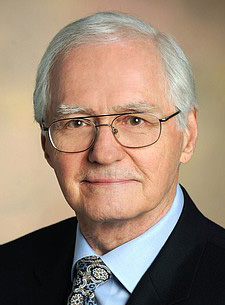
Richard Conville
The president wants to control those things that permit us as human beings to connect with other people, acknowledge our shared humanity, articulate our experience in words or music or images and reflect on those products and practices.
Without the arts, humanities and our language (freely exercised), we would be mere drones, robots living out our daily lives in shades of gray. We would have no Springsteen and no Shostakovich, no Gershwin or Brubeck or Willie Nelson, no Jelly Roll or Beyonce, Taylor Swift or Jay-Z. We would have no Ansel Adams, no Georgia O’Keefe, no Edward Hopper, no Andrew Wyeth. We would have no Thomas Jefferson or Frederick Douglass or Abraham Lincoln or Martin Luther King, no Emily Dickinson, Robert Frost, Langston Hughes or Mary Oliver.
Make your own list. Dig deep down. Remember. If some of those whose words shaped you were not named artists and thinkers, they may have been parents or teachers or pastors, priests, rabbis or imams — someone whose words helped you imagine a better world, a world where we could connect with others around our shared humanity, a world in which we would be seen and heard, a world where we would share the fruits of the bountiful earth instead of hoarding them for ourselves.
But of course, there is a dark side to all this. A risk. Language, freely exercised, can be wild. It can be used to create dark narratives of death and destruction, cruel narratives of suspicion, hate and violence. That’s why freedom is essential — freedom of the arts, humanities and language. When those human inventions are allowed to run free, we get to sort out the good from the bad among ourselves. We get to decide, without coercion, what kind of world we want to live in.
“The president’s appetite for control has no bottom.”
But right now, the president wants to make those decisions. He wants to put the thumb of government on the scales — as if he alone knows best! He alone, ignoring the Constitution, the rule of law and our 250-year heritage of ever-expanding human rights.
He is trying to control the work of artists (Kennedy Center) the work of scholars (Smithsonian Institution) and the language of government agencies (removing “woke” language).
The president’s appetite for control has no bottom. Check the latest news. Have you noticed him backing off any of his initiatives? No. His M.O. is to double down. He won’t stop with the Kennedy Center or the Smithsonian or his list of more than 200 forbidden words.
He will come after your language, your creativity, your history.
Lutheran pastor Martin Niemoller’s words are as true today as they were in 1946:
First they came for the socialists, and I did not speak out because I was not a socialist.
Then they came for the trade unionists, and I did not speak out because I was not a trade unionist.
Then they came for the Jews, and I did not speak out because I was not a Jew.
Then they came for me, and there was no one left to speak out for me.
Richard Conville is professor emeritus of communication studies at the University of Southern Mississippi and a long-time resident of Hattiesburg, Miss.