


As we move through the sacred calendar of spring — when Jews celebrate Passover and Christians observe Easter — we are reminded of profound spiritual truths: Liberation from bondage, triumph over death, the sacredness of life.
These holy days invite us to reflect not just on ancient miracles, but on modern injustices. Among the gravest is the continued use of the death penalty in the United States — a policy both morally inconsistent and spiritually corrosive.
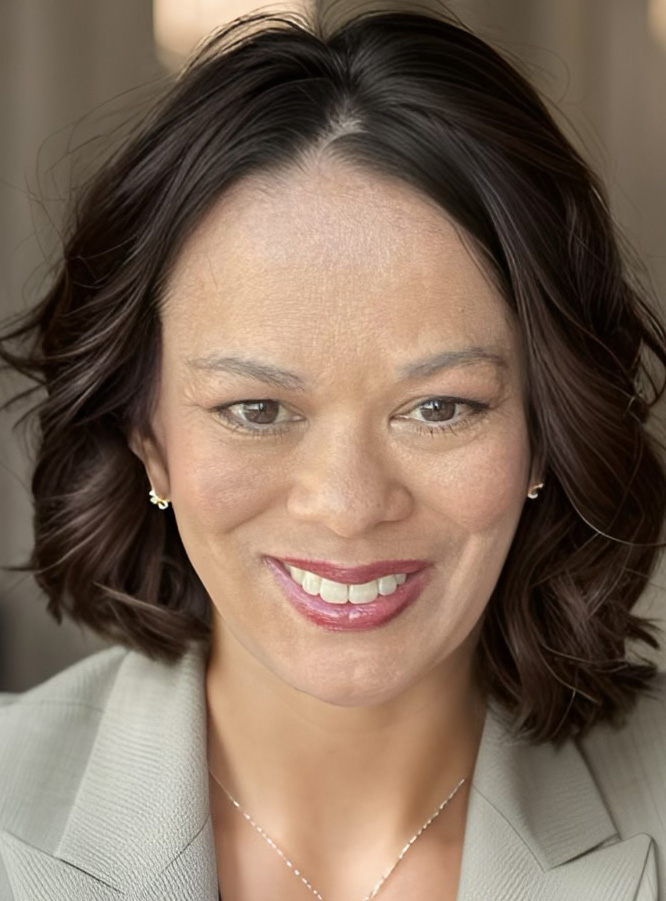
Nicole Wiesen
This season, when liberation and resurrection are central themes, we must confront the reality that our nation still sanctions the taking of human life through capital punishment. It is time for people of faith — especially those who identify as pro-life — to stand unequivocally for the abolition of the death penalty.
Passover commemorates the Israelites’ liberation from slavery in Egypt. It is a story of God’s preferential concern for the oppressed, the enslaved and the condemned. In the Haggadah, Jews are commanded to remember it was not only our ancestors who were freed, but we ourselves. To live as liberated people means to extend the same dignity and compassion we were shown.
Similarly, Easter proclaims the victory of life over death. The Cross, once a symbol of shameful execution, becomes a sign of redemption. Christians believe Jesus was executed by the state — an innocent man condemned to die. If we truly embrace the resurrection, we must reject systems that mirror Rome’s cruelty and injustice.
“If we truly embrace the resurrection, we must reject systems that mirror Rome’s cruelty and injustice.”
These holy narratives are not just ancient stories. They are calls to action. As Bryan Stevenson writes in Just Mercy, “Each of us is more than the worst thing we’ve ever done.” That truth echoes through the exodus and the empty tomb.
For many Americans, being pro-life is synonymous with opposing abortion. But if our ethics are to be truly life-affirming, they must extend beyond the womb. The death penalty is a glaring contradiction in a society that claims to value life. It is irreversible, expensive, racially biased and too often administered to the innocent.
Since 1973, at least 196 people have been exonerated from death row. That’s not a flaw — it’s a fatal feature of the system. We cannot call ourselves a pro-life nation while executing people, especially when so many are later found to be innocent.
Moreover, the application of the death penalty is steeped in racial injustice. According to the Death Penalty Information Center, Black defendants are far more likely to receive the death sentence, particularly when the victim is white. This is not justice; it is modern-day lynching wrapped in legal language.
Across the theological spectrum, religious leaders are increasingly united in opposition to the death penalty. Pope Francis has declared it “inadmissible,” adding it “attacks the dignity of the person.” Many evangelical Christians are rethinking their support as well, recognizing that executing someone does not restore what was lost — it only deepens the cycle of violence.
Jewish organizations like T’ruah: The Rabbinic Call for Human Rights also denounce the death penalty, noting rabbinic Judaism developed stringent legal safeguards precisely because of the risks of irreversible error and wrongful death. The Mishnah teaches that a Sanhedrin (Jewish high court) that executes more than one person in 70 years is considered a “bloodthirsty court.”
“Faith does not demand retribution, it demands restoration.”
Faith does not demand retribution, it demands restoration. It calls us to recognize the image of God even in those who have caused harm and to believe in the possibility of transformation.
As Passover and Easter converge, we have a unique opportunity to realign our moral compass. We must ask: What kind of society do we want to be? Do we believe in redemption, or are we content with revenge?
To abolish the death penalty is not to excuse violence or ignore victims. On the contrary, it honors victims by breaking the cycle of killing. It opens space for healing, for restorative justice and for communities to move forward together.
This holy season is an invitation. It’s a call to move from death to life, from punishment to possibility. Just as the Israelites crossed the Red Sea, and just as Jesus walked out of the tomb, we too can walk away from systems of state-sanctioned violence.
Let us, then, be people who choose life — in all its messy, sacred, irredeemable beauty.
Nicole Wiesen serves as director of communications for Georgians for Alternatives to the Death Penalty and is a Public Voices Fellow on racial justice in early childhood with the OpEd Project in partnership with the National Black Child Development Institute. She advocates for advancing mental health resources for previously incarcerated individuals