


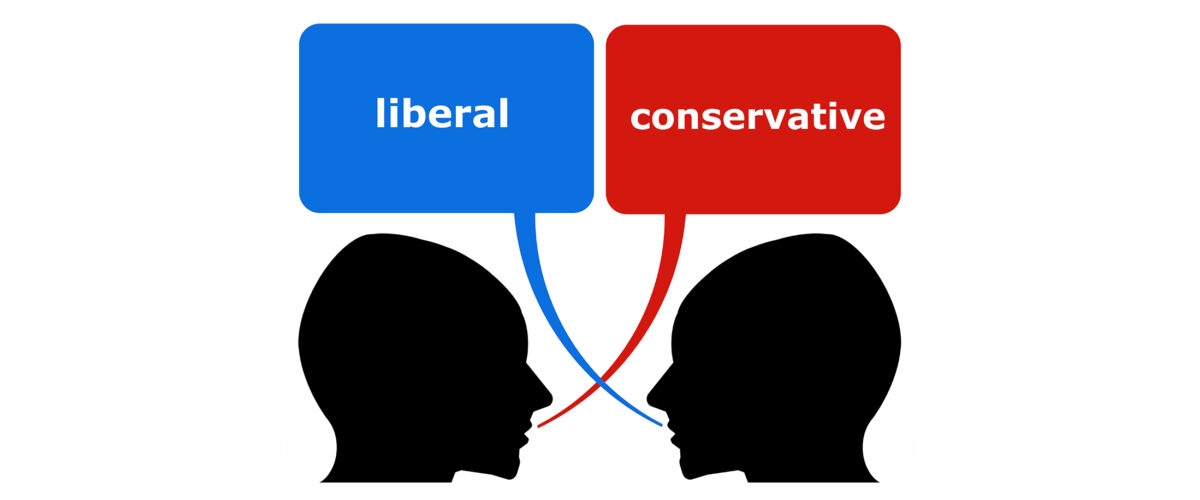
These two words may be the most politically charged words in the English language. One of the problems is we have let politics, instead of the dictionary, define these words.
The primary way to communicate is by the use of words, and there must be a standard definition of words so you and I know the meaning of the words we use in order to communicate accurately. I choose to use a dictionary definition of “conservative” and “liberal,” not the political definition of either.
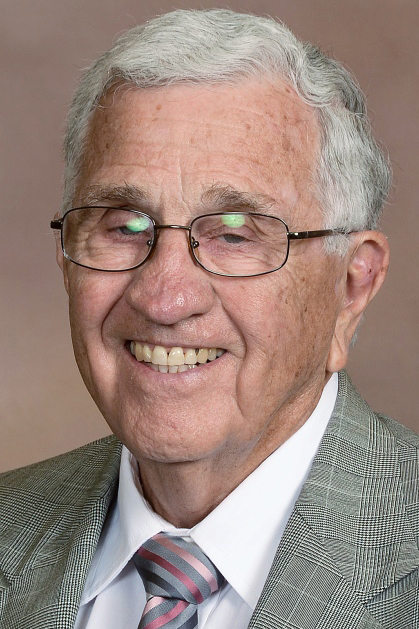
Bill Bruster
The American Heritage College Dictionary defines “conservative” as “favoring traditional views and values and tending to oppose change.” It defines “liberal” as “favoring proposals for reform, open to new ideas for progress, and tolerant of the ideas and behavior of others.”
I looked at two other dictionaries and found the same basic ideas in all three. So, I am using the dictionary definition of both words, not some ill-defined political definition.
As Christians we should be concerned about the ideology of Jesus. Was Jesus liberal or conservative? We gain a good view of Jesus in his first sermon in Matthew 5. In this sermon, he says several times, “You have heard it said, but I say unto you.” In each case Jesus was conservative in that he upheld the Jewish Law (you have heard it said) but he went further than the Law by expanding on it (but I say unto you) and thus was open to a new explanation.
“Was Jesus liberal or conservative?”
So Jesus was both conservative and liberal in regard to the Jewish Law. He was conservative in regard to keeping the law but liberal in applying the law.
Jesus was both conservative and liberal in regard to religious tradition. Jesus kept most of the religious traditions of his day but he was liberal when it came to others. He was clearly liberal when it came to picking grain on the Sabbath, thus violating the commandment of not “working” on the Sabbath. The Jewish tradition of washing your hands before you eat was well established, but Jesus said it is not what you put into your mouth that defiles you, but what comes out of your mouth. He also broke religious tradition by healing on the Sabbath.
He was clearly liberal when it came to money. Remember the woman who gave only a penny and Jesus declared she had given the most of anyone.
He was liberal on forgiveness, declaring his disciples should not only forgive seven times (the traditional practice) but 70 times seven.
So Jesus was a mixed bag. He was both conservative and liberal.
My childhood was filled with inconsistencies. My parents would not allow a deck of playing cards in our home, except Old Maid cards. Yet they played dominos regularly, especially 42, which is almost identical to several card games.
“My childhood was filled with inconsistencies.”
We were conservative white churchgoing Christians, yet we were racists. We had only one Black family in our community, a hired hand to a local farmer. They did not own a car and walked about 3 miles to the grocery store. They had several children but our school was segregated. I never remember anyone being offended by the injustices that family endured. We simply looked down on them since they were poorer than us. We were classists.
Each summer, a family came from Arkansas to chop cotton in our community. They lived in a shack, the kids wore no shoes, they dressed in rags but we were always glad to see them arrive because they were poorer than us and we could look down on them.
I spent my teen years in a typical conservative Oklahoma Baptist church. It was a great church and like most Oklahoma Baptist churches in the 1950s the dominant focus was on evangelism.
So when I went off to college and became a student pastor, I was a typical conservative Oklahoma Baptist pastor. College was challenging. I had a wonderful philosophy professor who challenged us to rethink everything. In a way, he helped us deconstruct and reconstruct our faith.
I roomed with two very bright friends. Our late-night bull sessions were extremely important in helping me come to grips with what we were all experiencing. Seminary also was instrumental in helping me sort out what I really believed and should practice.
“I received a phone call that shook the very foundation of my convictions.”
First Baptist Church in Siloam Springs, Ark., was my first full-time pastorate after seminary. One Easter we naturally had a full house for worship and late that afternoon I received a phone call that shook the very foundation of my convictions. I believed then, and still do, that abortion as a form of birth control is wrong. But that phone call challenged my convictions.
A family from another city had visited their family on Easter and had been in our church. The woman explained to me that she was 48 years old, her husband was 56 years old and she was pregnant. Her husband declared that if she did not get an abortion he would divorce her. They were the parents of three boys, ages 14, 16 and 19. She had married at age 18 and been a stay-at-home mom with no job experience or job skills. She did not believe in abortion.
They lived from paycheck to paycheck. If they divorced, she would have to go to work, their 19-year-old would have to drop out of college, and the two younger boys never would experience college. What must she do?
My conservative answer would be, “Do not abort your child.”
My liberal answer would be, “Do what’s best for your marriage and your three sons.”
After what must have seemed like a month of silence I said, “I cannot tell you what to do. That is above my pay grade. But I can promise you that whatever your decision, God loves you and will support you.”
I never found out the outcome, and it haunts me to this day. Was my advice conservative or liberal? The answer is found in your perspective.
“Was my advice conservative or liberal?”
The same is true in our political circumstances. Take a look at USAID. The conservative approach is to cut off aid to hungry children and people dying of curable diseases. The liberal idea would be to help the people we can help. The same is true of DEI, Critical Race Theory, refugees, immigrants, tariffs and more.
It may be that you come down on one side of some issues and the other side on some issues.
The truth is, we can change.
J.B. Rounds was one of the great pioneers in Oklahoma Baptist history. He founded the world famous (among Baptists) Falls Creek Baptist Assembly, a summer camp that draws up to 40,000 teens a summer. He was a missionary among the Native Americans and was editor of the Oklahoma Baptist newspaper in the early 1920s. As editor, he would editorialize, about once a month, on the sin of women who let their ankles show by wearing short dresses. He was a member of the same church as I and in the mid 1950s he would walk in the sanctuary each Sunday morning with his wife, whose dress allowed a little of her knee to show. We can change. We can become more conservative or more liberal.
I was taught that divorce is a sin. We Baptists would not allow a divorced person to teach Sunday school or serve as a deacon. I brought that conviction into my first pastorate. While still in college, a high school friend of mine came to see me. He told me he had a serious kidney problem and likely would not live more than two or three more years. He had fallen in love with a woman 10 years older with two young boys. She was a divorcee.
Jerry told her of his kidney condition and said they should not go forward with marriage plans. She wanted to marry him anyway, give her sons a father and enjoy what time he had left. He asked if I would officiate their wedding. I reluctantly agreed to do so.
Three years later, I stood by his bedside a few days before he died. He thanked me again for officiating their wedding and recounted what a wonderful time his family had experienced. I since have ordained divorced people and many have become involved in every facet of the church.
I still believe “one man for one woman” is ideal. So I am conservative. But I have changed in my application of the less than ideal.
“I am conservative. But I have changed in my application of the less than ideal.”
I have changed my idea of the role of women in the church. I grew up believing only men could be ordained as deacons or ministers. Women were able to teach, but only children and other women. I practiced that theology in my first four churches.
While serving Central Baptist Church of Bearden in Knoxville, Tenn., our daughter was freed from the nursery and started coming to “big church” when she turned 6 years of age. One Sunday on the way home from church she asked me, “Daddy, why don’t you like women?”
Stunned, I asked, “What do you mean?”
She replied, “You never let women do anything in church. They never pray, read the Scripture or take up the money. Why don’t you like women?”
I could not think of a way to explain my convictions to a 6-year-old, so I said, “Let me think about it and we will talk later.”
I restudied the Bible with the purpose of seeing what it said about the role of women. I had been wrong and told Julie as much. I changed my practice by not limiting the role of women in the church.
Some would say I am liberal. I would say I am following what I believe the Bible teaches.
We currently live in a 55 and older community. Every day we have a happy hour before the evening meal. We have some wonderful residents whom we cherish. Most of them grew up in conservative Christian churches that frowned upon drinking, smoking, divorce, women in ministry. Now most of them consume alcoholic beverages and attend a large Methodist church not far from our community. The church accepts divorce and celebrates women in ministry. These same people call themselves conservative.
I still have a conviction that our world would be better off without alcohol, but I am a liberal.
We are all a mixed bag. We are all conservative on some issues and liberal on others. So if someone asks you if you are liberal or conservative, the most honest answer is usually “YES.”
Bill Bruster is a retired pastor of multiple Southern Baptist churches, the last of which was First Baptist Church of Abilene, Texas. He was instrumental in launching the Cooperative Baptist Fellowship and spent the latter part of his career as national networking coordinator for CBF. He lives in Dallas, where he is a member of Wilshire Baptist Church and serves on the board of Gaston Christian Center.