

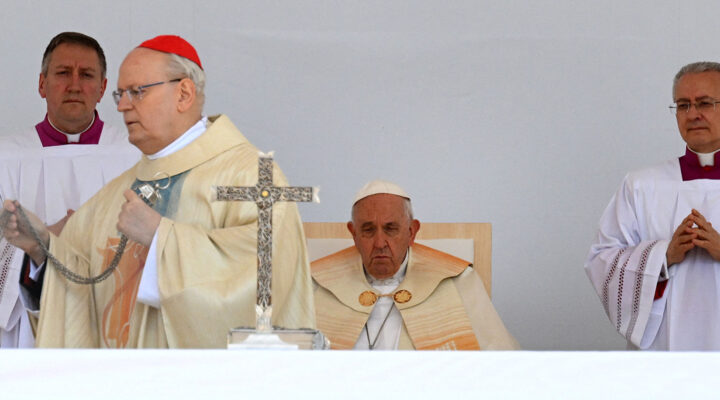
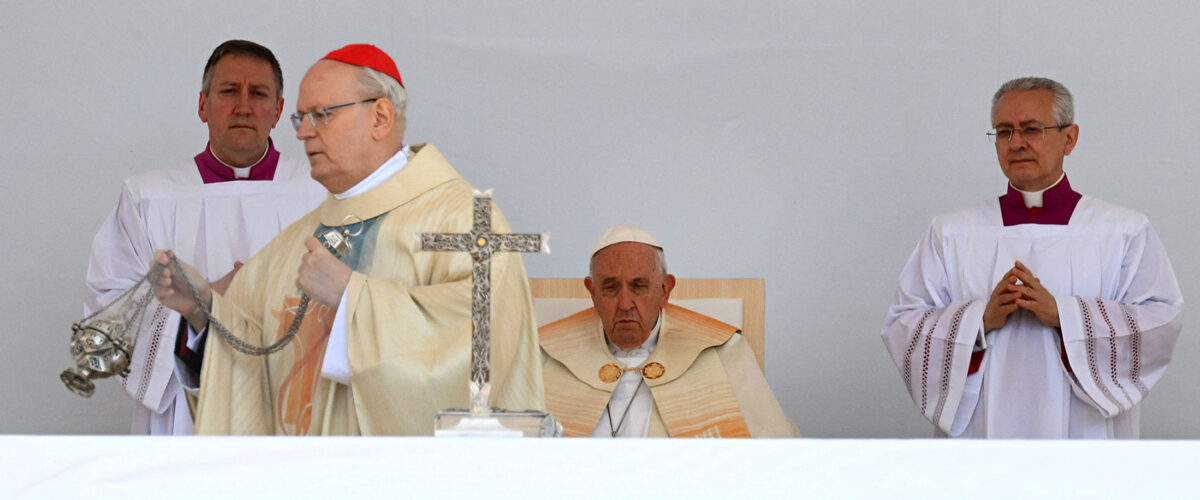
In the colonnade of St. Peter’s Square, not far from the free medical clinic and showers for the homeless and undocumented migrants opened by Pope Francis in 2018, sits a man on a bench.
From behind, his clothes are rough and worn and he carries on his back a large pack containing his meager possessions. His hand grips a pilgrim’s staff. The tourists and residents of Rome willing to face the lonely figure see his true nature.
“The roughness of his clothes becomes smooth, the bag he carries turns into wings and the hood turns into hair.” The bronze stranger on the bench is an angel, a life-size sculpture embodying Hebrews 13:2 — “Do not forget to show hospitality to strangers, for by so doing some have unknowingly entertained angels.”
The Vatican unveiled this new sculpture, called “Be Welcoming,” by Canadian artist Timothy Schmalz, during Holy Week just a few days before the death of Pope Francis. Through the artwork, the late pope sought to remind visitors that “all human life is sacred and that it is our spiritual duty to help the poor.”
Schmalz was a favorite artist of Francis’ and best known for his “Homeless Jesus” statues, one of which is positioned outside the Vatican’s apostolic charity offices. He told CNN some have complained to Cardinal Konrad Krajewski about the statue’s placement in St. Peter’s Square because “it doesn’t match Bernini’s colonnade and the sculptures on top” of it. According to Schmalz, the cardinal replied: “It doesn’t matter if it matches Bernini’s; it matches the Gospels.”
The same could be said of Pope Francis, who dined with the homeless, washed the feet of prisoners and extended blessings to same-sex couples.
Now throngs crowd the statues in St. Peter’s square waiting to see white smoke billow from the copper chimney of the Sistine Chapel. This centuries-old sign will let them know when the cardinals of the Catholic Church have chosen Francis’ successor.
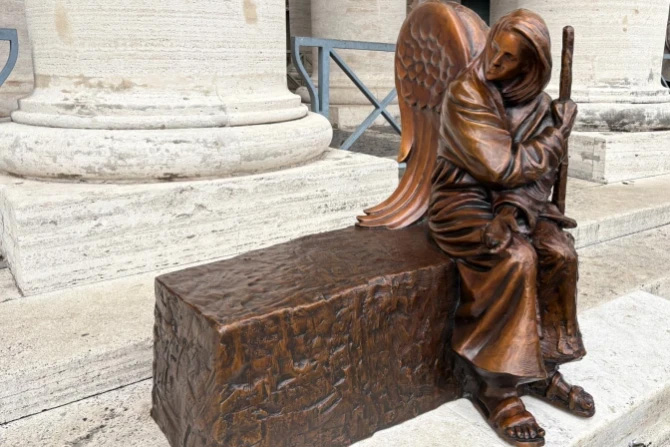
“Be Welcoming”
Conclave
Cardinal Timothy Dolan, whom U.S. President Donald Trump says would be his pick to lead the world’s 1.4 billion Catholics, told the Today Show, “I’d love to see somebody with the vigor, and the conviction, and the fortitude of John Paul. I’d love to see somebody with the intellectual wattage of a Pope Benedict. I’d love to see somebody with the heart of a Pope Francis.”
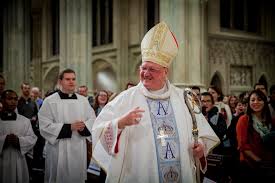
Timothy Dolan
Dolan, and all the church’s other cardinals under the age of 80, are part of the highly secretive Papal Conclave who will choose one among them to be the 267th pope.
“The whole thing about the Conclave is that it is a secret event. … The word ‘conclave’ comes from Latin, it basically means ‘behind a locked door’ or ‘behind a locked key,” said Catherine Pepinster, author, journalist and former editor of The Tablet, an international Catholic weekly review. Sequestered in the Sistine Chapel, without access to newspapers or electronic devices, the cardinals in the Conclave will deliberate and cast their votes via secret ballots placed in a gilded urn.
If no cardinal wins a two-thirds majority — 89 votes — on the first day, then voting will continue twice a day until a pope is elected. The paper ballots are bundled together and burned in one of two temporary furnaces installed in the chapel. If the vote was inconclusive, potassium perchlorate, anthracene and sulfur are added to a second furnace by the master of ceremonies to blacken the smoke produced by the burning ballots. Or he will add potassium chlorate, lactose and the conifer resin to the burning ballots to create the eagerly anticipated “fumata bianca” once members of the Conclave have chosen a pope.
While Medieval Conclaves could extend for months and even years, the rules were tweaked by Pope John Paul II and Pope Benedict to speed up the process. Since 1903, the average conclave has lasted three days.
Campaigning
As with any election, before the vote comes the campaigning. While cardinals are prevented from openly campaigning for the papacy, they are permitted to speak freely during the General Congregation meetings that precede the Conclave. There, even cardinals who are not eligible to vote may share their opinions, identify potential candidates and lobby for their favorites.
They “discuss what they think the needs are today,” said Elena Curti, who reported on the Conclaves of 2005 and 2013 for The Tablet. “They’re listening to one another, a lot of them are giving their views of what’s needed.”
They’re listening to one another, a lot of them are giving their views of what’s needed.”
A speech by Cardinal Jorge Mario Bergoglio of Argentina during the 2013 General Congregations later inspired the cardinals to elect him pope during that year’s Conclave.
Just as important as the formal speeches are the informal gatherings, both the coffee breaks and walks to and from the Vatican where the cardinals become better acquainted, and the meetings over dinner with “lobbyists” and powerbrokers outside church hierarchy.
With 133 cardinals participating, this year’s Conclave is the largest in history. It is also the most diverse, thanks to Pope Francis, who broadened the geography of the College of Cardinals by appointing men from places like Peru, Ecuador, Algeria and Iran. Although the former pope is responsible for choosing 80% of the electors, that doesn’t necessarily mean they will support a Francis-like candidate.
“There’s a lot of cardinals from the Global South, and some of them will have what you might call more conservative views about issues of personal morality and sexuality,” Pepinster explained. “So, it’s very hard to really foretell what they’re going to do.”
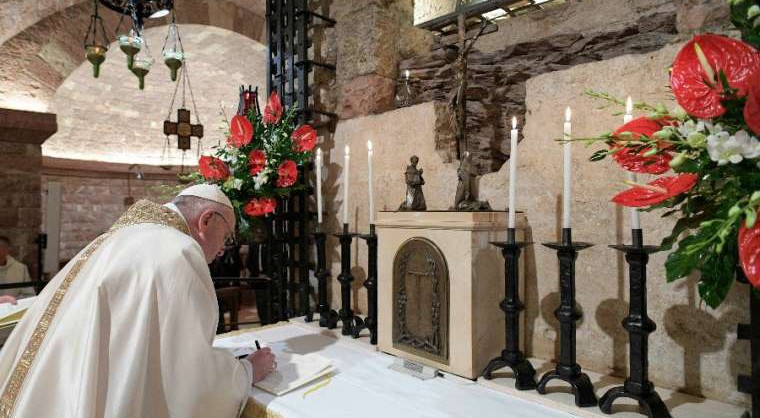
Pope Francis signs his new encyclical, Fratelli tutti, on the altar before the tomb of St. Francis of Assisi on Oct. 3. (Photo: Vatican Media)
Two competing visions
For conservative members of the Catholic Church, this period before Conclave is an opportunity to redirect a denomination they believe drifted too far to the left under Pope Francis. The former pope suppressed the Latin Mass, was more accepting of LGBTQ individuals and gave women more authority within the church, which angered conservative Catholics in the U.S.
“He was unafraid to speak up for the church’s priorities in the midst of a really turbulent political time here in the U.S., and that certainly ruffled some feathers,” said Kerry Weber, an executive editor for the Jesuit media outlet America. “Over time, there was a larger gap between his favorability among Republicans and Democrats. So, his favorability among Democrats remained very high, and his favorability among Republicans dropped closer to 63%.”

JD Vance receives first Communion as a convert to Catholicism in 2019. (Photo: Catholic Citizens)
However, the Catholic Democrats who would like to see Conclave elect a successor in the mold of Pope Francis are aging out. Younger liberal Catholics in the U.S. have abandoned the institutional church, quit attending mass and left conservatives in charge. Members of the conservative wing of the Catholic Church in America have had an outsized influence on the Trump administration and dominate the intellectual right. Thirteen members of the president’s cabinet are conservative Catholics, as is Vice President JD Vance, former adviser Steve Bannon and Kevin Roberts, director of the Heritage Foundation and architect of Project 2025.
In the 2024 election, Trump won the vote of 54% of the country’s 52 million Catholics with the help of his choice for Ambassador to the Vatican, Brian Burch. Burch’s nonprofit Catholic Vote has gone to extremes to elect Trump and promote right-wing causes, including harvesting cell phone data from Catholic churchgoers, suing the Biden administration over cooperation with immigrant friendly Catholic charities at the border and running attack ads against Kamala Harris, claiming she supported taxpayer-funded gender reassignment surgeries for children.
“There are some serious moneyed interests, not least in the United States,” said Father Damian Howard, provincial superior of the Society of Jesus. “I think an awful lot of vitriol comes from fairly well-coordinated and indeed well-funded lobby groups who are rather alarmed by what’s happening to some of their interests.”
So-called “MAGA Catholics” are extremely wealthy and well-connected, which could give them unprecedented influence during this papal election.
Massimo Faggioli, a professor of religious studies at Villanova University, says the financially strapped Vatican, which according to Reuters recently reported an $87 million shortfall, needs “American money and American influence.” When it comes to money and influence, no one associated with the Catholic Church in America has more of both than Leonard Leo.
Leonard Leo
Leo is a conservative Catholic who headed the Federalist Society and was the mastermind behind the confirmations of Catholics John Roberts, Samuel Alito, Neil Gorsuch, Brett Kavanaugh and Amy Coney Barrett to the U.S. Supreme Court, which gave SCOTUS a solid conservative super majority. (Gorsuch was raised Catholic but later became an Episcopalian.)
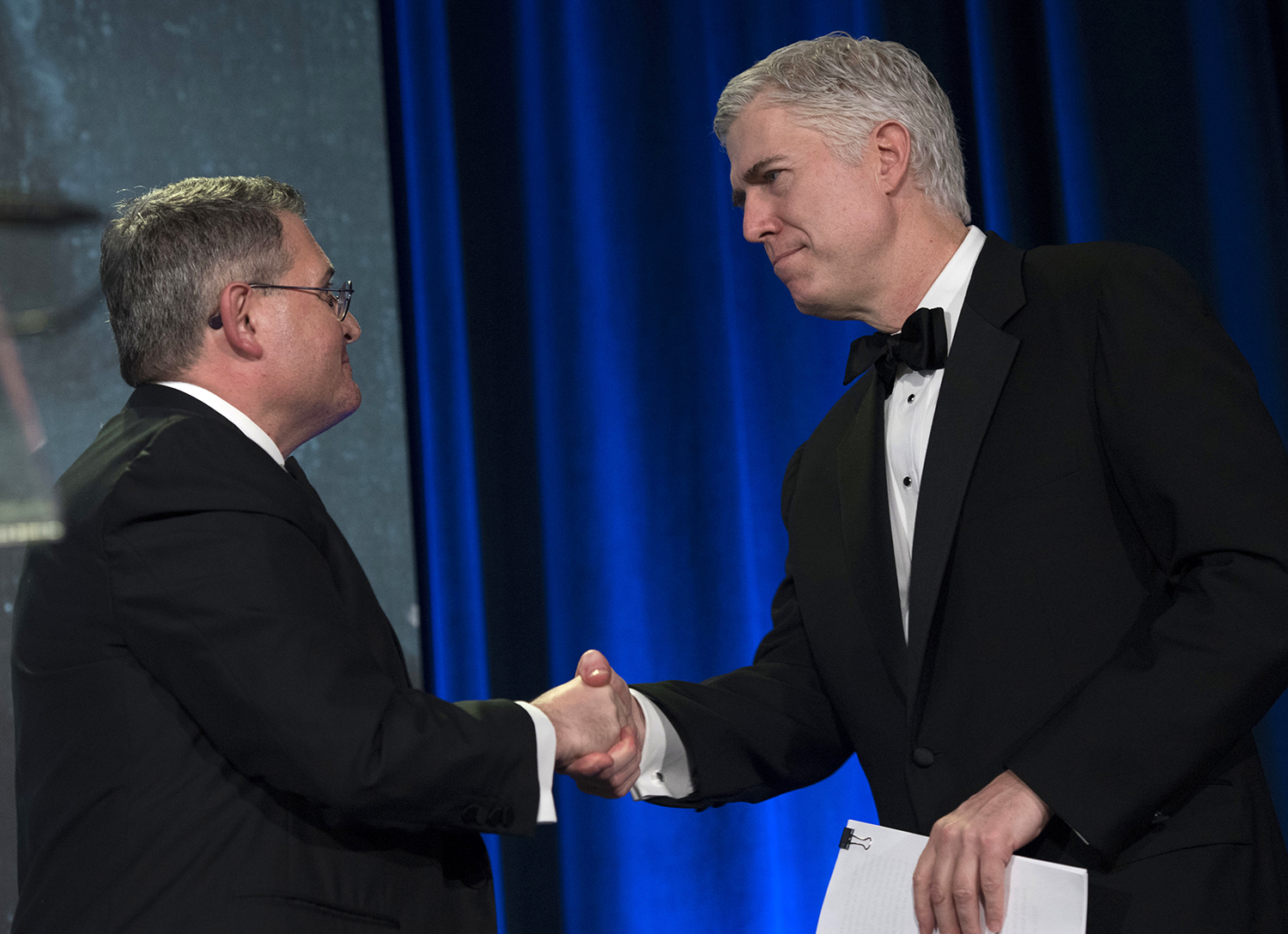
Leonard Leo, executive vice president of the Federalist Society, left, welcomes Supreme Court Associate Justice Neil Gorsuch for a speech at the Federalist Society’s 2017 National Lawyers Convention in Washington, Nov. 16, 2017. (AP Photo/Sait Serkan Gurbuz)
Using Donor Advised Funds like Donor’s Trust, which don’t have to disclose their beneficiaries to the public, Leo has channeled millions in dark money to right-wing political and religious organizations. The charitable trusts he controls have more assets than the Republican and Democratic National, Congressional and Senatorial committees combined, including the largest political donation ever, $1.6 billion from Republican financier Barre Seid.
In 2017, Leo pledged $1.7 million of his own money to Vatican initiatives worldwide and was named a “Steward of St. Peter” by the Papal Foundation.
Like many Catholics in the upper echelons of the Republican Party, Leo has ties to the conservative and controversial personal prelature Opus Dei. JD Vance, Kevin Roberts, Clarence Thomas, Bill Barr, Newt Gingrich and Peter Theil are just some of the Republican movers and shakers associated with this group.
Opus Dei is quick to say it is not a political puppet master pulling the strings Da Vinci Code style from Rome. Members are responsible for their own “political efforts.” However, the organization is happy to have friends in high places and has located its Catholic Information Center near the halls of power in Washington, D.C., to cultivate those friendships.
When the CIC gave Leo the John Paul II New Evangelization Award, he said in his acceptance speech that Catholics were under threat from “vile and immoral current-day barbarians, secularists and bigots” whom “the devil can easily take advantage of.”
Several Opus Dei affiliated groups sat on the advisory board of Project 2025, which received $50 million from various Leo-run trusts. The century-old organization was founded to support conservative Catholics against anti-Catholic forces in Spain but expanded over the decades to promote pushback against “liberal” initiatives in the church and broader culture. Its status as a personal prelature, allows it to operate independently within the church. During his pontificate, Pope Francis attempted to reign in Opus Dei, some branches of which currently stand accused of human trafficking, sexual abuse and labor exploitation.
Opus Dei responded in kind. Even before his death, some of its members, with the cooperation of ultra-conservative Catholic media outlets such as Catholic TV giant EWTN, were working to undermine Pope Francis’ reforms. They began pushing for a conservative cardinal to succeed him.
“A group, which has been linked to people like Tim Busch and to Leonard Leo, people who are in the wider Opus Dei orbit, they’ve been recruiting former CIA officers, former FBI officers ahead of the next Conclave with the idea of having the dossiers that they can presumably get out there to voting cardinals, to cardinal electors, with a view to, I guess, discrediting some of the more progressive candidates out there,” said author and journalist Gareth Gore. His book, Opus: The Cult of Dark Money, Human Trafficking, and Right-Wing Conspiracy inside the Catholic Church, explores Opus Dei’s history of shadowy and shady dealings.
Some possible popes
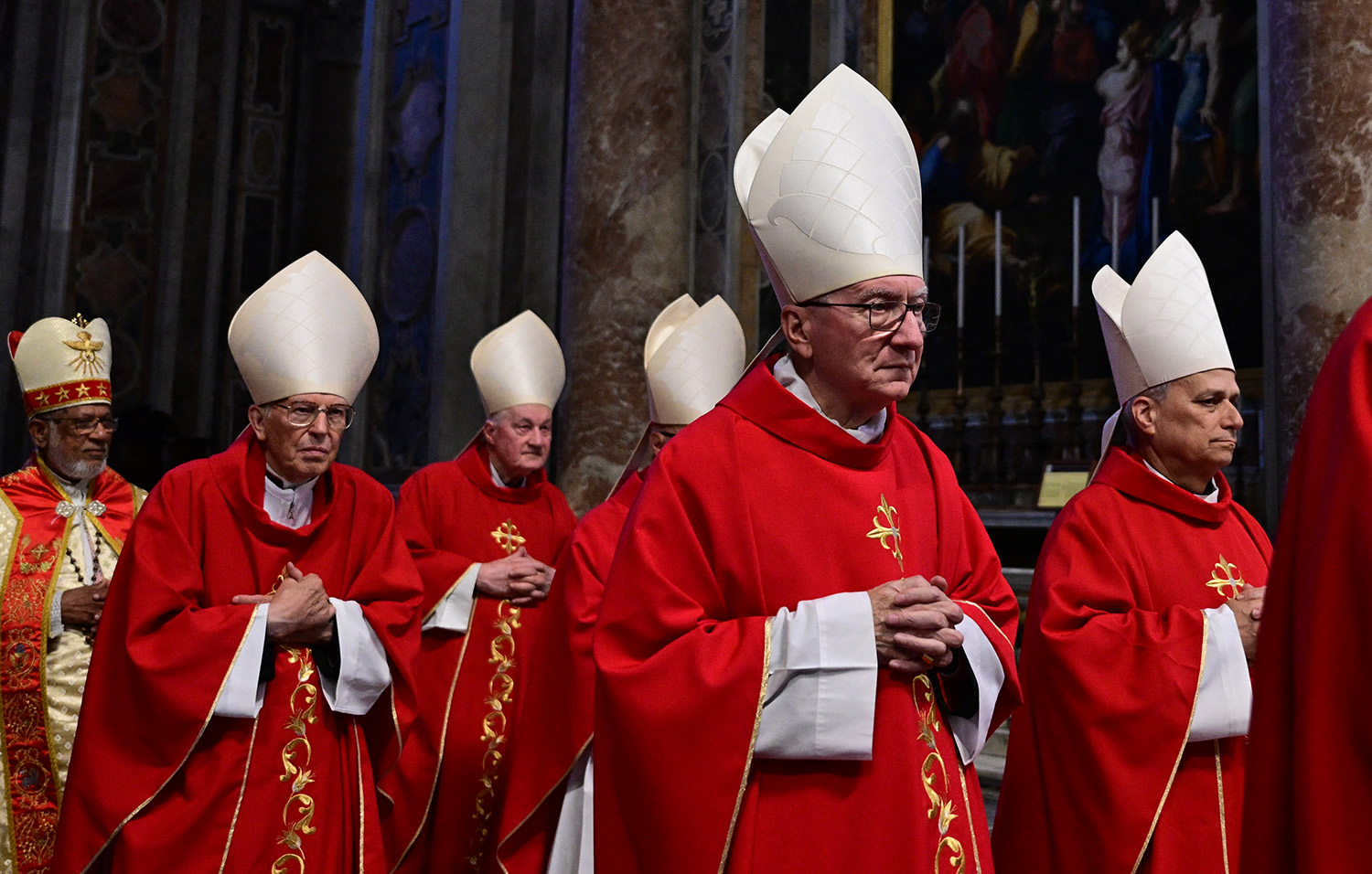
The Vatican’s Cardinal Secretary of State Pietro Parolin (C) and cardinal Robert Francis Prevost (right) attend the Seventh Novemdiale mass at St Peter’s Basilica. (Photo by TIZIANA FABI/AFP via Getty Images)
One target of conservatives’ ire is Cardinal Pietro Parolin, who was Pope Francis’ second in command and is considered one of the “papabili” or potential papal candidates. Parolin, 70, is Italian, which may win him support from cardinals who would like to see the papacy return to Europe. With a background in the diplomatic arm of the church, Parolin has shored up relationships in Vietnam, Israel and Mexico. He is an expert on Middle Eastern and Asian affairs as well.
“I think he’s got two problems when it comes to the other cardinals voting for him. One is that he is a diplomat. He has no pastoral experience as a bishop in a diocese … and … with the help of Parolin Pope Francis created an agreement … that the Chinese could effectively have cardinals or bishops they picked endorsed by Rome,” Pepinster explained.
The China deal and Parolin’s proximity to Pope Francis have drawn the ire of conservatives like those at Catholic Vote, who spread false rumors that the cardinal had suffered a medical emergency during a General Congregation Meeting.
MAGA Catholics would prefer a more conservative candidate like Peter Erdo, 71, the Metropolitan Archbishop of Esztergom-Budapest in Hungary. Erdo opposed Pope Francis’ blessing of same-sex couples and disapproves of allowing divorced and remarried Catholics to receive Communion. During the migrant crisis in 2015, he appeared to align himself with Hungary’s prime minister, Victor Orban, when he equated offering immigrants refuge to “human trafficking.” When Russia invaded Ukraine, Erdo changed his tune and welcomed fleeing Ukrainians. In 2011, Opus Dei awarded him an honorary doctorate.
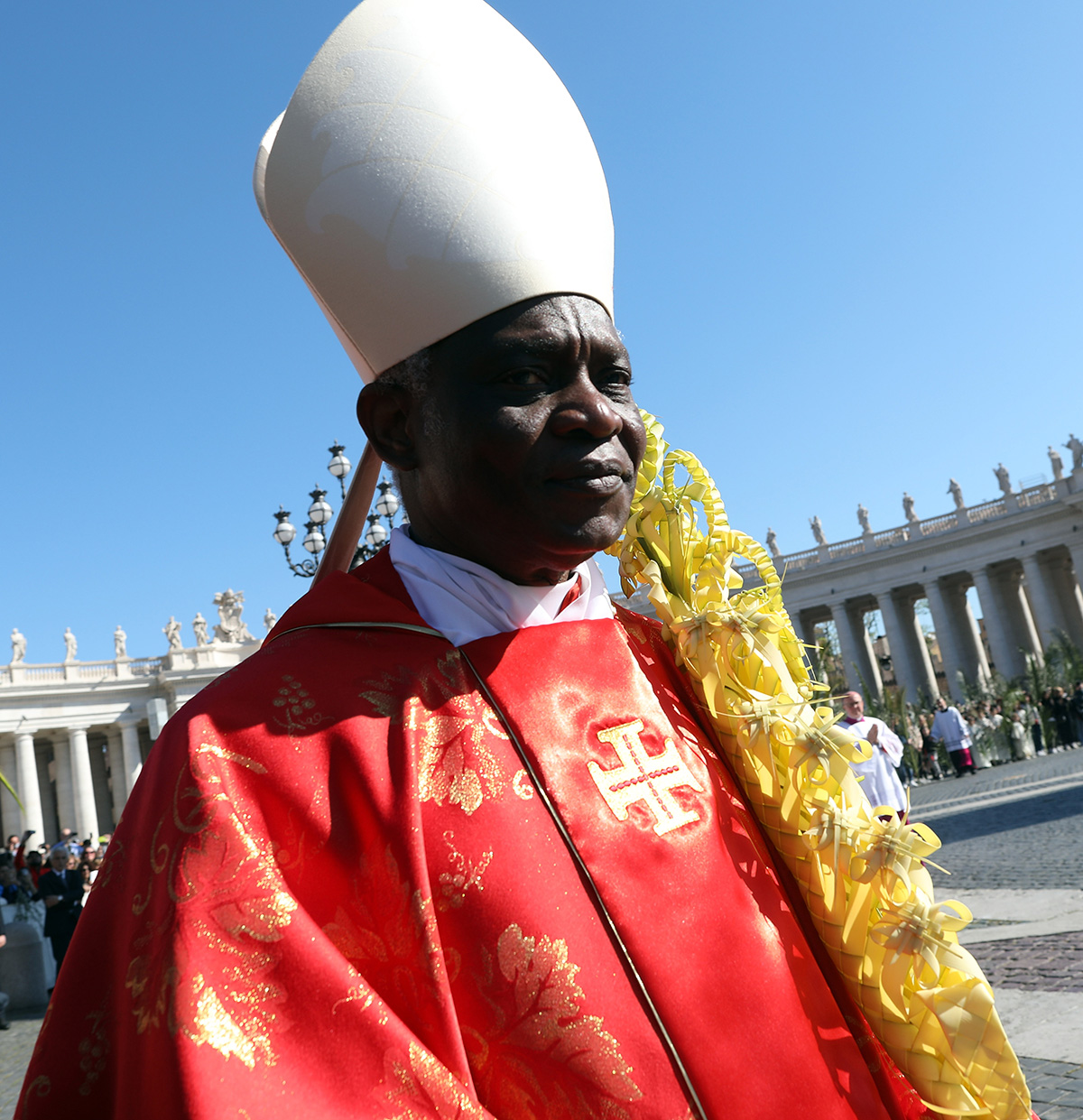
Cardinal Peter Appiah Turkson attends Palm Sunday Mass celebrated by Pope Francis at St. Peter’s Square on April 9, 2017, in Vatican City, Vatican. (Photo by Franco Origlia/Getty Images)
There are two potential papabili from Africa, Cardinal Peter Turkson, 76, from Ghana and Cardinal Robert Sarah, 79, from Guinea.
Turkson has spoken out about climate change and on behalf of economic justice and human rights. While he affirms the Catholic Church’s traditional teachings on marriage, the priesthood and homosexuality, he believes the laws of many African countries against homosexuality are too harsh.
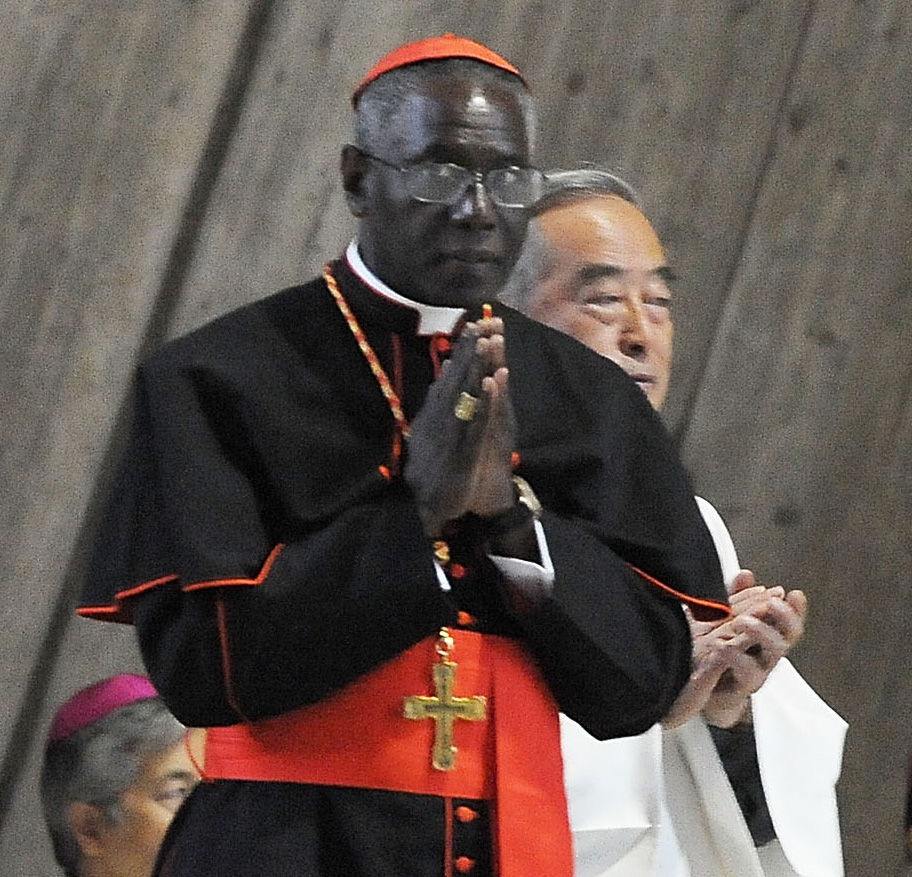
Cardinal Robert Sarah (Photo by Jun Sato/Getty Images)
Sarah has been more adversarial toward Pope Francis. When the late pope was considering allowing married men to serve as priests, Sarah wrote a book with Pope Benedict in defense of priestly celibacy. He has been vocal in his criticism of “gender ideology” and Islamic fundamentalism.
Should the Conclave elect either Turkson or Sarah, the church would have its first Black pope since the fifth century.
Another candidate is Cardinal Pierbattista Pizzabella, 60, who is currently the Latin patriarch of Jerusalem, and is no stranger to conflict. “He’s Italian as the name suggests,” said Michael Kelly, director of public affairs for Aid to the Church in Need, Ireland, and former editor of The Irish Catholic, “but has lived in the Holy Land for the last 30 years and he’s managed complicated relationships, to say the least, between the Israeli authorities [and] the Palestinian authorities.”
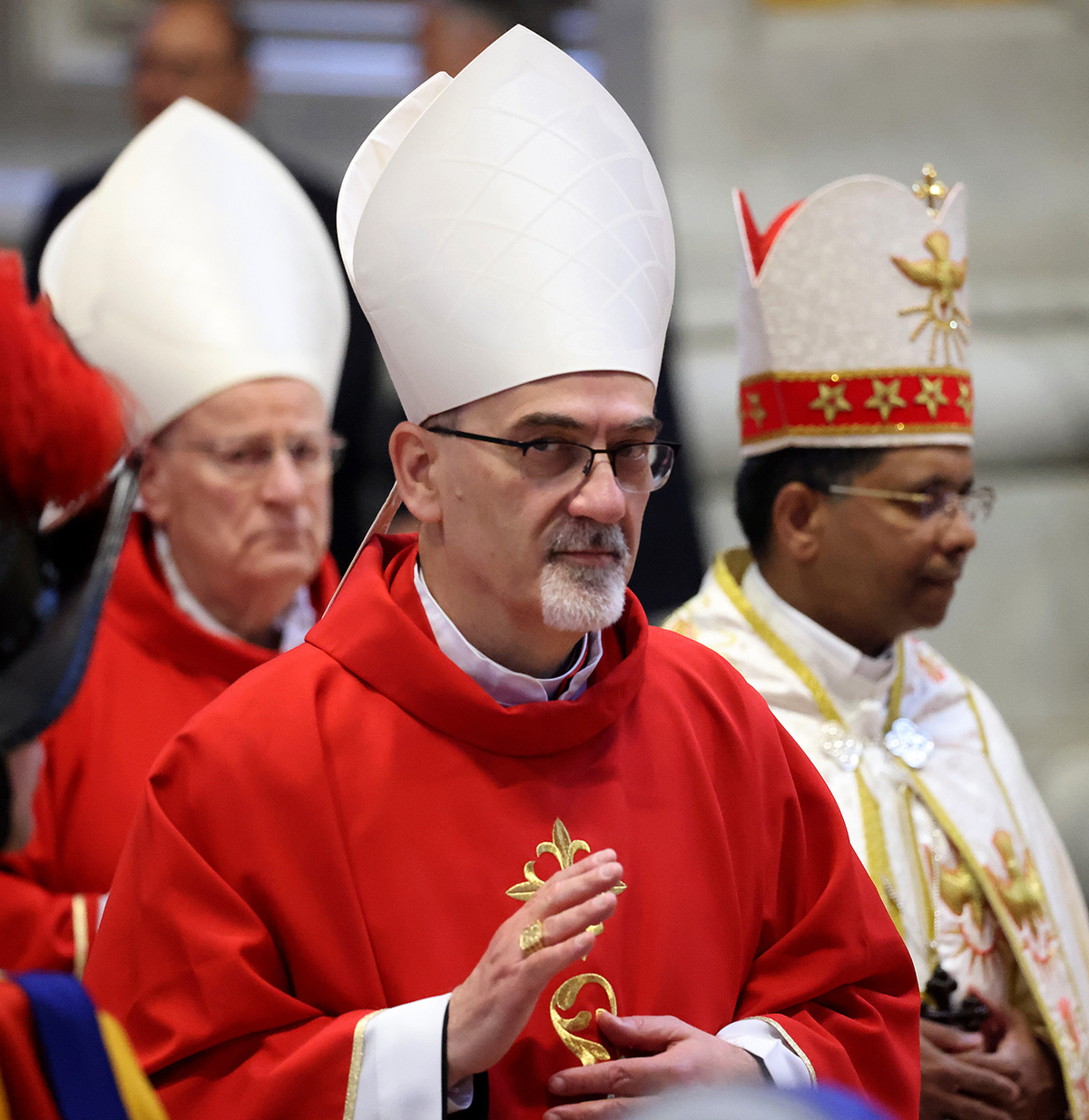
Cardinal Pierbattista Pizzabella attends Mass at St. Peter’s Basilica on May 2 in Vatican City, Vatican. (Photo by Franco Origlia/Getty Images)
When Hamas attacked Israel on Oct. 7, 2023, the cardinal offered himself as a hostage in exchange for the children being held in Gaza. Pizzabella visited the lone Catholic parish in Gaza last Christmas and rebuked Donald Trump for his plans to resettle the people of Gaza. One drawback for Pizzabella, according to Kelly, may be his age. “He’s only 60 years old, and in cardinal years that’s very young. So, you would be talking about a papacy of 25, 30, perhaps more years. So, I think that would be a challenge.”
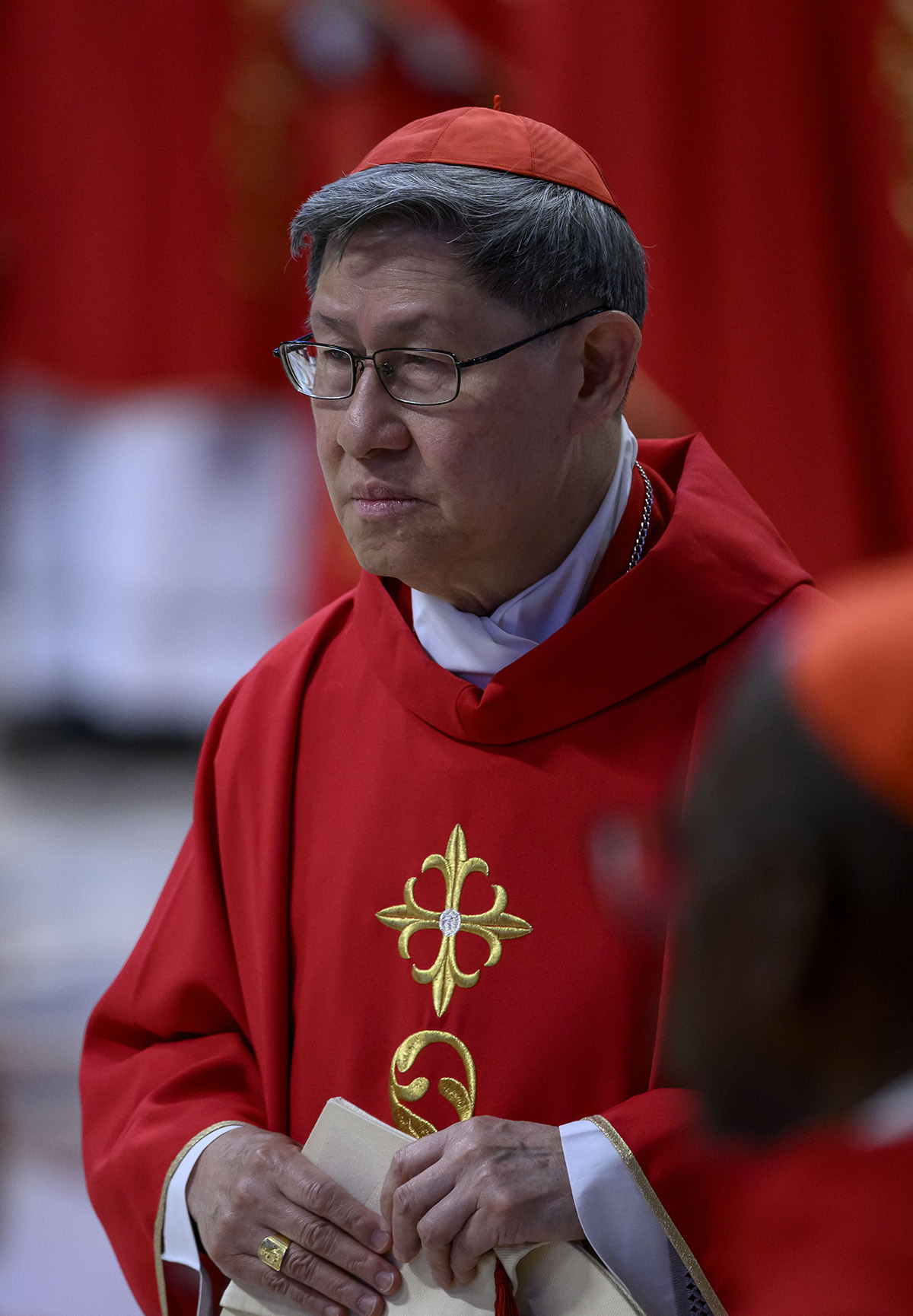
Cardinal Luis Antonio Gokim Tagle attends the fifth Novemdiales mass held for the late Pope Francis in St. Peters Basilica. (Photo by Antonio Masiello/Getty Images)
Known as the “Asian Francis” for his pastoral gifts and solidarity with the poor, Filipino Cardinal Luis Antonio Gokim Tagle, 67, is the former archbishop of Manila and represents the region with the fastest growing Catholic population. Like Pope Francis, Tagle wants to soften the church’s “harsh” rhetoric around gay couples, divorced people and unwed mothers. Says Kelly, “He’s known to be very warm, is known to be very enthusiastic, very in touch with his emotions. I don’t think I’ve ever been at a homily that he’s delivered that he hasn’t wept during.”
“Chito,” as the cardinal prefers to be called, has become a favorite of Gen-Z Catholics for his social media posts. A video of Tagle singing a karaoke rendition of John Lennon’s Imagine, unearthed by right-wing LifeSiteNews, has both won the cardinal new fans and riled up conservatives. However, if the cardinals are looking for an administrator, as some reports suggest, Tagle may not fit the bill after a disastrous presidency at Caritas Internationalis, a collection of world-wide Catholic charities.
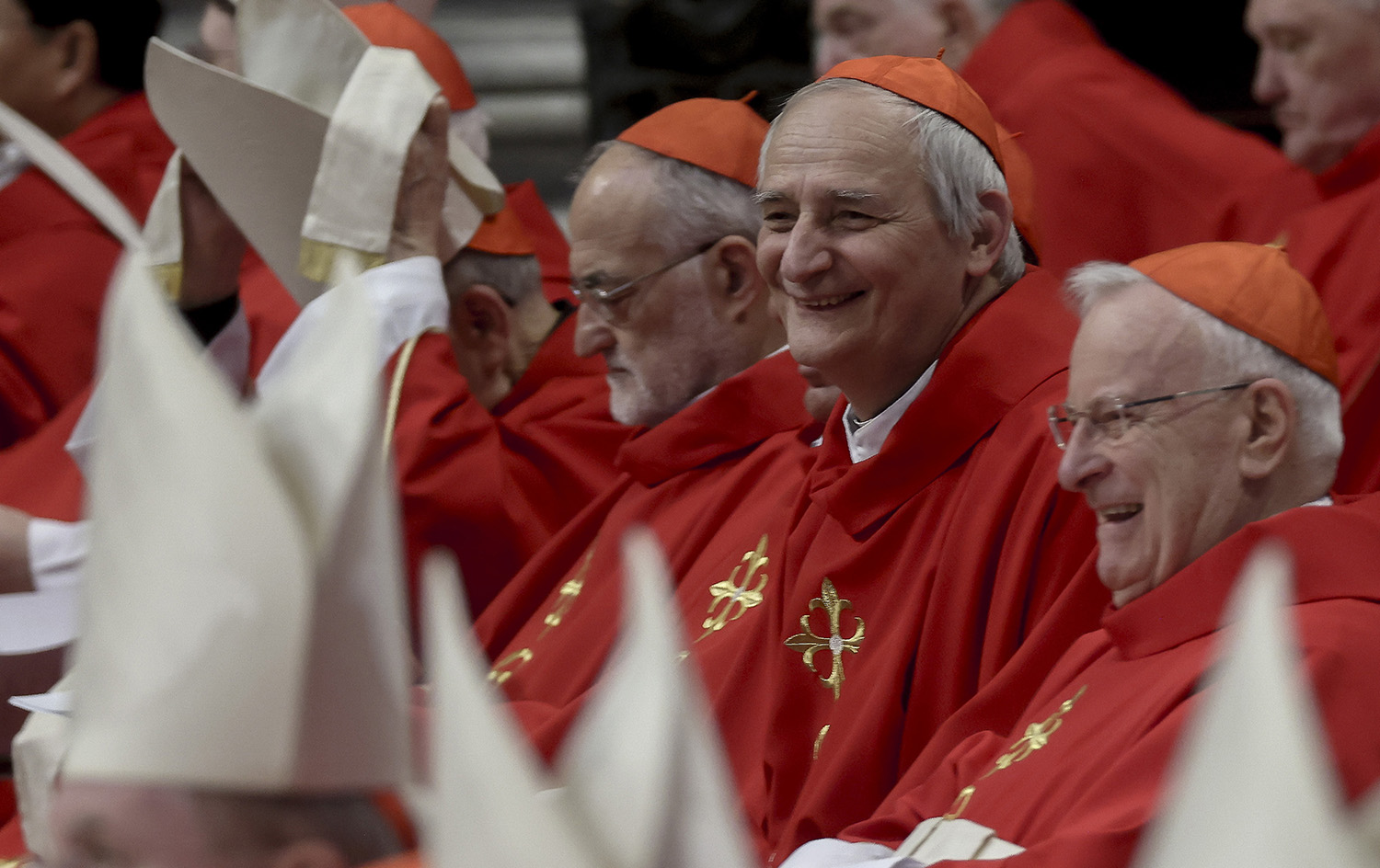
Cardinal Matteo Zuppi smiles as he attends the Sixth Novendiale mass, on May 1 in Vatican City, Vatican. (Photo by Alessandra Benedetti – Corbis/Corbis via Getty Images)
The Vatican’s Peace Envoy to Ukraine and the archbishop of Bologna, Italian cardinal Matteo Zuppi, 69, also would suit the liberal wing of the church, which is struggling to retain its European members. In Germany, 1.1 million Catholics have left the church over sex abuse scandals and the Vatican’s slow pace of reform. German bishops are looking for a more inclusive church that ordains women and welcomes LGBTQ members.
Cardinal Zuppi shared Pope Francis’ concern for the poor and is more accepting of same-sex relationships than many of his colleagues. “I think he would be seen as in the mold of Pope Francis,” Kelly said. “I think that will scare a lot of the more conservative cardinals who feel now is the time … for a bit more stability in the church.”
In the boat
As the world awaits the decision of the current Papal Conclave, there’s another sculpture by Timothy Schmalz worth contemplating. Unveiled by Pope Francis in 2019 also in St. Peter’s Square, “Angels Unawares” is a bronze life-sized statue of migrants and refugees crowded together in a 20-foot boat. Like “Be Welcoming,” it also was inspired by Hebrews 13:2. The 140 figures in the boat are equal to the number of saint statues on the Colonnades of St. Peter’s Square. Schmalz explained: “Most of the saints around St. Peter’s Square suffered immense struggles, likewise the figures in the boat.”
Along with Jesus’ parents, Mary and Joseph, in the boat stands a Jewish man escaping Nazi Germany; a pregnant woman from Poland fleeing communism; a Cherokee man forced to follow the Trail of Tears; a Syrian boy seeking refuge from his country’s civil war; and a boy leaving behind the Potato Famine in Ireland. Refugees from the religious wars in Europe, enslaved Africans and Vietnamese boat people are also on the skiff sailing toward St. Peter’s Basilica. With them, in the center of the boat, is an unseen angel whose wings peak out from above the heads of the other passengers. Pope Francis had the work of art installed in 2019 “so that all will be reminded of the evangelical challenge of hospitality.”
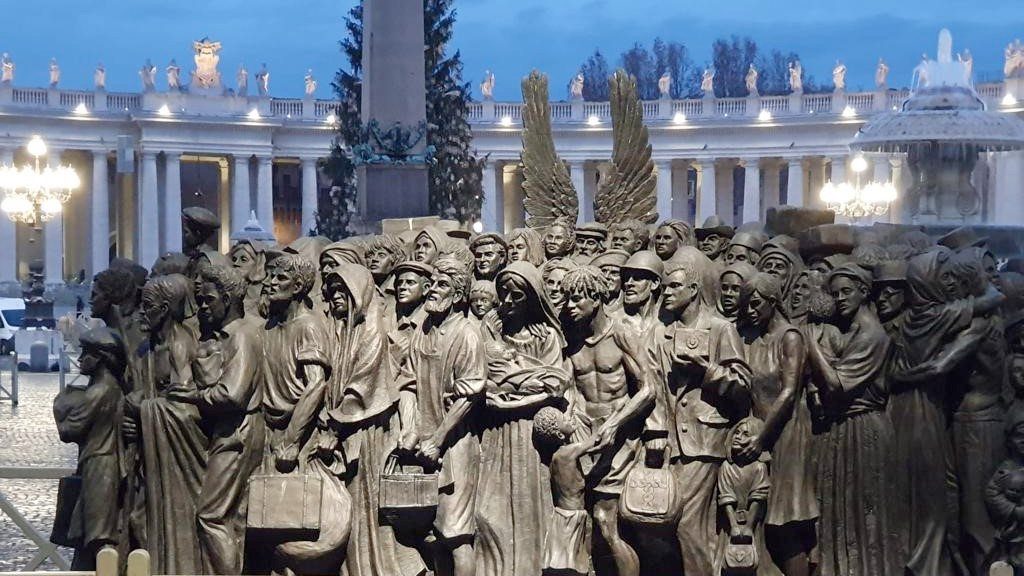
“Angels Unawares”
It’s also worth remembering that many of those in the boat are there because of the actions or inaction of the Catholic Church. The Catholic Church instigated and/or blessed these human tragedies.
Pope Julius II led troops into battle to expand papal territory. Pope Pius XII negotiated with Hitler to protect the German church but remained silent while the Nazis executed millions of European Jews. Pope Paul III declared the slave trade legal and benefitted financially from the labor of enslaved people. The Doctrine of Discovery, issued by Pope Alexander VI, cleared the way for settlers to seize native land.
In 2022, when visiting Canada, Pope Francis begged “forgiveness for the evil committed by so many Christians against the indigenous peoples.”
Many within (and without) the Catholic church want to see this focus on the poor and marginalized maintained. At least one faction would prefer to emphasize the theological and political priorities of the church’s moneyed and increasingly American interests.
For now, the world will have to wait until the white smoke appears over St. Peter’s Square to find out what the future holds for the Catholic Church.
Kristen Thomason is a freelance writer and journalist living outside Edinburgh in the United Kingdom. She has produced educational and promotional media for national and international religious organizations and public television. Kristen also worked with local churches in Metro D.C. and Toronto, Canada. With a master’s degree in communication and undergraduate degrees in media studies and classics, she is interested in the intersection of politics, religion, history and the arts.
Related articles:
Dividing lines at Catholic Conclave may be different than you expect
Remembering the ‘People’s Pope’ | Analysis by Steven Harmon
Al Mohler vs. Pope Francis on human nature
Can Pope Francis help rescue us from Christian nationalism? | Analysis by Rodney Kennedy