

I was going through a box of my things while I was home a few months ago, and it was a reminder of how my obsession with baseball goes back to my childhood. Through the years, I have collected countless odds and ends that always seem to have a Mets logo on them.
How I ended up a Mets fan while living in San Antonio, Texas, is a longer story, but my fervor for baseball seemed to seep through into my schoolwork. In this box were several papers I’d labeled “baseball propaganda,” including some very opinionated pieces about how the DH Rule should be abolished and correct parameters for Hall of Fame induction.

Jonathan Greer
I admit I have softened on my hatred of the DH Rule, but earlier this week, I started texting with a friend about MLB Commissioner Rob Manfred’s decision to reinstate numerous players who have passed away over the years. These players mostly were banned from baseball for gambling or attempts to bribe umpires, and most received these lifelong bans well before I began watching the Mets. The fact is, I really only know two players on the list, and one of them, Shoeless Joe Jackson, I only know because of the movie Eight Men Out.
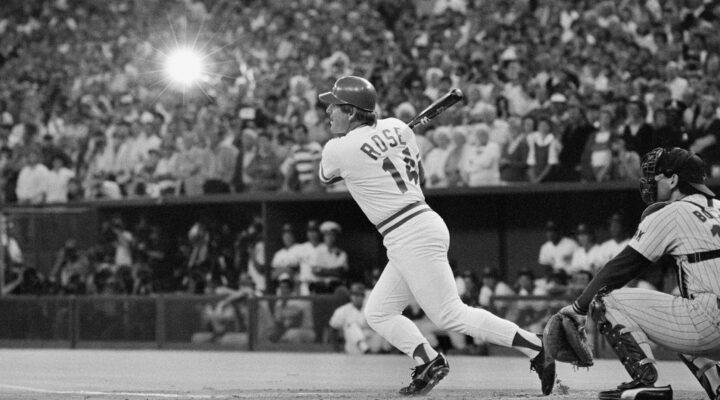
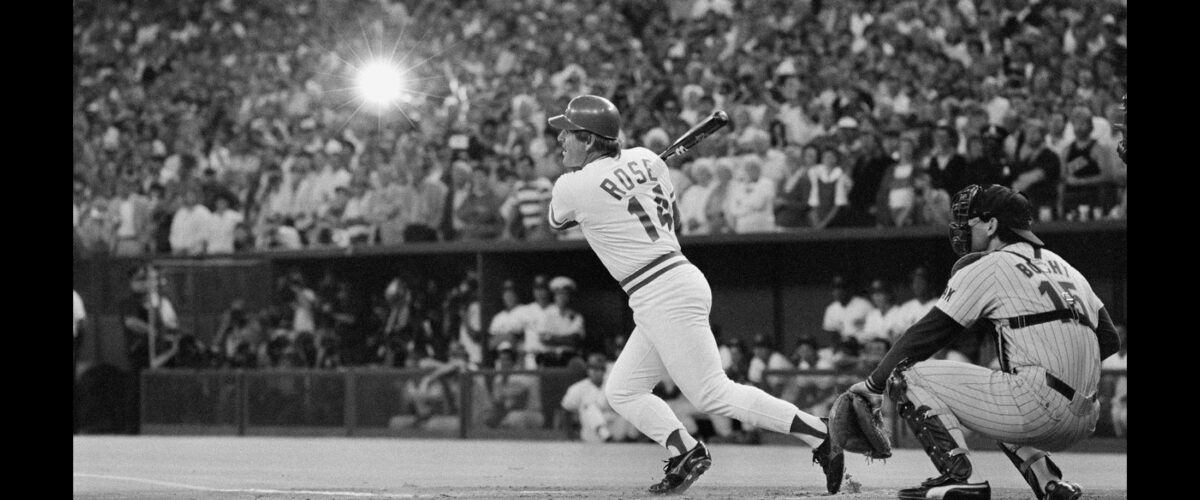
Then, there’s Pete Rose. I can’t recall watching Rose in a game, but it’s likely I caught “Charlie Hustle” in at least one Cubs game on WGN during the twilight of his career. I certainly remember him as a manager and the gambling scandal that led to his lifetime suspension from baseball. Rose was one of those personalities that would pop up every now and then, usually in a news item where he was up to some sort of trouble.
When Rose died last year, obituaries seemed to struggle with the nuance of a great player and a complicated man. It is undeniable that Pete Rose is one of the best baseball players to ever don a uniform. He is first all-time in hits and games played, records likely not to be topped anytime soon, and his consistency, longevity and grit were the hallmarks of his play. Rose’s intensity and will to win were legendary. However, some of his skill set made him a fierce and successful player off the field, another matter.
Rose had a horrendous gambling addiction, one that led him to bet on baseball while still managing the Reds. This gambling continued throughout his life, well past his lifelong ban from baseball in 1989. Rose’s troubles extended from his gambling addiction. He was accused of statutory rape in 2015 and although he never denied the sexual encounter, he claimed he had understood the young woman to be 16, the age of consent in Ohio at the time.
“Manfred’s reinstatement of Pete Rose this week leaves me in the moral dilemma I have faced lately.”
Manfred’s reinstatement of Pete Rose this week leaves me in the moral dilemma I have faced lately. In most cases, I deal with this dilemma regarding art. Should I be watching Woody Allen or Roman Polanski movies? Can I still listen to R. Kelly or Kayne West? Is Gone with the Wind a book I should still be reading?
As a Christian, I understand the fallibility of myself and others. I can’t expect public figures to be perfect, and there are plenty of heroic figures in our country who have some really sordid chapters. Scripture is littered with “men of God” doing bad things. I gave up on my baseball players being perfect when I realized all the serious drug abuse that was happening with my beloved New York Mets in the 1980s.
Still, I do have boundaries on who I will support and I’ve made the personal decision to avoid content created by those mentioned in the previous paragraph.
But is Pete Rose different? Personally, as the years have gone on, it hasn’t been the gambling that really made me question Rose’s eligibility for the Hall of Fame. It’s been purposeful deception regarding the matter in public. And perhaps he was trying to deceive himself. Time and again, he chose a destructive path, seemingly doubling down when forgiveness was a possible path. When asked by a female reporter in 2022 about his statutory rape charge, he blew off the accusation, saying, “It was 55 years ago, babe.”
I’m certainly not claiming to know the eternal outcome for Pete Rose. I don’t know if he found peace in his final days or if he found closure. But so many baseball fans treat the Baseball Hall of Fame almost like they think of heaven. Did you perform well enough to earn a spot? Did you exhibit the moral and ethical standard to deserve this reward? Did you say all the right things and show appropriate adherence to the rules and laws?
“The opinionated 10-year-old me would have written a doozy of a propaganda piece to my teacher regarding this.”
Do I want perfect people in the Baseball Hall of Fame? No way. Ted Williams was notoriously cranky with reporters. Tim Raines had a challenging cocaine problem. Ty Cobb was a horrible racist. Do I think more than stats matter? Well, I think I do.
The baseball writers so far have kept the door closed to players who definitely used steroids or have a large cloud of suspicion hanging over them. Key players of my youth like Barry Bonds, Alex Rodriguez and Manny Ramirez are on the outside looking in, at least for now. Rodriguez and Ramirez were suspended for their steroid use. For players like Bonds, there were no concrete policies in place to suspend folks for steroid use. I’m totally fine with them entering the Hall of Fame, but I think their steroid use should be a part of telling their story.
Then, there is Curt Schilling. He seems more like Pete Rose in terms of exclusion. Schilling does not have a lifelong suspension but pretty much kept his nose clean while playing. His numbers are in line with a Hall of Fame pitcher, but his racist and misogynistic post-career rants have kept him from getting support from the baseball writers. Schilling just isn’t a nice person. Does baseball really want to honor someone who spews such hate?
So what to do with Pete Rose? You’ll likely find opinion pieces on both sides of the matter in the coming weeks. His Hall of Fame case is in the hands of the Classic Era Baseball Committee. Does the Hall of Fame need to look at stats and adherence to rules of the game only? Do character and public persona matter?
I think the opinionated 10-year-old me would have written a doozy of a propaganda piece to my teacher regarding this. The older and sometimes wiser me realizes it’s a bit more complicated. And I’m not really sure I care if Rose gets into the Hall of Fame or not.
But I do care about how his story is told. Leaving out the gambling addiction and leaving out his predatory sexual history does a disservice in telling his full story. He lived his life unapologetically, so we should tell the truth of his life without glossing over the complications.
Jonathan Greer is a recent graduate of Brite Divinity School, where he received a master of divinity degree with a certificate in women and gender studies. He was born in raised in San Antonio and earned a bachelor’s degree in church music and a master’s degree in music history from Baylor University. He is a founding member and board member of Vox Peregrini, a pilgrimage choir. Jonathan lives in Dallas and recently was ordained as a minister by Royal Lane Baptist Church.