



For the past 30 years, I have made it a practice to read the four Gospels all the way through, every word, about three or four times a year; all of which must add up to somewhere around a hundred trips through Matthew, Mark, Luke and John.
If you have done something similar, you may have experienced the change that sort of long, slow practice can make in a person’s life. It doesn’t happen all at once, or once and for all. But slowly, slowly, little by little, reading the four Gospels, time after time, across a lifetime, can leave one with a deep, clear sense of what I call “the cumulative weight of the Gospels.”
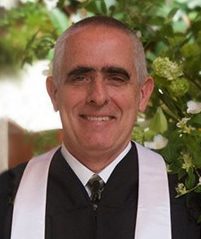
Chuck Poole
Needless to say, the four Gospels, like the rest of the Bible, speak with varied voices. But varied voices notwithstanding, to read the four Gospels over and over, all the way through, is to come to see that the cumulative weight of the Gospels leans in the direction of empathy for, and solidarity with, whoever is most in need of help and hope, comfort and relief, love and welcome.
Twenty centuries of evolving Christian doctrine has made the Christ of Christianity primarily about a problem — our alienation from God by original sin — and how to fix it — our reconciliation to God by Jesus’ sacrifice. This is why popular Christianity’s biggest verses are John 3:16 and John 14:6.
However, to read the four Gospels all the way through, over and over again, is to see the Jesus of the four Gospels is not primarily about a problem and how to fix it, but a life and how to live it, and a love and how to give it.
“The Jesus of the four Gospels is primarily about a life and how to live it.”
To read the four Gospels over and over, all the way through, is to see the cumulative weight of the Gospels leans in the direction of whoever is most vulnerable and voiceless, left out and alone. Jesus, over and over in Matthew, Mark, Luke and John, is drawn to pain like a moth to a flame; sitting down with and standing up for whoever is most marginalized and ostracized, demonized and dehumanized, vulnerable and voiceless, left out and alone.
This is why so many spoke of the late Pope Francis as the most Christlike pope we ever have seen. His life so often embodied that beautiful spirit, the spirit of the Jesus of the four Gospels.
The fact Pope Francis spent so much of his life sitting down with and standing up for whoever was most marginalized and ostracized, demonized and dehumanized, caused some of his critics to dismiss him as “the most woke pope.” But for those who know the four Gospels most intimately, what others ridiculed as “woke” about Francis was a clear embodiment of the spirit of Jesus in Francis.
The popular practice of dismissing contemporary embodiments of the thoughtful and mindful, gentle and grace-filled way of Jesus as “political correctness,” “virtue signaling” or “wokeness” is a sadly misguided development of the past decade.
To read the four Gospels over and over, all the way through, is to come to know that to get up every morning and live a walls-down, arms-out life of love, standing up for whoever is most on the margins by standing up against whatever systems of discrimination and domination, bullying and ridicule, exclusion and erasure put them there is not political correctness; it is Holy Spirit correctness. To live that way and love that way isn’t virtue signaling; it is Jesus following. To live a walls-down, arms-out life of welcoming and affirming love for the whole human family isn’t wokism; it’s baptism.
“Those who are most intimately acquainted with the four Gospels become bravely and beautifully predictable in their responses to the issues of the day.”
That kind of gospel-grounded, Jesus-centered, Spirit-led life of solidarity with whoever is most on the margins is what I call a “more of the same” life.
In John 16:12-14, Jesus is reported to have said, “I still have many things to say to you, but you cannot bear them now. When the Spirit of truth comes, the Spirit will guide you into all the truth; for the Spirit will not speak on the Spirit’s own but will speak what the Spirit hears. … The Spirit will take what is mine and declare it to you.” The Spirit, never freelancing, but always only saying more of the same of what Jesus already had been teaching; taking the disciples further and further along the same path down which Jesus had gotten them started; the same path, but more of the same.
This may help explain why those who are most intimately acquainted with, and deeply rooted in, the four Gospels eventually become so bravely and beautifully predictable in their responses to the issues of the day; uniting in clear solidarity with refugees, asylum seekers and immigrants; working for Medicaid expansion for people living in the health care coverage gap; standing up for marginalized minorities by standing up against white supremacy, Christian nationalism and government muscle-flexing at the expense of gender nonconforming people.
We become so predictable in that way, not because we are checking a series of progressive boxes, but because we are following a single expansive Spirit. It’s what the Gospel of John calls “the Spirit of truth” — the Spirit Jesus said would take us further and further along the same path down which Jesus got us started before Jesus handed us off to the Spirit, whose work is to show us more of the same life of love Jesus embodied while Jesus was with us. It’s what the poet Christian Wiman called “the love that keeps opening and opening and opening.”
This may be what Jesus had in mind when, in that same “Holy Spirit section” of the Gospel of John, he is reported to have said that once Jesus left and the Spirit came, Jesus’ followers would do the same things Jesus had been doing, only more so.
More of the same, more of the same, more of the same ….
Chuck Poole retired in 2022 after 45 years of pastoral life, during which he served churches in Georgia; North Carolina; Washington, D.C.; and Jackson, Miss. He has served as a visiting preacher and teacher on the campuses of multiple universities, seminaries and divinity schools. He was the founding teacher of the Wood Street Bible Class in Jackson, which he led for 21 years. The author of nine books, numerous published articles, one gospel song and the lyrics to three hymns, Chuck has served as a “minister on the street” and as an advocate for interfaith conversation and welcome. He and his wife, Marcia, now live in Birmingham, where he serves on the staff of Together for Hope.
Related articles:
Jesus, politics and the purple church