


“The kingdom of God is inside you, and all around you, not in mansions of wood and stone. Split a piece of wood, and I am there; lift a stone, and you will find me.” — Gospel of Thomas, Saying 77
This ancient quote credited to the Gospel of Thomas, a noncanonical early Christian text, resonates deeply in the current American religious and political landscape. In a time when faith is increasingly entangled with power, policy and polarization, these words beckon us to return to the radical heart of the divine message: God dwells not in structures of dominance but in the human spirit and in creation itself.
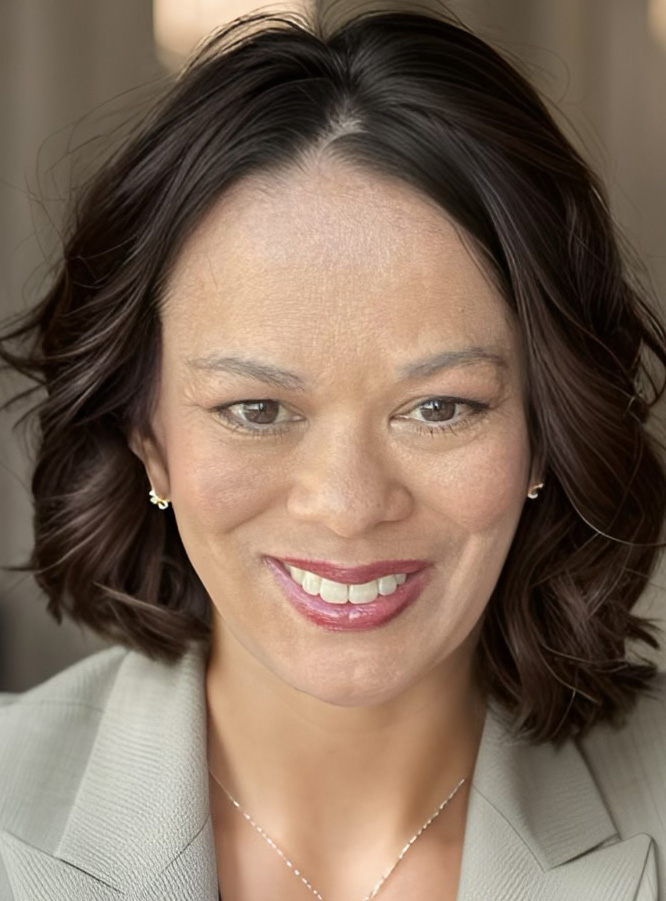
Nicole Wiesen
The death of Pope Francis has triggered waves of reflection across the globe. A reformer by intention if not always by institution, Francis consistently urged the church to rediscover compassion, humility and its duty to the margins. He described the church as a “field hospital,” not a fortress. He challenged the global conscience on poverty, climate change and human dignity — often standing in contrast to the political priorities of many so-called Christian leaders, especially in the United States.
His revision of the Catechism of the Catholic Church in 2018 to declare the death penalty “inadmissible” in all cases marked a bold theological shift. In doing so, Francis emphasized the church’s evolving understanding of human dignity — not as conditional or earned, but as inviolable. This positioned the church directly against the use of capital punishment and implicitly questioned the moral framework of countries like the United States, where the death penalty remains legal.
“In America, we find ourselves in a peculiar religious contradiction.”
And yet, in America, we find ourselves in a peculiar religious contradiction. The most vocal defenders of the term “pro-life” often campaign aggressively for the death penalty. They oppose abortion with fervor yet support policies that end life through execution or through slow neglect — lack of health care, poverty, environmental destruction or mass incarceration.
How can a society claim to be pro-life while supporting executions and turning its back on the poor? As Sister Helen Prejean, one of the most prominent anti-death penalty activists in the United States, has written, “Being pro-life cannot just be about birth; it must be about dignity at every stage of life.”
This contradiction is not just political; it is spiritual. If the kingdom of God is truly within and among us, then the prison, the homeless encampment, the refugee camp and the Death Row cell are all sacred spaces. Jesus himself was executed by the state, framed as a criminal and abandoned by the empire and religious elite. What would he say about those who, in his name, sanction similar acts today?
Christianity has drifted from its roots. The first Christians were not political power brokers but persecuted radicals who saw God in the face of the leper, the widow and the outcast. The Gospel of Matthew, chapter 25, reminds us we encounter Christ in the hungry, the prisoner and the stranger. It doesn’t say we’ll meet him in the legislature or the luxury sanctuary.
In the words of Jesus from Luke 17:21, “The kingdom of God is within you.” Yet too often, American religion seeks to externalize that kingdom — build it in walls, laws and elections — rather than cultivate it in compassion and justice.
In 2023, the United States carried out 24 executions and issued 21 new death sentences. These statistics do not reflect a system of justice, but of racial and economic bias, human error and retribution. More than 190 people have been exonerated from Death Row since 1973 — clear evidence our system kills not just the guilty, but sometimes the innocent.
“To live the gospel with integrity, we must re-examine what it means to be pro-life.”
To honor Pope Francis’ legacy and to live the gospel with integrity, we must re-examine what it means to be pro-life. It means opposing abortion and execution. It means valuing life before birth and after prison. It means caring for the child and the mother. It means lifting every stone of injustice and seeing God there.
We must split the wood of our own hardened ideologies and see if Christ is really there. We must lift the stone of every death sentence, every denied clemency, every executed human being and ask: Was this justice or idolatry?
The next generation of believers is watching. They are not drawn to a Christianity of exclusion, judgment or violence. They seek a spiritual home rooted in mystery, compassion and authenticity. They understand true religion does not worship power — it loves humanity.
As we remember Pope Francis and reflect on the moral crises of our time, we should not build more mansions of stone. We should build communities of mercy. We should abandon the politics of death and embrace the theology of life.
The kingdom of God is still within us — and we are still being asked to choose whether to live like we believe it.
Nicole Wiesen serves as director of communications for Georgians for Alternatives to the Death Penalty and is a Public Voices Fellow on racial justice in early childhood with the OpEd Project in partnership with the National Black Child Development Institute. She advocates for advancing mental health resources for previously incarcerated individuals
Related articles:
Evangelicals could kill capital punishment if they would, speakers declare
Abolitionist cites reasons to campaign against death penalty
Younger adults driving decreased support for death penalty
Trump demands death penalty be restored