

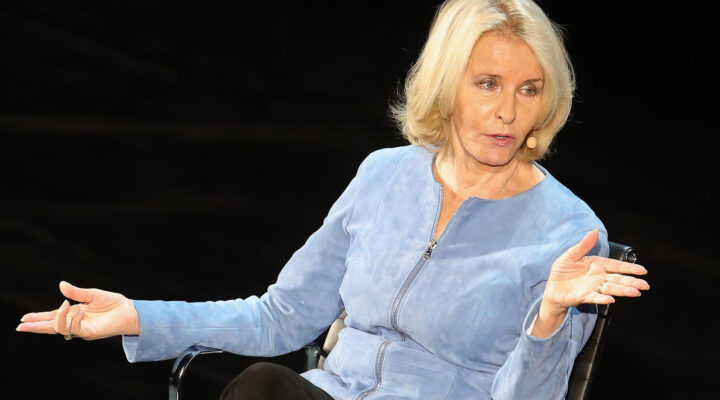
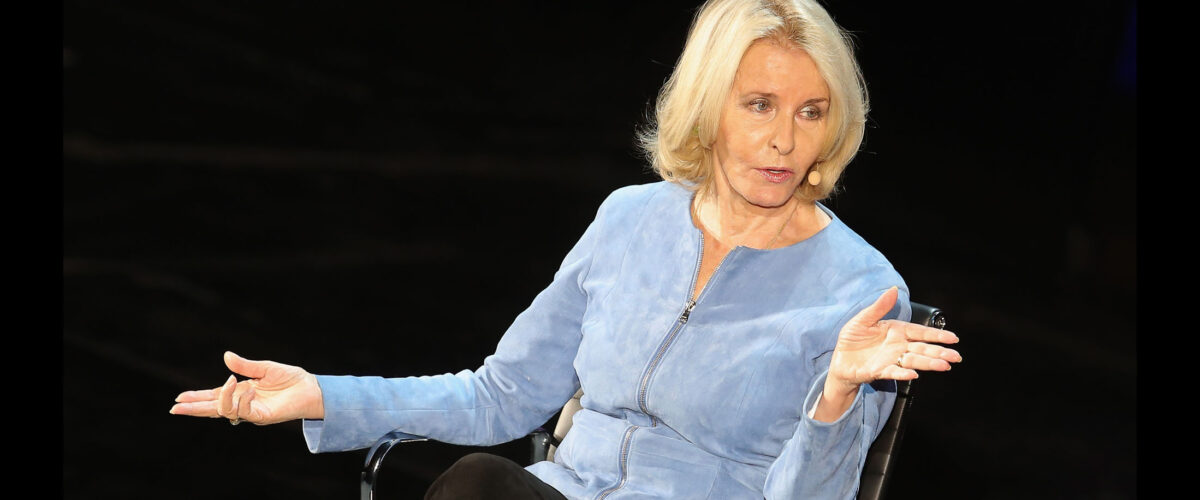
Washington Post reporter Sally Quinn feels like she has been around the table in Washington, D.C., history and has met important people along the way she would count as friends.
Quinn’s late husband, Ben Bradlee, was the influential Washington Post editor during the Watergate scandal. Some credited the paper’s reporting with ousting Richard Nixon as president.
Quinn also wrote for the Post and befriended the newspaper’s influential owner, Katherine Graham, who at one time was called the most influential female leader in America. Graham was the only female owner of a national newspaper.
“It’s interesting because lately I’ve been going to these dinners and I find that people ask me questions, and I start telling stories, and they keep saying, ‘Oh, my God, you were there,” Quinn explained.
Quinn, now 84, was in the room when her husband and Graham repeatedly sat at the same table trying to figure out how to cover Nixon and his crimes. Looking back now, she remembers the tough choices the owner and editor had to make.
“Katherine had more strength, and she was so courageous, and she was fun,” Quinn said. “Ben loved her. Katherine and Ben had the most wonderful relationship together. They really got each other. The two of them during Watergate, [it] would never have happened without the two of them working together to uncover the truth. Katherine never talked about religion, but she was definitely a Christian.”
Looking back, she says of the two: “They trusted each other. They trusted each other’s values and morals and ethics. They were totally on the same wavelength when it came to Watergate and the importance of keeping and holding former President Nixon accountable.”
One irony to her is that for the first 18 months of the Post’s reporting on Watergate, readers weren’t paying attention. But Bradlee and Graham — along with reporters Bob Woodward and Carl Bernstein — kept pressing on.
“There is something about military courage that I think is strong, but moral courage is the most difficult.”
“Ben was the most courageous person I ever met in my life,” Quinn said. “Clearly, literally the most courageous. My father was a general. He fought in two wars, and he was incredibly courageous. Ben fought in World War II. I mean, there is something about military courage that I think is strong, but moral courage is the most difficult. Ben was the most honorable person I ever met in my life; decent, honorable, good, and strong, brave. It’s hard to define where he got it. I think he just always was that way.”
Quinn, who was raised in the South and attended church regularly but strayed away from the faith as she grew up, became an atheist before returning to faith in God.
 “I remember we were living in Athens. My father was a general, and he had a car and driver. On Sunday mornings, the car and driver would take us, my brother and sister and I, to Sunday school. I still prayed to Jesus every night, but I didn’t believe it. You know, I just thought it was kind of like Santa Claus. I’ve always been fascinated because of my Southern upbringing of the mysticism and the magic of religion and what it is that compels people to be so religious and believe so strongly. It’s always fascinated me.”
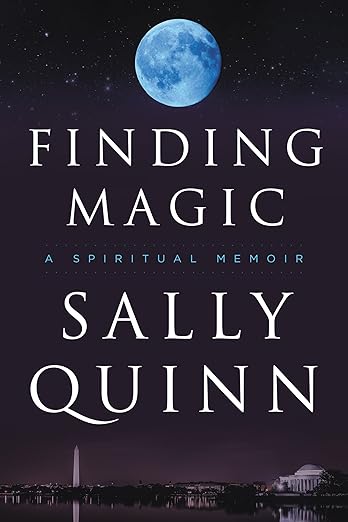
Quinn’s fascination with religion wound up leading her to ask the leadership of the Washington Post to establish a new religion section called “On Faith” that she led. A previous book she wrote, Finding Magic, tells her story of intersecting with religion across time.
Today, Quinn sees herself as a “little c” Christian and defines herself as someone who follows the teachings of Jesus and is curious when it comes to religion, which led her to be the main editor of the religious section for the Washington Post.
 “When I took on being the lead writer for the Post when it came to religion, I knew it was a huge issue at the time, but I also knew I didn’t feel like I knew enough about religion to cover it, which is why I brought in others, such as author Jon Meacham, to help me along the way,” she explained.
Although Quinn has sat around many different tables in the center of national discourse, she retains her sense of being curious. Now, as a book author again at age 84, she hopes others will join her on another journey in another important time in history.
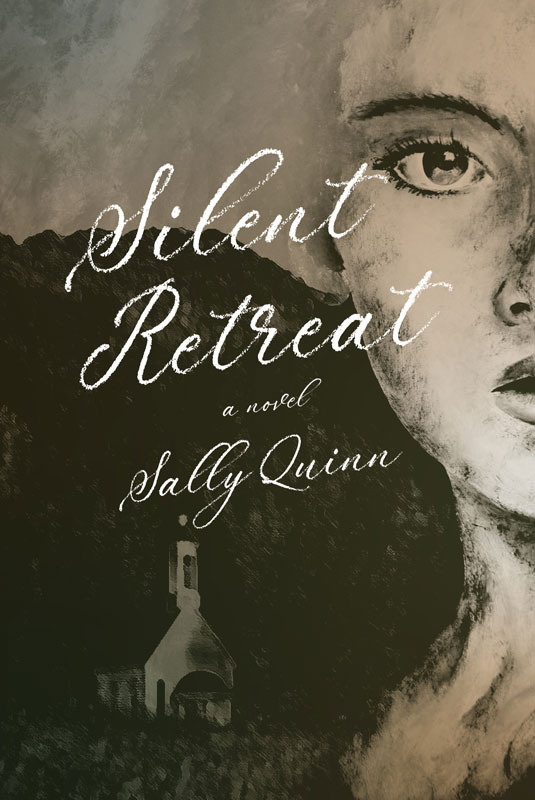
This time, her book is a novel. Silent Retreat tells the fictional story of reporter Sybilla Sumner checking into a monastery for a five-day silent retreat, only to meet James Fitzmaurice-Kelly, archbishop of Dublin. The novel explores the challenge each of them faces to their vows — hers being wedding vows and his being a vow of celibacy.
Publicity for the book calls it a “soulful love story” that “explores the boundary between flesh and spirit, restraint and ecstasy, and asks what we’re willing to sacrifice in the name of passion.”