


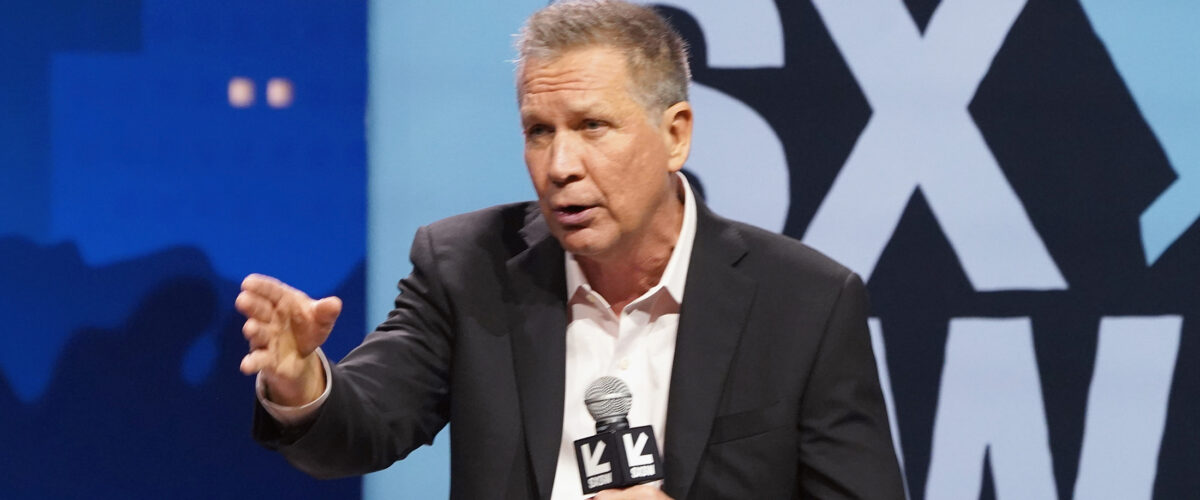
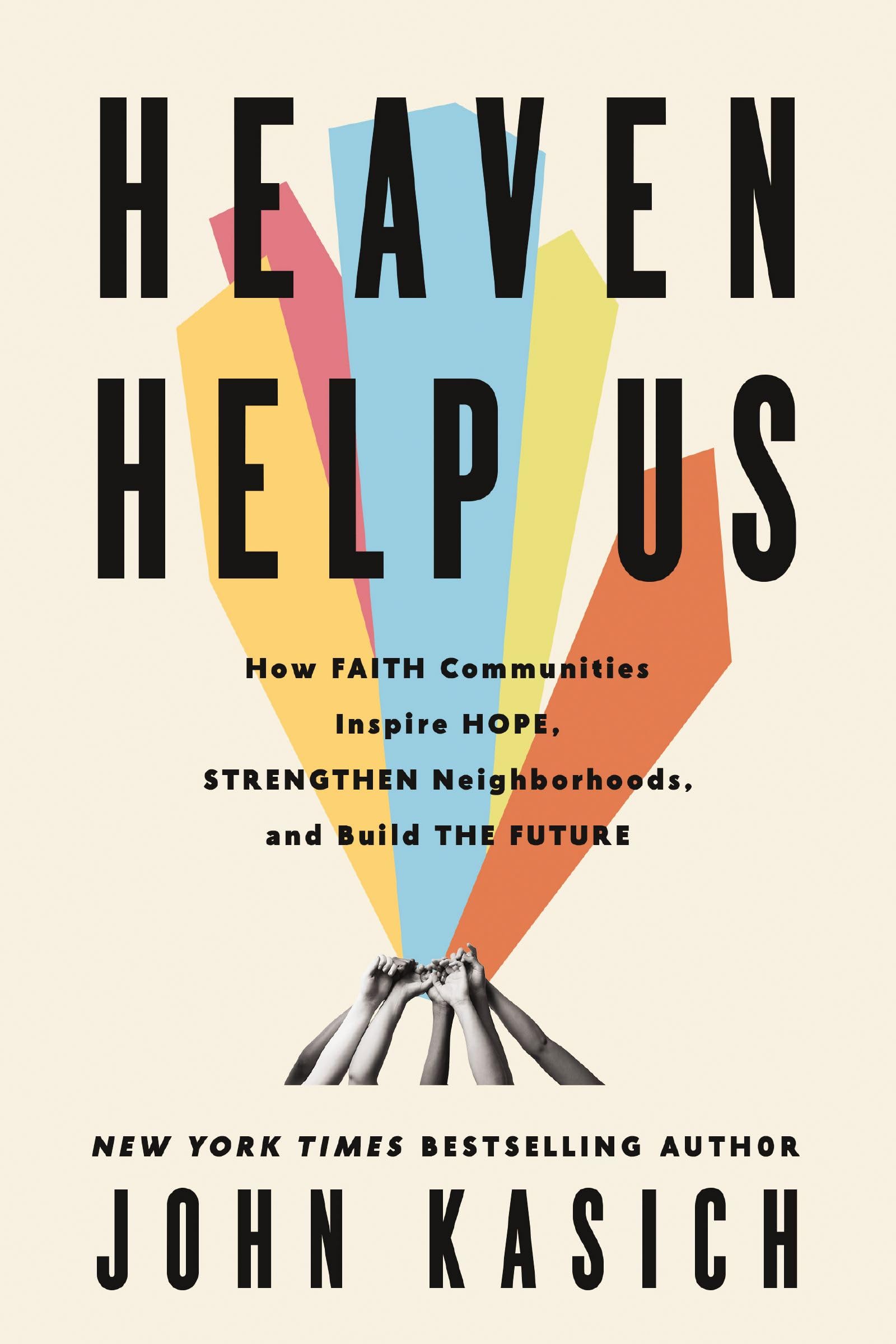
Former Ohio Gov. John Kasich believes stories change people, and he hopes the stories in his new book, Heaven Help Us, will convince others that lives of service can mend a fractured nation.
When the idea first surfaced, Kasich thought he would convene theologians to define belief. After a few fruitless meetings, however, a friend sent him in a different direction — toward the lives of ordinary people doing the work.
“There is nothing like learning from people who are actually on the field doing the work,” Kasich said in an interview.
Version 1.0.0
Kasich, 69th governor of Ohio and a 2016 Republican presidential hopeful, never has been shy about discussing faith. Heaven Help Us is his second book on the subject, following the memoir Every Other Monday, and its chapters spotlight ministries that illustrate what he calls “bottom-up” change. He argues that renewal starts when neighbors improve their block, their school or their congregation and keep at it day after day.
“I was trying to get a group of theologians to define what it meant to be a believer so that pastors didn’t get pressured into doing political things they didn’t want to do,” he said. “I had these meetings with these theologians, which went nowhere. So, my friend said, ‘Why don’t you write your own book?’ And then I thought, OK, I will. The idea or the title of it, ‘Heaven Help Us,’ just came out of the blue to me.”
Many readers, Kasich admits, may have preferred a tell-all about his onetime rival Donald Trump. That book, he adds with a laugh, “would be flying off the shelves,” but it would not address the disease of polarization that, in his view, stifles cooperation and saps hope.
“I believe when we are united, we’re bigger, and when we’re divided, we’re smaller. I just am concerned about the division that we see, the words that are used. That’s where I am.”
Instead, Kasich set out to cast faith communities in a more hopeful light.
“I believed it would be helpful to kind of portray the faith community as one that’s really positive and really helpful, not all this judgmental stuff and anger and division and everything else, but that the community itself can bring about fantastic change in our country. And I think the book kind of illustrates chapter by chapter how that happens with people who are carrying that forward.”
“I knew this all along that people of faith can bring about change.”
Writing the book didn’t change his faith, he said. “I knew this all along that people of faith can bring about change. … It made me feel good to be able to tell these stories. I feel as though the wind is underneath my wings.”
Among the accounts that moved him most are those rooted in tragedy and forgiveness.
“The story of the shooting at the synagogue in Pittsburgh is etched in my memories. I remember exactly where I was when I heard about Pittsburgh and, of course the whole country knew about what happened in Charleston, S.C., at the Mother Emmanuel Church. I just thought they deserved to be put in this book on the issue of forgiveness, which we all need. There are so many great stories in the book, it’s hard for me to mention just one. There are stories in the book, from people teaching adults to read — 25% of Americans are illiterate — to people helping people who are homeless. “
Kasich believes the United States is going through a season of tension, yet he remains convinced its democratic and religious institutions are resilient enough to survive. Real renewal, he contends, will come from neighborhoods, not from Washington or statehouse corridors.
“We’re going to get through it because the institutions are strong enough to get us through this. And then the question has to be, we have to focus on that change comes from the bottom up, not the top down. … I like to say if the secretary of state and your trash man went on vacation, who would you miss more?”
Kasich plans to spend the coming year talking about the book in churches, synagogues, mosques and civic auditoriums. Each chapter ends with practical suggestions readers can adopt in their own communities. These suggestions range from tutoring literacy students to volunteering at homeless shelters to simply extending forgiveness where injury still lingers. Kasich hopes these small acts of mercy will create ripples of faith that grow into waves of healing across the United States and far beyond.