



The Wisconsin Supreme Court erred in not granting a Catholic social agency the same exemption from state unemployment assistance taxes enjoyed by churches, religious schools and other faith groups, the U.S. Supreme Court ruled June 5.

Justice Sonia Sotomayor
The unanimous opinion written by Justice Sonia Sotomayor concluded that requiring Catholic Charities Bureau and four affiliated nonprofits to pay the tax was a violation of the U.S. Constitution’s Free Exercise clause. All the groups are controlled by the Catholic Diocese of Superior, Wis.
In 2024, the Wisconsin Supreme Court agreed with the State Labor Commission’s determination that the groups’ work — primarily serving developmentally disabled people regardless of religious affiliation — was mostly “secular in nature.” Other nonprofits in the state are required to pay into the unemployment tax program.
Catholic Charities, Headwaters, Barron County Developmental Services, Diversified Services, and Black River Industries “neither attempt to imbue program participants with the Catholic faith nor supply any religious materials to program participants or employees,” the state justices ruled. “Although not required, these would be strong indications that the activities are primarily religious in nature.”
But the Wisconsin Labor Commission violated the neutrality government as constitutionally required to respect when interacting with faith groups, Justice Sotomayor noted in the Supreme Court decision.
“When the government distinguishes among religions based on theological differences in their provision of services, it imposes a denominational preference that must satisfy the highest level of judicial scrutiny. Because Wisconsin has transgressed that principle without the tailoring necessary to survive such scrutiny, the judgment of the Wisconsin Supreme Court is reversed.”
The First Amendment guarantees the autonomy to define internal governance and missions without government interference, Justice Clarence Thomas said in concurring with the decision in Catholic Charities Bureau v. Wisconsin Labor and Industry Review Commission.
“Religious institutions may create different corporate entities to help manage their temporal affairs, but those entities do not define the broader religious institution’s internal structure,” Thomas said. “Here, although Catholic Charities and its subentities are separately incorporated from the Diocese of Superior, they are, as a matter of church law, simply an arm of the diocese.”
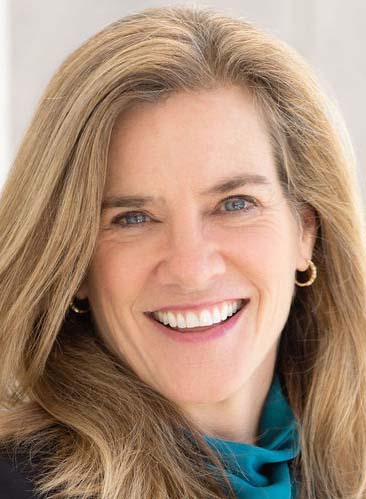
Holly Hollman
Holly Hollman, general counsel for Baptist Joint Committee for Religious Liberty, credited the ruling for strengthening legal protections for ministries with functions other than worship or proselytizing.
“Still, accommodations must be carefully drawn,” she said. “If states cannot set reasonable limits, they may respond by offering fewer exemptions. Religious liberty is best secured when accommodations are tailored, fair and sustainable.”
Americans United for Separation of Church filed an amicus brief in the case warning that a decision for the plaintiffs could extend tax-exempt status to any group claiming a religious motivation behind its services.
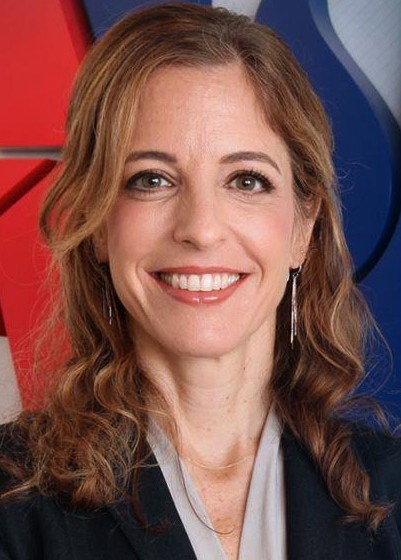
Rachel Laser
“This case continues a dangerous trend we’ve seen from Christian nationalist legal outfits for more than a decade now,” AU President Rachel Laser said after the ruling was released. “From health care access to retirement benefits to antidiscrimination protections and now unemployment insurance, they argue that companies and organizations can simply claim a religious motive in order to sidestep worker protections. If these religious extremists succeed, the mere invocation of religious beliefs will erase important social safety nets and civil rights protections for workers. Americans United will continue to unite the religious and nonreligious to fight for workers’ rights.”
The ruling also could be detrimental to the availability and vitality of unemployment insurance programs for unemployed Americans, she added. “Today’s decision could be used to hamstring courts’ ability to ensure that employers must contribute to this safety net when they are not qualified for the limited religious exemptions under the law.”
The Freedom from Religion Foundation condemned the ruling as a misinterpretation of the Constitution.
“This decision is fundamentally wrong. Treating religiously affiliated nonprofits the same as all other nonprofits is not a violation of the First Amendment,” FFRF Co-President Annie Laurie Gaylor said.
Repercussions from the decision could negatively affect unemployment compensation for laid off workers nationwide, Legal Director Patrick Elliott said. “This ruling is a dramatic expansion of religious exemptions that invites confusion, litigation and further erosion of state/church separation.”
However the Heritage Foundation, the far-right group behind Project 2025, praised the ruling.
“It is heartening to see that the Supreme Court swiftly and unanimously rejected Wisconsin’s weak justifications for the state’s effort to deprive religious charitable works of their religious character — an effort that clearly discriminated against faiths. Lower courts must take note that First Amendment rights of religion cannot be so easily undercut by hostile state actors.”
Related articles:
High court appears sympathetic to Catholic Charities case against Wisconsin
Seven religion-influenced cases pending before US Supreme Court