

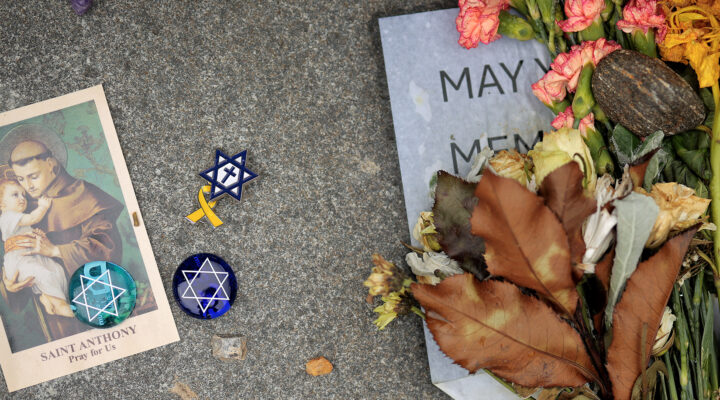
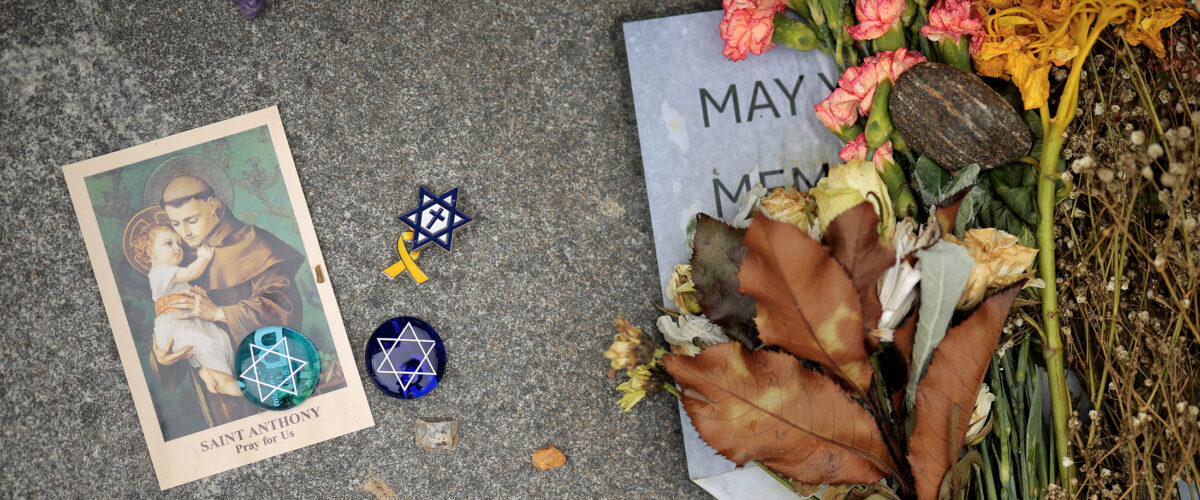
I come to this writing not as a bystander, but as a neighbor, a witness and a believer in justice, peace and the sacred dignity of every human being.
On a recent afternoon in Boulder, I stood shoulder to shoulder with members of our Jewish community after a violent attack that left many injured. The words shouted during the assault — “Free Palestine” — never should be used as a shield for hatred or terror.
And yet, they were.

Stuart C. Lord
That phrase, once a call for dignity and liberation, has been wielded in acts of violence across the globe, echoing not hope but horror. I know Palestinian Americans who feel crushed by war and voiceless in their grief. I know Jewish neighbors who now fear walking into synagogues. I write this as a Christian leader, heartbroken by what I witnessed and convicted that silence is no longer an option.
“Free Palestine” emerged from decades of struggle for self-determination and justice. It was born from displacement, occupation and generational trauma. At its best, it expressed the yearning of a people for freedom and peace.
Hanan Ashrawi, a Palestinian peace negotiator, once said, “Our struggle for freedom and independence must be rooted in nonviolence and respect for human rights.”
And yet, in recent months, that slogan has been weaponized. When shouted in moments of hate, it no longer calls for peace but instills fear. For many Jewish people today, hearing “Free Palestine” triggers trauma.
On June 1 in Boulder, Colo., a man attacked peaceful demonstrators with firebombs. He shouted, “Free Palestine” as he injured 15 people, including an 88-year-old Holocaust survivor.
Sen. Michael Bennet said: “He was not trying to improve the lives of Palestinians. He simply wanted to kill Jews, by burning them.”
“He was not trying to improve the lives of Palestinians. He simply wanted to kill Jews.”
Colorado Attorney General Phil Weiser stated: “My thoughts are with those injured and impacted by today’s attack against a group that meets weekly on Boulder’s Pearl Street Mall to call for the release of hostages in Gaza.”
What began as a slogan for liberation is now, in some moments, misused as a justification for violence. That must be named and challenged.
After the Pearl Street attack, Jewish families questioned whether to attend synagogue. Parents hesitated to send their children to Hebrew school.
CU Boulder student Megan Jones said, “I’m proud to be Jewish, but also frustrated that it’s no longer a given to be safe in our own community.”
Rabbi Fred Greene of Congregation Har HaShem said: “A lot of people feel like it can’t happen here. I’m not so naive. I think it can.”
These are not abstract fears; they are lived realities.
To heal, we must reawaken our moral imagination. We must ask: What happens when those who cry out against oppression adopt the tools of hate?
Violence against civilians, no matter the cause, must be condemned. The humanity of the Palestinian people must never be denied. Neither can we ignore the reality of rising antisemitism.
We must not do to others what we so passionately stand against.
“The humanity of the Palestinian people must never be denied. Neither can we ignore the reality of rising antisemitism.”
We need new words. New rituals. New ways of speaking that bind rather than break.
As Boulder vigil participant Ed Victor put it: “Our goal through walking quietly is for people to notice us … seeing pictures of people still in Gaza again, both alive and no longer with us.”
His quiet protest reminds us: Dignity can be defended without destruction.
In the days after the Pearl Street attack, I saw tears. I saw anger. I saw resilience.
Jonathan Lev, executive director of the Boulder Jewish Community Center, said: “We are praying for their recovery and holding space for our entire Jewish community during this time of fear and insecurity.”
And I felt that fear, too — as a Christian, as a Black man, as a neighbor. But I also felt a calling to speak truth with tenderness and to help restore the bridge between empathy and accountability.
We must return “Free Palestine” to its rightful meaning: a cry for dignity, not destruction. We must challenge the misuse. We must speak with clarity, compassion and courage.
That is how we heal. That is how we hope. That is how we become whole again.
Stuart C. Lord is a Christian minister, educator and civic leader based in Boulder, Colo., where he is a member of Pine Street Church. He serves as CEO of Y Solve Foundry and Delta Developmental, where he guides the launch and scaling of mission-driven ventures that unite ethical leadership with financial sustainability. He previously served as associate provost at Dartmouth College, president of Naropa University and founding director of the Center for Leadership and Civic Education at DePauw University. He is also the founder of the Declaration of Respect and the BSA Survivor Action Group.
Related article:
‘This is not the way of peace,’ Boulder Baptist pastor says after attack