


The first few years I lived outside Alabama, I received the same question by those learning where I grew up: Did you see members of the Ku Klux Klan walking down the street in Alabama?
This question was sometimes asked in sincerity and other times in condescension of those who bought into the plethora of stereotypes about Alabama. And to be honest, actions from some of our racist Alabama residents only fanned the flames of these stereotypes.
Ginny Brown Daniel
This question of the overt presence of the KKK caused me to wrestle mightily with my home state as well as the racism I saw in other communities pointing the finger at Alabama. At the time in the late 1990s, I responded in a comparable refrain: “No, I never saw members of the KKK in white robes and hoods marching down the street in my hometown. Those days are long past in our history’s rearview mirror. We have learned our lessons from the racism of our past and are now on a journey of racial reconciliation.”
Oh, my. Even as I write this, I see the naïve white privilege that enabled me to speak and believe these words with fervent ardor. No, I never saw those in hoods burning crosses and enacting violent terror in my hometown, but the people formerly wearing the hoods were still there.
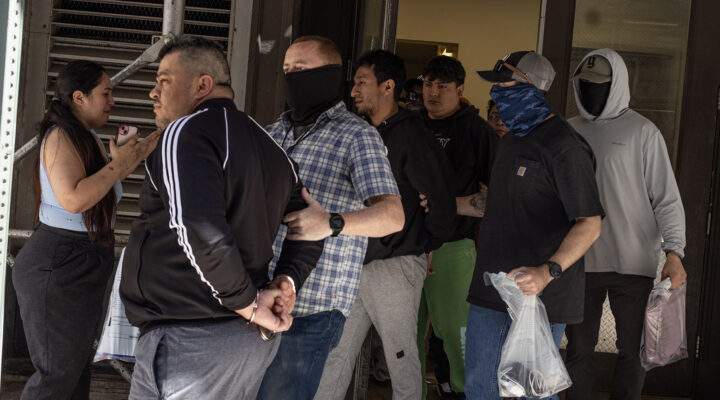
I’ve thought a lot about those hooded people as I see pictures of Immigration Customs Enforcement agents wearing masks that hide their face as they detain immigrants in courthouses, homes, schools, farms, manufacturing plants and on the street. Why are federal agents allowed to mask their faces when detaining these individuals, including children?
The current administration has responded that it’s because agents are being “doxxed.”
I was unfamiliar with that term and had to look it up. It means people can use facial identification software to identify federal agents to find out their personal address and information. The intentional irony is that doxxing is being used to target pro-Palestine protesters and progressive lawmakers. Sadly, doxxing is what enabled the horrific shootings and murder of the Minnesota senators and their spouses in their own homes last Friday night.
And I’m aware that some protesters who are more vulnerable than others have worn masks we often saw during the pandemic to shield their face as well. Who’s right? Who’s wrong?
What’s in a mask?
The answer depends on power. Masks worn by marginalized protesters often serve as a fragile veil of protection — against retaliation from employers, institutions or even family. But masks worn by federal agents wielding weapons and arrest orders serve an entirely different purpose. These masks do not shield the powerless from harm; they shield the powerful from accountability.
“The spirit of the hood still walks among us.”
What does it mean when a government agent can show up unannounced, refuse to identify themselves, and take someone away from their home or school while concealing their own identity? It means the spirit of the hood still walks among us — modernized, bureaucratized and legalized. It means our nation has learned how to update its racism, not dismantle it.
The link connecting the masks of the KKK and the masks of ICE agents today is white Christian nationalism. It’s a modern iteration of an old sin — the belief that God ordains white dominance, American exceptionalism and divine backing for law-and-order oppression.
This ideology wraps itself in the language of faith while denying the core gospel truth that every person bears the image of God. It’s not just that history repeats itself — it evolves, finds new uniforms, new language and new legal loopholes. But the root remains: fear masked as righteousness, power masked as piety.
As a person of faith and conscience, I find this morally intolerable. True safety comes not from secrecy but from justice. We are taught what is done in the dark will be brought into the light. That means if you have power and are acting with integrity, you should be willing to do it with your face uncovered.
The agents who hide behind masks may say they fear doxxing but what should terrify us more is the state-sanctioned erasure of faces, names and stories of the people being detained.
We cannot build a beloved community on anonymity and fear. We must name what is happening for what it is: a violation of human dignity. And we must unmask the systems that allow it.
Ginny Brown Daniel is an ordained minister who is a keynote speaker and writes on faith and politics in Texas. Visit her website at www.ginnybd.com.