


The words “Deadhead” and “Christian” aren’t often spoken in the same sentence, if only because the former doesn’t seem to have much to do with the latter. But upon deeper inspection, there may be more overlap than one might think.
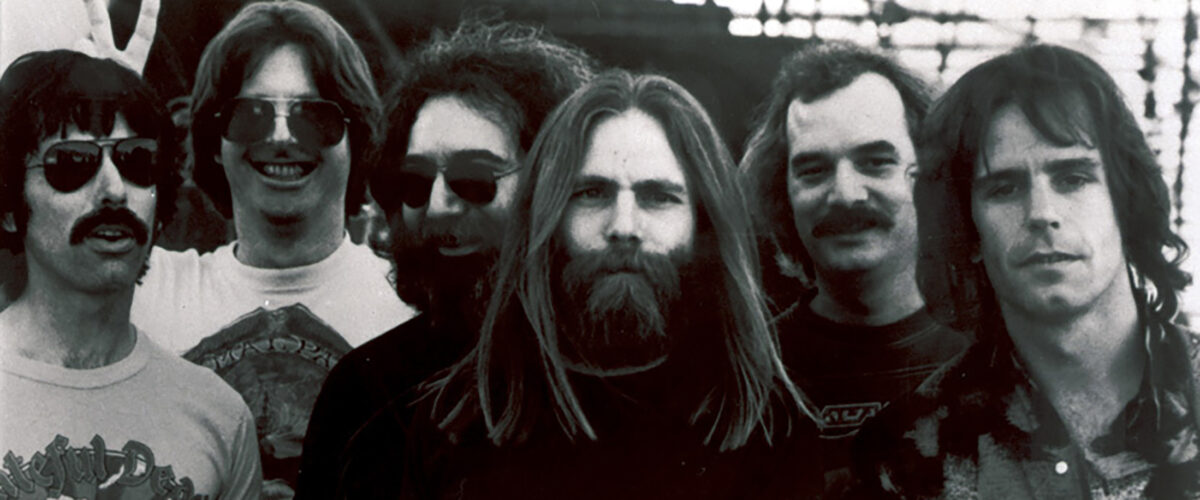
The eclectic 1960s rock band The Grateful Dead, has no shortage of spiritual ideas that have turned its “Deadhead” followers into a traveling movement, bonded by shared ideals and a strong community. Even in the decade since the band’s surviving original members performed their last concerts in the 2015 Fare Thee Well tour, the movement remains active and strong through the internet.
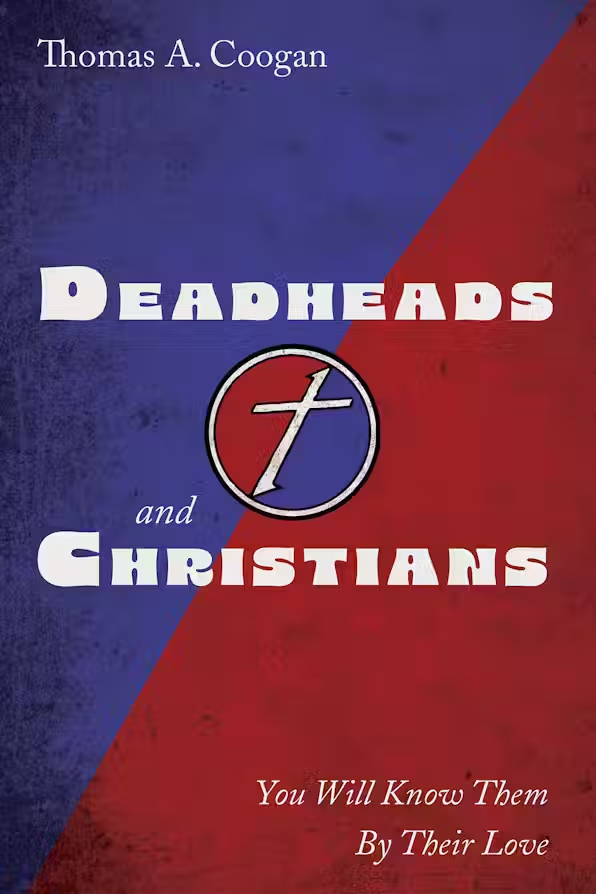
This spiritual aspect of the band is the subject of a new book by Thomas A. Coogan. A 63-year-old member of Nassau Presbyterian Church in Princeton, N.J., Coogan has been a Grateful Dead fan since the 1970s. His book, Deadheads and Christians: You Will Know Them By Their Love, explores the spiritual intersection between Christianity and the “peace and love” vibes of the band.
 “It’s kind of a hare-brained project,” Coogan joked. “The working title of the book was Ask A Deadhead, and the original intention was to spur Christians to go probe the ideas, go meet Deadheads, and find out if there is a religious dimension to this. As I described it years ago, it’s common for Deadheads to say, ‘As a Deadhead, I believe such.’ There’s an expectation that being a Deadhead involves certain attitudes and behaviors I don’t believe you’d see in someone who is a Rolling Stones fan.”
The idea that Grateful Dead’s music has religious dimensions isn’t new, but Coogan says there’s something worth reflecting on in its message. Deadheads find great significance in the music, identify with it, and signify their identity through the band with T-shirts and bumper stickers. They’re infamously not shy about their love of the band and reflect their life behavior in that identity.
The Grateful Dead certainly wouldn’t have considered themselves a religious band, especially in the context of what organized religion often means in the popular American context. However, Coogan points out that they did consider themselves spiritual, grasping for a deeper and higher meaning that is more than mere entertainment.
“To me, it means welcoming the stranger, seeing the divine in everybody you encounter, finding commonality with anybody you encounter,” Coogan said. “The common attitude is a hopeful and optimistic attitude in the face of our mortality. Their imagery and songs are largely about how this time in our world is short and what are you going to make of it. That can lead to cynical hedonistic attitudes, but in our community it’s a peace and love attitude. Christians ought to be able to extend a friendly greeting to anybody they encounter.”
The book itself initially emerged in the aftermath of the Grateful Dead’s 2015 reunion concerts. Having returned to the culture after a few decades focusing on work and family, and after having spent several decades in deep Bible study, Coogan attended and saw the entire Deadhead movement revitalized by that last round of shows, realizing what an active, large and dynamic community it was. In some ways, it had achieved its peace and love goals half a century later more effectively than when it started.
Coogan ended up discussing the phenomenon as a presentation at his church, shortly after the 2015 tour. Having seen the strength and breadth of the Deadhead movement, he tied that community and spirituality into a Bible study about the Acts of the Apostles. Eventually, after much prodding, he expanded that concept into a full book manuscript and formally submitted it for publication.
His biggest surprise since publication, though, has been how many Christians have emerged from the woodwork to say they appreciate his ideas. Up until now, he’d mostly assumed he was alone in his Grateful Dead fascination at church.
“I have been surprised about how many church-going Deadheads I have uncovered, most of whom are surprised there is anybody else. Most people are caught by surprise that there would be overlap between Deadheads and Christians, but fellow Deadheads have approached me too, saying they’re surprised somebody else is making a serious evaluation of it.
“It’s a peace and love community. It could just be people with a similar musical taste, but those who are really into the community know it means as much as their taste. They share a bond with all those people who know it means as much to them as it means to you.”