


In a historic and extraordinary legal maneuver, the Trump administration has filed a lawsuit against all 15 sitting federal judges in the state of Maryland.
The lawsuit, initiated by the U.S. Department of Justice on Tuesday, directly challenges a standing order from Chief Judge George L. Russell III that temporarily blocks the deportation of migrants who file habeas corpus petitions contesting their detention.
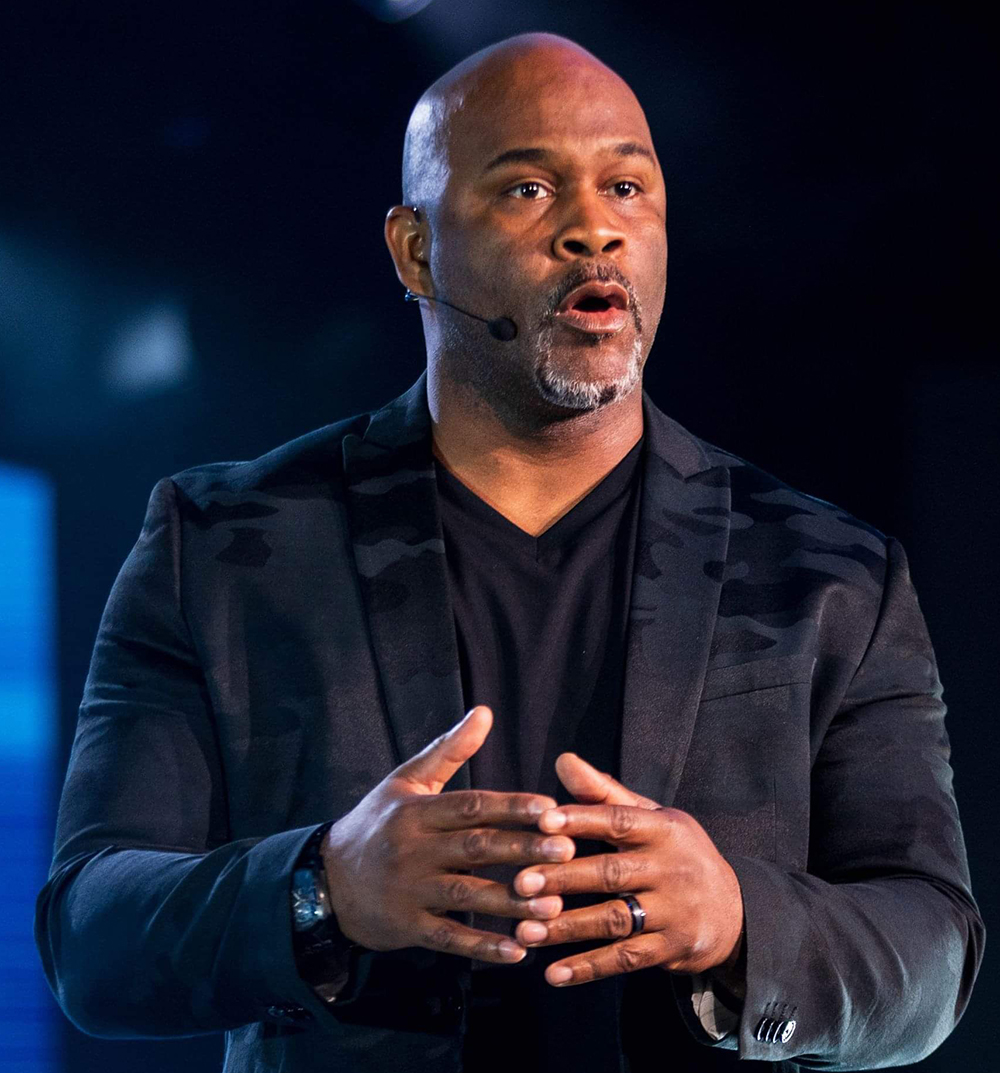
Edmond W. Davis
This legal confrontation is not just another chapter in the long-standing tug-of-war between federal branches, it’s an unprecedented move that tests the very structure of American democracy. We are now watching a direct challenge to the authority, neutrality and legal independence of the federal judiciary.
To be clear, the DOJ has a right to question legal rulings it believes overstep constitutional boundaries. Under Attorney General Pamela Bondi, the department argues the Maryland court’s 48-hour stay on deportations infringes on the executive branch’s power to enforce immigration law. Their contention is that this pause undermines the will of the electorate and obstructs presidential authority.
But instead of filing a conventional appeal or asking the Supreme Court to weigh in, the DOJ chose to file a lawsuit against all 15 judges of the U.S. District Court for the District of Maryland. That action alone sends shockwaves through legal circles and constitutional law classrooms nationwide.
“We are now watching a direct challenge to the authority, neutrality and legal independence of the federal judiciary.”
The standing order in question, signed by Chief Judge Russell, gives migrant detainees two business days of protection from deportation after filing a habeas petition. The purpose? To ensure petitioners are present and accessible for judicial review, can access legal counsel and aren’t swiftly removed before the courts can examine their claims.
The DOJ views this as judicial activism. Critics of the administration, however, see it as a necessary safeguard in response to increasingly aggressive and sometimes chaotic deportation practices. This move by the Trump administration appears to be less about legal clarity and more about exerting control over an independent judiciary that dares to scrutinize executive action.
Legal scholars from both conservative and progressive backgrounds are in near-universal agreement that this move is without precedent. They point out that judges, even when their rulings are challenged, always have been protected by judicial immunity and the structural integrity of separation of powers.
Let’s ask plainly: Has anything like this ever happened before? The answer is a firm no.
There is no known instance in modern U.S. history where the Department of Justice has sued an entire district bench.
We’ve had heated disagreements between the White House and the judiciary — FDR’s court-packing attempt and Abraham Lincoln’s suspension of habeas corpus during the Civil War come to mind — but never have we seen a legal campaign launched against an entire federal court simply for doing its job.
This isn’t about political party or even presidential policy. This is about the normalization of judicial retaliation. What happens when judges can be sued for interpreting the Constitution as they see it? What precedent does that set for the future of impartial jurisprudence?
This concern isn’t theoretical. Judge Esther Salas of New Jersey has been speaking out passionately since 2020 after her son was murdered by a man targeting her for being a federal judge. She warned us then, and she warns us now: The judiciary is under attack — not just politically, but personally.
And here’s what we must remember: Judges are not legislators. They are not extensions of the executive. They are constitutional referees whose job is to protect rights, uphold laws and provide balance when one branch reaches too far. That’s not judicial activism. That’s the design of our system.
“We inch closer to a system where loyalty matters more than law, and power outweighs principle.”
So, when I look at this moment, I don’t just see a courtroom dispute. I see the erosion of long-standing legal norms. When judges are painted as political enemies rather than legal authorities, we inch closer to a system where loyalty matters more than law, and power outweighs principle.
Still, there is reason for hope.
Federal judges are among the most resilient and essential public servants in American democracy. Their reach, although often behind the scenes, extends into the most vital aspects of our daily lives — defending civil rights, interpreting statutes, ensuring due process.
And our Constitution, while tested, is still strong.
The separation of powers never was meant to be convenient. It was meant to protect us from tyranny, from overreach, from exactly this kind of power play. The framers knew unchecked authority — even by elected leaders — must be balanced by neutral legal oversight.
This lawsuit may or may not succeed in court, but in the court of public integrity, it already has raised red flags. If we allow judges to be sued for issuing temporary stays or for protecting constitutional rights, what will be next? Who will be next?
This is not merely a political fight. This is a legal reckoning. And more than that, it is a battle for the soul of our democracy.
We the people must decide whether we stand with the rule of law or with those who would bend it.
Edmond W. Davis is a social historian, journalist, retired history professor, a socioemotional intelligence expert, and author of multiple historical texts, Arkansas’s first and only Tuskegee Airmen history textbook, and an international speaker. He is a former director of the Derek Olivier Research Institute for the Prevention of Gun Violence. Davis is the founder of the National HBCU Black Wall Street Career Fest and an Amazon No. 1 author.