

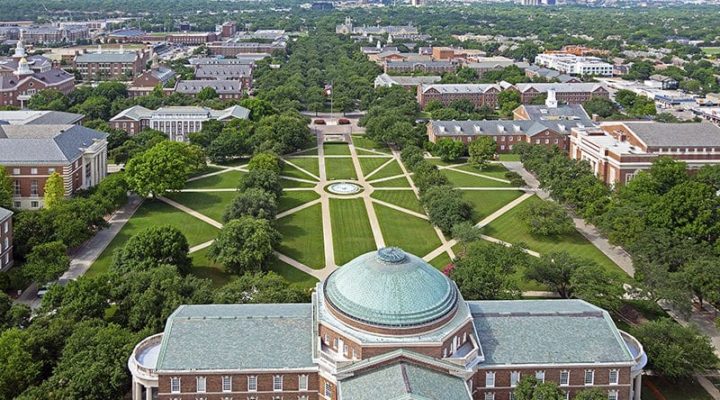
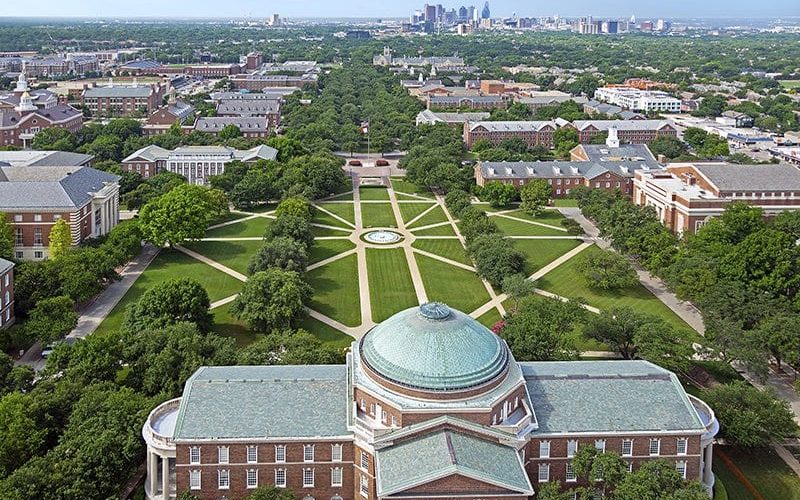
The Texas Supreme Court says the South Central Jurisdiction of The United Methodist Church has legal standing to sue Southern Methodist University over changed bylaws that deprived the regional body of its right to govern the church-owned university located in the heart of Dallas.
The Texas high court issued a mostly unanimous opinion June 27 upholding the regional unit’s right to governance over SMU, which South Central’s predecessor founded in 1911. The jurisdiction also legally holds title to 133 acres of the university 234-acre Dallas campus.
The ruling written by Texas Supreme Court Justice Debra H. Lehrmann states: “We hold that the conference has statutory authority to sue SMU to enforce its rights” under both SMU’s 1996 articles of incorporation and Texas state law.”
South Central brought the lawsuit in November 2019 after SMU filed a revision of its 1996 bylaws, deleting a section that described the university “to be forever owned, maintained and controlled by the South Central Jurisdictional Conference of The United Methodist Church.” At that time, SMU President R. Gerald Turner said the board desired to separate from the UMC because of its anti-LGBTQ stances.
Justice Lehrmann wrote that state law allows the jurisdictional conference “as a church or other religious association to assert and maintain the very right of control that SMU disputes and that its board has unilaterally purported to sever.” The opinion also gives the jurisdiction standing to litigate its breach of contract claim as a “third-party beneficiary.”

Laura Merrill
Arkansas Bishop Laura Merrill, president of the South Central Jurisdiction College of Bishops, and Mission Council Chair Derrek Belase issued a statement praising the high court ruling: “Today’s favorable opinion from the court supports our original position that SMU must seek the approval of the SCJ when making changes to its amendments. Our desire is to see this matter brought to a peaceful resolution so that our historic connection to the university can be fruitfully maintained for future generations.”
In a statement released July 3, SMU said it was “pleased the justices recognized that the school followed the law when it submitted changes to its governing documents to the state and that it is prepared to defend its board’s right to act in the university’s best interests.”
Whether the lawsuit still will go forward remains to be seen because so much has changed in the six years since South Central first sued SMU. Not only are major players different, but the original reason SMU claimed for eliminating South Central from its bylaws — the UMC’s anti-LGBTQ stance — also has been removed.
These changes, plus the jurisdictional leaders’ reaction to the ruling, lead observers to speculate it is possible negotiations between the university and the jurisdiction will settle the matter privately. However, in testimony before the high court in January, the jurisdiction’s attorney, Sawnie A. McEntire, said the regional body still thinks it needs legal relief.
“The fact this dispute has been resolved about same-sex marriages and things of that nature, that’s not going to let us back in the door,” McEntire was quoted in a UM News article. “They shut the door on us.”
The conflict began in late 2019 when SMU’s board of directors and then-President Turner submitted new bylaws to the Texas secretary of state. Turner and the board claimed that as a nonprofit business chartered in Texas, it only needed to file new incorporation papers with the state and not submit to the church jurisdiction’s longstanding governance. Under church law, SMU was required to have approval for changes from the full jurisdictional conference that meets once every four years.
At the time, Turner contended the reason for the change was the action earlier that year by a special General Conference, the UMC’s highest lawmaking body, to impose harsher penalties for violating the denomination’s anti-LGBTQ stances. He said SMU was open to all people and that remaining under UMC control would send the wrong message to students and faculty.
The UMC had held since 1972 that “the practice of homosexuality is incompatible with Christian teaching.” Although the statement was contained in the nonenforceable Social Principles, a set of social-justice guidelines, the “incompatible” language was used to enact enforceable church laws. These laws included refusing ordination to LGBTQ candidates, disallowing same-sex weddings, denying use of church funds for LGBTQ-friendly organizations and defrocking ordained clergy who admitted to being a “self-avowed practicing homosexual.”
Finally in May 2024, General Conference removed all the UMC’s anti-LGBTQ policies and laws.
In addition to church law changes, two of the principals in the SMU-UMC dispute are now gone from the scene. Turner retired after three decades as SMU’s top executive and has been succeeded by Jay C. Hartzell.
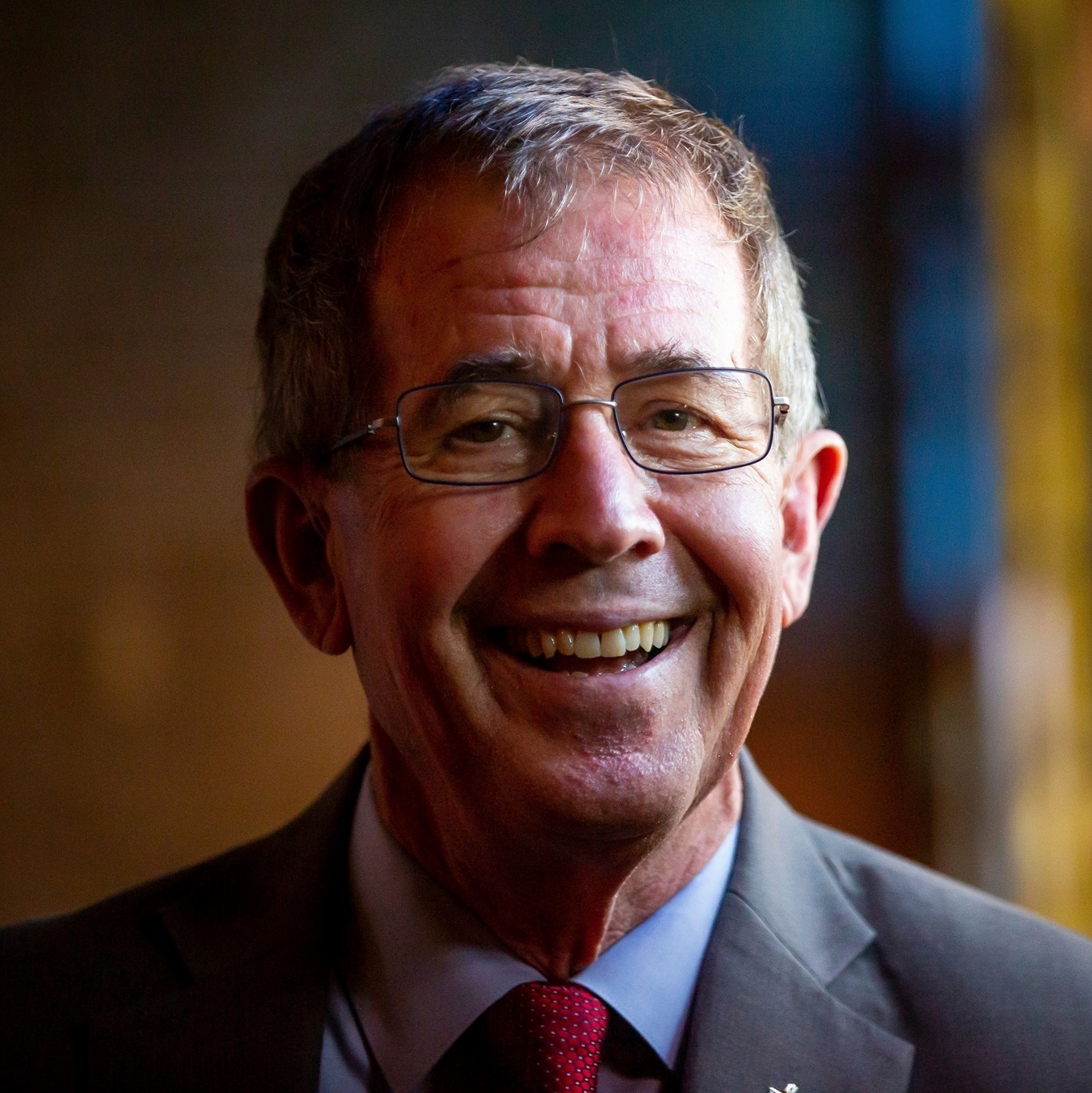
Scott Jones
Also gone is a former United Methodist bishop, Scott Jones, who previously was professor of evangelism at Perkins School of Theology, the UMC-related seminary at SMU. As a South Central bishop leading the Houston-based Texas Annual Conference, Jones was a member of SMU’s board and cast the lone negative vote to amend the 1996 bylaws. Subsequently SMU’s board terminated Jones’ membership.
Jones brought a claim against SMU’s general counsel in the South Central litigation, but a lower court dismissed that lawsuit in 2021, and an appeals court upheld the dismissal. In the interim, Jones retired from The United Methodist Church to become a bishop in the breakaway Global Methodist Church, a dissident faction opposed to LGBTQ acceptance. Since Jones didn’t ask the Texas Supreme Court to review the lower-court dismissal, his case wasn’t addressed in the June 27 opinion.
Jones now serves on the faculty of the new Wesley House of Studies at Baylor University, a Baptist seminary that has embraced the more conservative Methodist branch.
SMU’s ties to The United Methodist Church have remained strong throughout the six-year legal battle. In addition to housing one of the UMC’s 13 official seminaries, the university is home to Bridwell Library, which now houses the entire collection from the World Methodist Museum formerly located at the World Methodist Council headquarters in Lake Junaluska, N.C.
Related articles:
Lawsuit between SMU and UMC is headed to court again
Truett Seminary names a controversial Methodist bishop to its faculty