

Just days before President Donal Trump left office at the conclusion of his first term in office, a “1776 Commission” he created in 2020 issued its report, calling for “patriotic education” designed to counter what he claimed was a “twisted web of lies” of systemic racism being taught in public schools, calling it “a form of child abuse.”
Although President Joe Biden abolished that commission shortly after winning the 2020 election, Trump has reinstated the work’s agenda and its goal of getting rid of “wokeness” across the spectrum of U.S. institutions, including a “radicalized view of American history” which “vilified (the) Founders and (its) founding.”
In the months following his return to office in January 2025, Trump has ruled mostly by way of 166 executive orders, 44 memoranda and 71 proclamations.
Now, his first legislative initiative, what he calls his “One Big Beautiful Bill” (formally, HR-1, a budget reconciliation bill), is a done deal. The House of Representatives largely left intact the Senate’s version, although a number of House members received unspecified concessions to secure their votes.
“Trump has ruled mostly by way of 166 executive orders, 44 memoranda and 71 proclamations.”
The president pressed Republican congressional leaders to get the bill to his desk by July 4, the date of our nation’s birth, in order to sign it into law amid the national fireworks displays — to supplement his personal vanity project begun with the recent military parade on his birthday.
The Congressional Budget Office, a nonpartisan federal agency tasked with tallying the costs of federal budget initiatives, assesses that HR-1 will have dramatic economic impacts on the distribution of wealth in the U.S.
Overall: If approved, this legislation will create the largest transfer of wealth from the nation’s poorer economic classes to the wealthiest.
What’s in the bill
Among the findings (largely verified by the analyses of other similar private firms) are the following:
- Americans who comprise the bottom fifth of all earners would see their annual after-tax incomes fall on average by 2.5% within the next decade, while those at the top would see about a 2.4% boost.
- On average, that translates to about $560 in losses for someone who reports little to no income by 2034, and more than $118,000 in gains for someone making more than $3 million.
- A person making $217,000 or more annually would receive about a $12,500 tax cut, on average, according to a new analysis released Monday by the Urban-Brookings Tax Policy Center, which did not factor in last-minute changes to the legislation. But a person making $35,000 or less would see only about a $150 average tax cut.
- Medicaid, the government’s health care program for lower income households, will be cut more than $1 trillion, forcing somewhere between 12 million to 17 million people off its roll.
- More than 3 million people would lose food stamps and other nutritional-related programs, including more than 17 million children.
- The bill will increase the national debt by $3.4 trillion ($4.1 trillion, counting cumulative interest) over the next decade.
- Hundreds of rural hospitals, in particular, will be hard hit. The American Health Care Associates estimates one-quarter of nursing care facilities will close.
- Bonus to big pharma. HB-1 allows more medications to be exempt from Medicare’s price negotiation process, keeping prices high.
- A potpourri of other cuts will result as well. Especially hard hit will be the tax incentives for alternative energy companies (the same kind of incentives long provided to fossil fuel companies), likely wiping out the tremendous gains those businesses have made in reducing deadly carbon emissions.
- HR-1 quadruples funding for border security: $60 billion on top of the existing $17.1-billion budget. The Immigration and Customs Enforcement agency will now be bigger than the Federal Bureau of Investigation, Bureau of Prisons, Drug Enforcement Agency and others combined.
- The tax cuts will come into effect almost immediately. But the cuts to safety net social spending will not take effect until after the 2026 midterm elections. (Surprise. Surprise. Which is probably why Sen. Mitch McConnell said critics “will get over it.”)
“A budget can reveal many things: priorities, values, ambitions. It also reveals character. When we look closely at this one, we see a form of social violence disguised as governance. A turning away. A coldness settles in when power no longer feels accountable to suffering,” says Gayle Rose of The Institute for Public Reporting. “They talk about financial efficiency, but what they offer is moral bankruptcy.”
“They talk about financial efficiency, but what they offer is moral bankruptcy.”
Keep in mind that before this bill was proposed, the bottom 50% of U.S. citizens held just 2.4% of the country’s wealth (down from 3.5% in 1990). The top 50% owned 97.6%.
What people are saying
It’s possible, of course, that recent history — a late June opinion poll indicated the public opposed HR-1 by a 2-to-1 margin — may undermine the bill’s legitimacy. But the damage to our democracy could take a long time to recover.
Here are some of the claims and counterclaims on the bill:
- “We are all going to die.” — Senator Joni Ernist, R-Iowa, in a town hall meeting, responding to one participant’s concern that people will die as a result of slashing Medicaid coverage and food assistance programs. She then went on to make a snarky faux apology filmed in a graveyard.
- “They’ll get over it.” — Sen. Mitch McConnell, R-Ky., in a meeting with Republican colleagues, admitting their constituents will face political blowback over Trump’s cuts to Medicaid and food assistance.
- Draconian cuts to Medicaid insurance coverage and nutrition assistance to lower income citizens are “immaterial” and “minutiae” compared to the additional immigration enforcement funding in Trump’s bill. — Vice President JD Vance
- “This is a deal with the Devil.” — Rep. Alexandria Ocasio-Cortez, D-N.Y.
- This is the “most deeply immoral piece of legislation I have ever voted on.” — Sen. Chris Murphy, D-Ct.
- “It’s a strange feeling to see people work so hard to hurt so many people.” — author unknown, responding to the marathon sessions needed by the House and Senate to establish HR-1.
Sodom and Gomorrah
Anyone having been exposed to Sunday school lessons immersed in biblical texts knows what happened in the twin cities of Sodom and Gomorrah, along the Jordan River plain in ancient Canaan.
Genesis 19 accounts the arrival in Sodom of two “angels,” where they encountered Lot, Abraham’s nephew, who invited them to dine and lodge with him. As night fell, men of Sodom surrounded the house and demanded that Lot turn over to them the two guests so they “could have sex with them.”
Being the one righteous man in the city, Lot refused. My teachers and preachers failed to mention that Lot offered his two virginal daughters to the rapists, saying, “Let me bring them out to you, and you can do what you like.”
Then Lot’s angelic visitors “struck blind” the marauders, and Lot and his family escaped. Having been warned not to look back on Sodom’s destruction, Lot’s wife did so and was turned into a pillar of salt.
Since that time, “sodomy” laws have proliferated, criminalizing homosexuality and other taboo sexual practices. (It wasn’t until 2003 that the U.S. Supreme Court invalidated state laws in this regard.)
Nevertheless, consider this: Of the many times the sin of Sodom and Gomorrah is mentioned in both the Older and the Newer Testaments, only one text, from the Prophet Ezekiel, specifies the precise nature of that sin.
“This was the guilt of your sister Sodom: she had pride, excess of food, and prosperous ease, but did not aid the poor and needy.”
‘From the consent of the governed’
The Declaration of Independence was issued on July 4, 1776. It included these extraordinary lines: “We hold these truths to be self-evident, that all men are created equal, that they are endowed by their Creator with certain unalienable Rights, that among these are Life, Liberty and the pursuit of Happiness. That to secure these rights, Governments (derive) their just powers from the consent of the governed.”
“That to secure these rights, Governments (derive) their just powers from the consent of the governed.”
That latter phrase represents a profound change in political philosophy, testily emerging from the ancient assumption of the divine right of kings and potentates. The idea was not novel to the British colonial intelligentsia — it already was a minority movement in Britain. But it was a radical change in governance theory. And it was still a suspicious notion to most colonists.
Having been launched in the Declaration of Independence, then incarnated more fully with the 1777 approval of the US Constitution (not ratified until 1778), this nascent revolution was fragile and hotly contested in its administration.
On Oct. 30, 1787, a New York newspaper carried a front page ad for an almanac which, for the first time, printed within its covers the Constitution of the United States, the document which contains this soaring language: “We the People of the United States, in Order to form a more perfect Union, establish Justice, insure domestic Tranquility, provide for the common defense, promote the general Welfare, and secure the Blessings of Liberty to ourselves and our Posterity.”
But in that same almanac was this ad: “TO BE SOLD. A LIKELY young NEGRO WENCH, 20 years of age, she is healthy . . . and has a small child . . .” and “remarkably handy at housework.”
So while our nation’s founding held forth a bold promise of freedom, it also carried a pernicious caste prejudice. There was no way to square these two characteristics — freedom and enslavement — until the ideology of race was invented to justify displacement and genocide of the indigenous population and enslavement of dark skinned people judged short of full humanity.
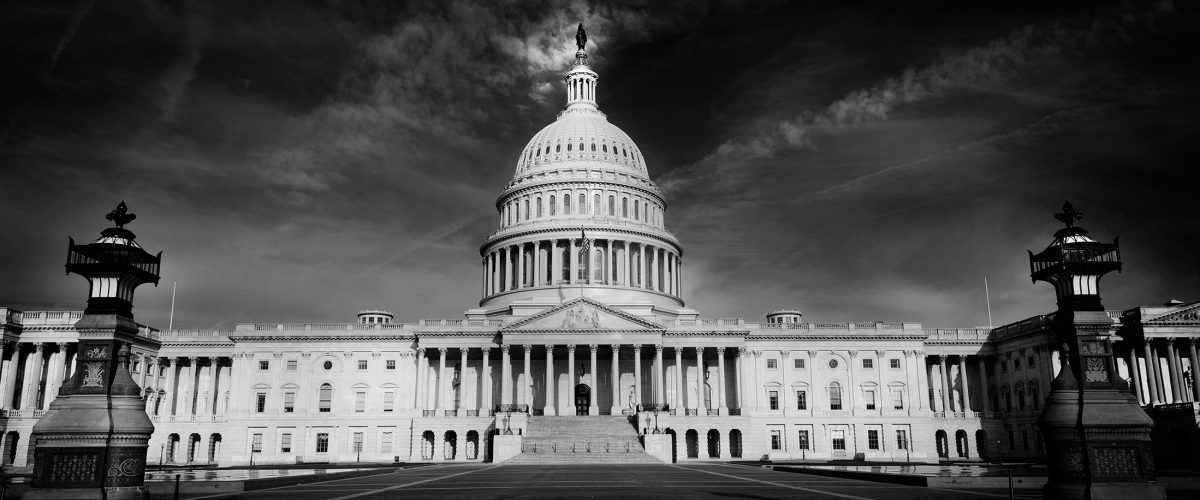
When President Trump celebrates our nation’s birth with the signing of a sodomizing budget bill — at his Resolute Desk, situated in the grand national seat of government built by Black slaves, on land where the Piscataway, Pamunkey, the Nentego (Nanichoke), Mattaponi, Chickahominy, Monacan and Powhatan cultures thrived prior to European unauthorized immigration — he is oblivious to this history.
This is not an option for people of faith and conscience. Dissidents to such abominable policy need to hear, and memorize, and teach to our children, one of the final statements Pope Francis made on Good Friday of this year, three days prior to his passing, in an implicit criticism of the Trump administration’s migration policies: “Today’s builders of Babel tell us that there is no room for losers, and that those who fall along the way are losers. Theirs is the construction site of Hell. God’s economy, on the other hand, does not kill, discard or crush. It is lowly, faithful to the earth. … It cultivates, repairs and protects.”
Ken Sehested
Ken Sehested is the author and editor of prayerandpolitiks.org, an online journal at the intersection of spiritual formation and prophetic action.
Related article:
Johnson gives ‘glory to God’ for Trump’s big bill but others say God is mocked