

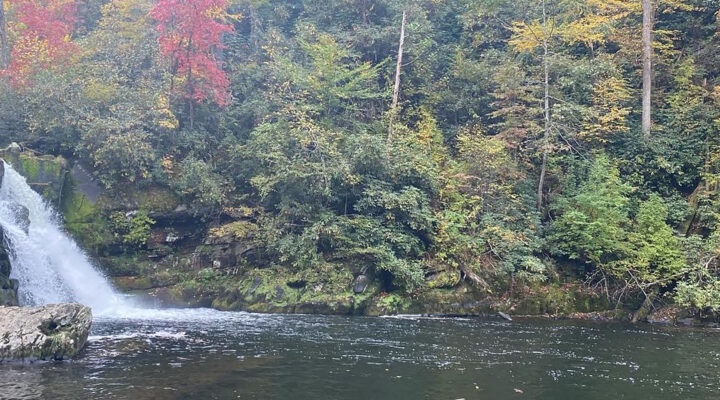

Driving through the fog gave the air a thickness that seemed to envelop us, to welcome us into a place that fizzled with eternity.
A group of friends and I had traveled into the Cades Cove area of the Great Smoky Mountains National Park to hike the Abrams Falls Trail. It was mid-October, peak autumn-induced kaleidoscope season, so we left in the twilight of morning. We arrived at the trailhead and began our 5-mile hike.
On our left was the constant churn of Abrams Creek. We spent time in conversation with one another, followed by extended bouts of silence, basking in the growing sunlight as it poked through the red, yellow and orange leaves. When we finally arrived at Abrams Falls, we sat on the rocks, watching the water cascade into the creek — an ever-flowing force of change shaping the land beneath our feet. We broke the bread of our granola bars and sipped from our Owala bottles — a kind of communion in creation.
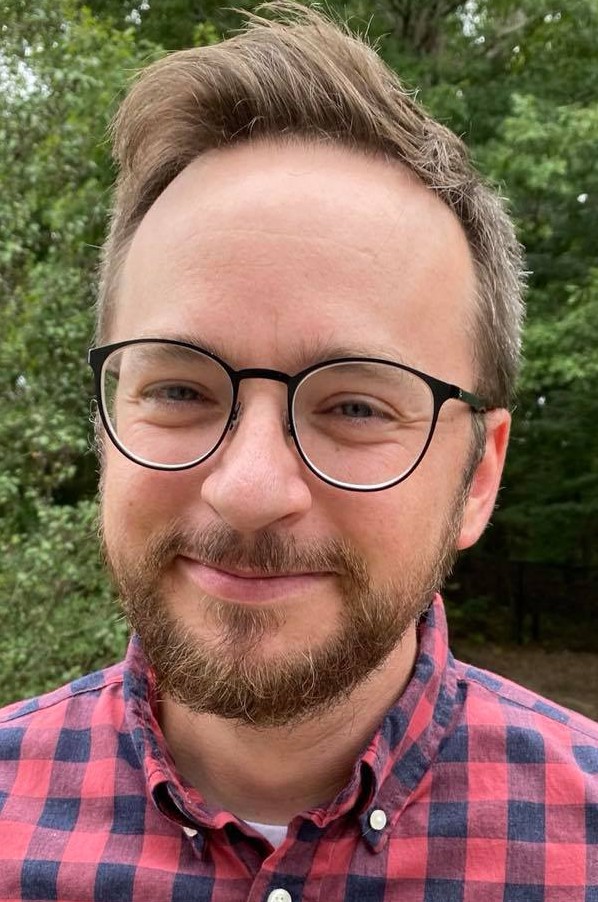
Tyler Tankersley
That is but one sacred moment in my life that has taken place in the sanctuary of a national or state park. And I know I’m not alone. Many of us carry cherished memories of family vacations, holy encounters with natural wonder or worshipful vistas we hold dear. The naturalist and wilderness advocate — our closest American equivalent to a real-life Gandalf — John Muir once said, “After a whole day in the woods, we are already immortal.”
Hiking in national and state parks has become a sacred rhythm in my life. I’m blessed to live in North Carolina, which boasts a top-notch state park system. My goal is to hike in all 41 of North Carolina’s state parks (I recently completed a trail in my 24th).
My experience in national parks is more modest. I’ve only visited Great Smoky Mountains, Everglades, New River Gorge, Gateway Arch, and Rocky Mountain National Parks — but I’m currently planning trips with friends and family to Zion, Mount Rainier, Yosemite, Yellowstone and Glacier. I’m already anticipating the holy moments waiting for us in these sacred temples of nature.
For many of us, our parks are what Celtic Christians called “thin places” — spaces where the veil between heaven and earth feels especially sheer. In Christ Plays in Ten Thousand Places, Eugene Peterson (who retired just outside Glacier National Park) wrote, “Our national parks are among the great accomplishments that our not-always-accomplished governments have provided for us. Just as churches and places of worship serve to sanctify time, so these parks have always seemed to me to mark sacred space.”
But these sacred spaces are under threat. Our national parks — and many state parks — are facing increasing pressures from neglectful and shortsighted policy decisions. At the start of the second Trump administration, under the influence of Elon Musk’s tech-centric ideology, thousands of National Park Service employees were fired — people whose essential jobs ensured the parks’ cleanliness, preservation, maintenance and beauty. These cuts came at a time of record-breaking park attendance; 2024 saw the highest number of visitors in history, and 2025 is on track to exceed it. The National Park Service already was underfunded; now it faces a crisis of personnel as well.
Most recently, on July 3, President Donald Trump signed an executive order titled “Make America Beautiful Again by Improving Our National Parks.” These so-called “improvements” include charging higher entrance fees for non-U.S. citizens than for American visitors, revoking prior mandates to promote diversity and inclusion in the parks, and requiring park rangers to post signs encouraging citizens to report any displays or materials that portray America in a “negative” light — shoehorning patriotic hagiography into interpretive signage at a time when accurate history is most needed. Simultaneously, efforts are under way to remove protections from national forests — like a proposal to open 85,000 acres of Tennessee backcountry to logging and commercial development.

As some of the Judeans languished in Babylonian exile, they began to write down their collective memories of what might have been — and what could be — if they ever returned home. In Leviticus 25, part of the radical call to a Year of Jubilee, we find this liberative decree: “The land shall not be sold in perpetuity, for the land is mine; with me you are but aliens and tenants. Throughout the land that you hold, you shall provide for the redemption of the land.”
The late Rabbi Jonathan Sacks reflected on these verses: “It (the land) is not ours; it belongs to God. We are mere temporary residents, with a duty of stewardship. … We are guardians of a world we received as a gift, and we must pass it on, intact, to those who come after us.”
Ojibwe activist and author Winona LaDuke put it more simply: “I would like to be remembered as a person who belonged to the land, not as a person who owned it.”
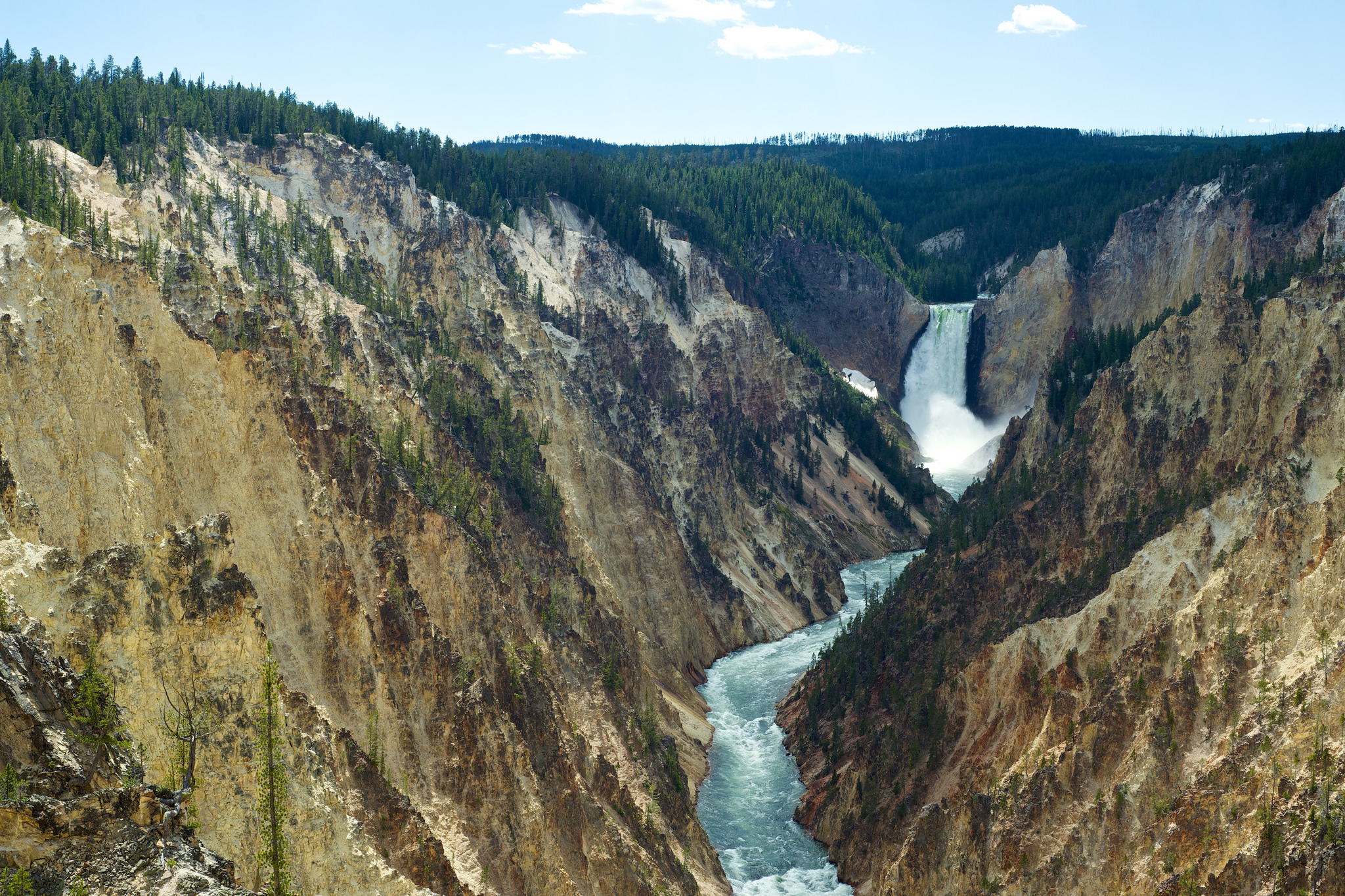
Yellowstone National Park. (Photo/Eric Vaughn/Creative Commons)
Within the Torah is the radical notion that the land belongs to God and to God’s people as a whole — not to corporations, capitalists or the wealthy elite. The current efforts to undermine the communal nature of our national parks are a betrayal not only of democratic ideals but of our deepest theological commitments — commitments that transcend personal or national self-interest.
I’ve already contacted my elected representatives to make my convictions known. I urge you to do the same.
A few weeks ago, after an especially stressful period of ministry, I found myself with a rare day off. I packed a peanut butter and jelly sandwich, an apple and a thermos of coffee into my backpack and drove the short distance to Pilot Mountain State Park, just half an hour from my home. I got out of the car and breathed in the fresh oak-and-pine air.
As I began walking, one foot in front of the other, I felt some of the tension I’d been carrying begin to melt away. Near the pinnacle of the trail, I found a weathered bench. I sat, ate my lunch and took out a journal. I wrote a simple prayer of gratitude — to the God who met me there, beneath the blue sky, among the rustling trees on the mountainside.
Tyler Tankersley serves as senior pastor of Ardmore Baptist Church in Winston-Salem, N.C., and is currently pursuing a doctor of ministry degree in leadership and spiritual formation from George Fox University.