

Just days after Donald Trump’s inauguration, I wrote an analysis piece examining the rising sentiments of fascism in the U.S. political climate. Social media users felt they were in the musical “Cabaret” — a play that portrays the rise of Nazism in Berlin presaging the Holocaust.
Since then, many on social media have attempted to remain committed to telling the stories of oppression, minoritization and violence happening every day in our political climate. But they have faced challenges with algorithms intended to manage community dialogue, especially on TikTok.
Censorship on social media
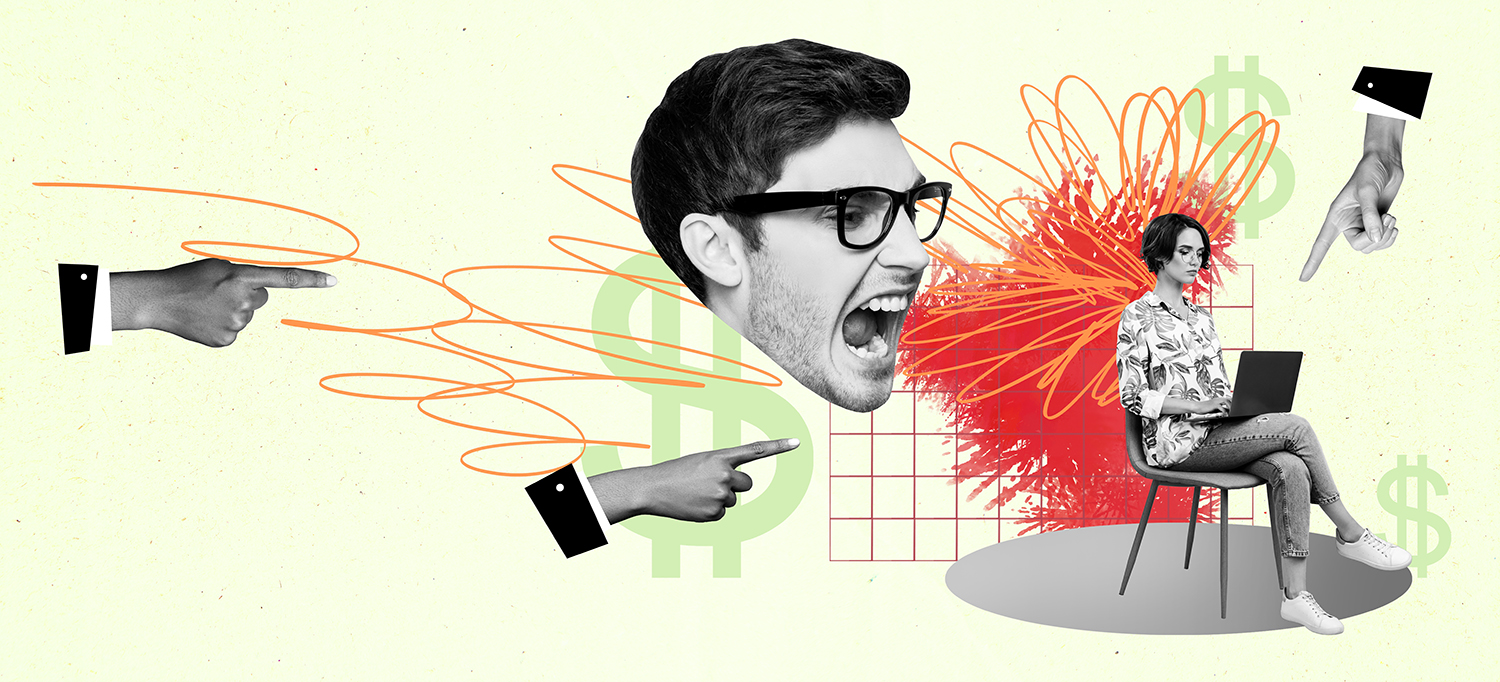
By no means is censorship on social media a new phenomenon. It’s common for sites to use social media monitoring software to flag negative or hateful speech so it can be investigated or removed.
This is often called “community guidelines,” which are meant to enhance user experience by preventing hateful, inappropriate or illegal content from being spread.
“By no means is censorship on social media a new phenomenon.”
To do this, the algorithm rewards content creators who avoid flaggable keywords by promoting and monetizing their posts. In turn, it censors, shadow bans or removes content containing them.
For instance, you probably have seen news coverage of the war in Gaza or Ukraine censored with content warnings alerting users that the tweet, Facebook status or Instagram post may include violence or sensitive content. This helps users who may be shocked by the content prepare themselves before viewing it, if they choose to do so.
Other times, content may be completely removed if it is deemed too far outside a site’s community guidelines.
But this censorship is not always used for good.
For instance, in her investigation into digital sex trafficking on the website Pornhub, Laila Mickelwait discovered social media monitoring was used on the site and its sister companies to find strategic ways to keep making money from digital sexual abuse materials. These were videos that depicted crimes like rape, sexual assault and other forms of human trafficking, videos published without consent.
Rather than using the algorithm to take down flagged content, it functioned to censor titles and comments that indicated the content was illegal.
This is because users learned that by changing words like “child” to “ch*ld” and “rape” to “r*pe,” the videos would not be flagged and illegal content could remain unmonitored and continue racking in profits for creators.
(Shutterstock)
Big Brother is watching
But what does this have to do with fascism?
Those who completed their assigned readings in high school literature courses will remember the classic novel 1984 by George Orwell.
In the novel, Orwell imagines a society called “Oceania,” one of three fictional superstates controlled by totalitarian regimes (for Oceania, the regime is called “The Party”). The party’s leader is “Big Brother,” who the population is completely submissive to.
In every aspect of life, Big Brother is watching.
“Although Orwell’s work is fiction, this happens in real life.”
One of the ways Big Brother and The Party maintain totalitarian control over Oceania is by censoring all information available to citizens, especially by the work of the “Ministry of Truth,” which forges and alters historical documents to exclude information about events and people involved in activities deemed contrary to the regime’s political ideal. The truthful documents are destroyed, and the public may only access the new information promoted by the Ministry of Truth.
Evidence of previous facts, figures or events that were erased exist only in people’s minds.
Although Orwell’s work is fiction, this happens in real life.
In Mickelwait’s memoir, for example, she explained that on at least one occasion she tweeted about a Pornhub video clearly depicting child rape, and the company removed the video. Immediately, it was replaced with one of adult actors engaging in similar sex acts, with an identical source link, title and caption to the original video, although the company never acknowledged the accusation or made public efforts to identify the whereabouts of the children in the original post.
This made it look like her claim was false, when it was actually true, erasing her evidence from public knowledge.
Newspeak
(Shutterstock)
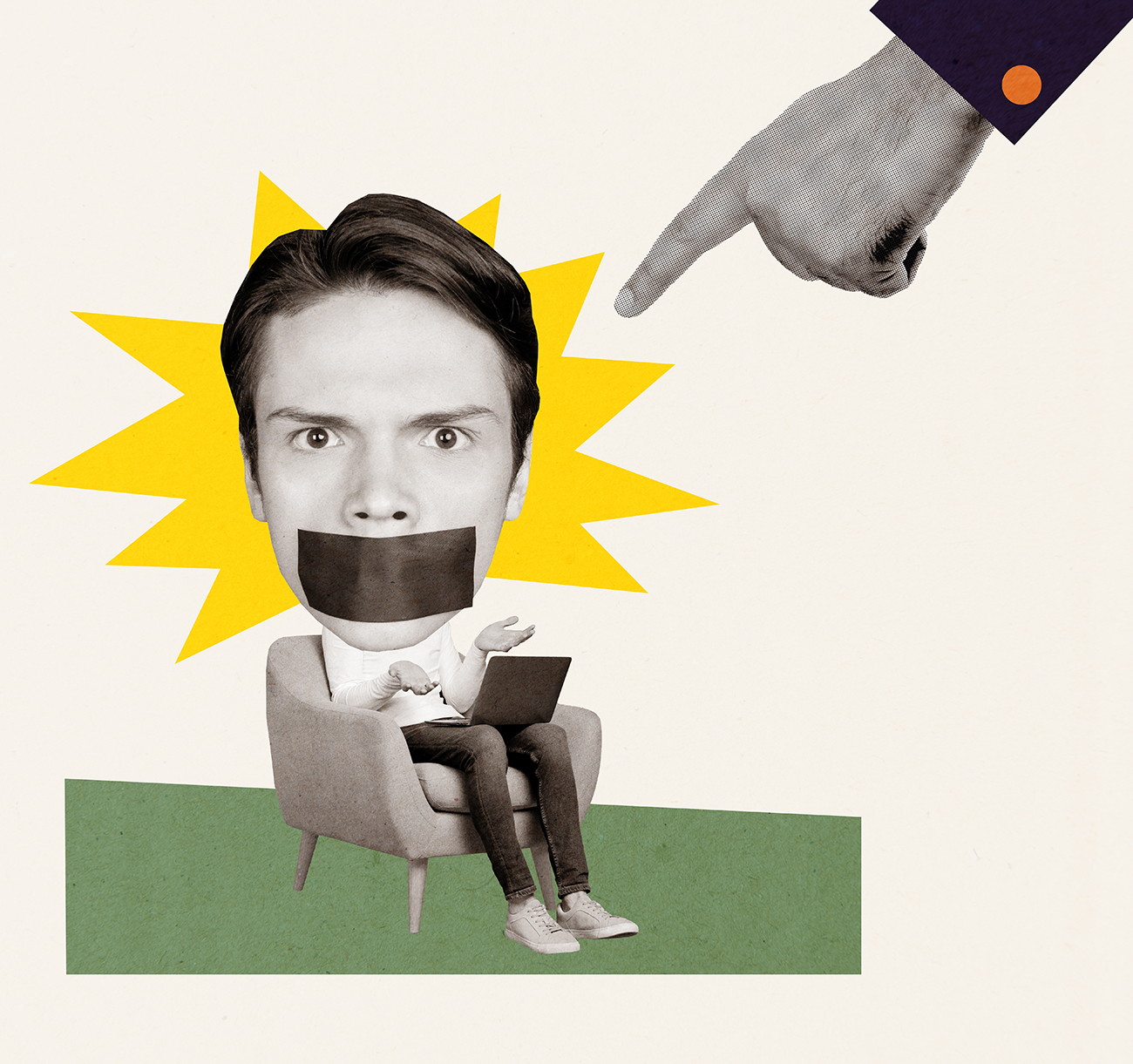
Along with simply erasing information, like what happened to Mickelwait, one important aspect of totalitarian control in Orwell’s universe is something called “newspeak.”
Newspeak is a linguistic structure created by The Party to control the way citizens articulate thoughts. This is done by reducing the amount of available vocabulary to ensure the ways citizens express themselves adhere to the regime’s ideals. This censored lexicon forces language to be simple and thus provokes as little critical thought as possible.
Newspeak is considered contrary to “oldspeak,” the language used before The Party was in control which includes a much broader range of lexical choices.
And because Big Brother is always watching, Oceania citizens have to subscribe to this type of speech constantly to avoid punishment (even in their own homes).
The Party also uses words like “Ingsoc,” short for English Socialism, and “Minitrue” for Ministry of Truth. These shortened terms prevent citizens from thinking critically about the meanings of these organizations, even though they are pillars of control in their society.
For example, in newspeak, you cannot say your job at Minitrue is bad. You must say it is “ungood.” If you want to call it terrible, you must say “double-plus-ungood.” This erases negative language from everyday vocabulary and makes sentences less clear and concise, making citizens less likely to deeply critique things.
This is comparable to how Hitler’s totalitarian regime shortened terms that represented bad actors, such as Nazi (National Socialist) or Gestapo (Geheime Staatspolizei/Secret Police). Linguistic choices like this function to reduce a person’s chance of thinking critically about what a word means, making them less likely to question the regime itself — which in Orwell’s novel is named as the illegal action “thought crime.”
Newspeak, as a concept, is inherently political. It exhibits the ways in which society must censor itself in obedience to those in power, even when a person is simply trying to tell the truth.
(Shutterstock)
Is ‘algospeak’ real-life newspeak?
The reason newspeak works in the novel is because citizens know they are being monitored, so they are obedient to its linguistic rules — for fear of being punished after breaking them. They learn to self-police public expressions to keep in good standing with the regime.
A similar thing is happening on social media platforms right now — especially TikTok — which users are calling “algospeak.” Users have noticed an increasing number of terms and topics that will cause a post to be shadow banned or flagged for review.
Shadow banning is when certain content becomes less visible and harder to search for after triggering the algorithm’s social media monitoring software. Once a creator has one post shadow banned, the rest of their posts often suffer the same fate too.
In Orwell’s universe, this is similar to “vaporizing” — removing the memory of an “unperson” (someone murdered by the regime) from public records.
And the flagged terms that trigger shadow banning seem to be relative to pressing social issues.
In turn, users have resorted to algospeak — simplified versions of words that will not trigger the algorithm’s social media monitoring service. Here are some examples and their conventional English counterparts:
- unalived = murdered, killed
- sewer-slide = suicide
- grape/d/the grape emoji = rape/d
- seggs/secks = sex
- corn/the corn emoji = pornography
- homo-shmecshual = homosexual, gay
- yahtzee = Nazi
- snow emoji/ice cube emoji = Immigration and Customs Enforcement (ICE)
- watermelon emoji = Palestine
Some words are intentionally misspelled, too, such as: ch*ld, ab0rtion, f*scism, Tr*mp or r*pist.
So, a person might see a TikTok video discussing a case of child sexual abuse with a caption like, “ch*ld grape made into corn videos,” scattered with grape and corn emojis. Or coverage of the war in Gaza that focuses on Palestinian suffering identified only with watermelon emojis, because posts on the topic must have a completely irrelevant caption or title to avoid being pushed to the depths of TikTok’s algorithm.
Critics of algospeak complain these linguistic patterns are annoying because they facilitate dialogue about serious topics with dreadfully unserious language. In the above example, the idea of a grape or watermelon sounds a lot less shocking or problematic than the actual violence being described. This desensitizes and distances content viewers from the core issues being discussed and simplifies conversations about them in ways that avoid calling out the violence or injustice that has occurred.
But if we think of algospeak like Orwell thought of newspeak, that is exactly the point.
Taking away the voice
One of the most powerful ways to protest an injustice is by having the courage to articulate that injustice clearly and directly in the public square, no matter how uncomfortable the words are to hear. But because social media algorithms are censoring users into avoiding the language needed to speak, they are forced to minimize their conversations about injustice, making them less effective.
“Because social media algorithms are censoring users into avoiding the language needed to speak, they are forced to minimize their conversations about injustice.”
This is because one of the most powerful ways to force someone into submission is to take away their voice.
And although this type of social media monitoring has been around for a while, users noticed a clear shift in the algorithm after Trump “saved” Tik Tok just days before his inauguration. Many U.S. users reported changes in their feed that prioritized pro-Trump content and said comments were being censored in new ways, although TikTok denied claims there was any change in the algorithm.
Notably, however, users received two pop-up notifications praising Trump for his collaboration with the company.
Today, algospeak appears in nearly every post that could be relatively political in nature.
Censorship directly from the regime
And while censorship on social media is one thing, newspeak/algospeak is bleeding into everyday life.
Last month, Rodney Kennedy wrote an article for BNG using all the words Trump wants banned (although the list has grown since its publication). The list includes words like diversity, indigenous, victim, socio-economic, sexuality, male, female and even phrases like “peanut allergies” and “safe drinking water.”
Government websites have been scrubbed of materials flagged for review because they contain these words. The list also has made it difficult for scientific researchers to publish important health and safety information with organizations like the CDC, because many of their studies require discussion about banned words.
Unironically, 1984 and other books warning readers of the dangers of totalitarian regimes, and even Holocaust memoirs like Anne Frank’s Diary of a Young Girl, are on the list of books banned in the U.S., which prohibits their use in libraries and schools.
Notably, both the Soviet Union and Nazi Germany banned or burned books with themes considered subversive or contradictory to the regime’s ideals.
So, it seems like the regime is here. Here’s a snapshot of some of the things the Trump administration has done since my “Cabaret” article”, in plain English:
- Mistakenly deported Kilmar Abrego Garcia, a Salvadoran native who lived in Maryland under protected legal status, during a mass deportation of alleged migrant gang members (many of whom had no criminal record).
- Returned Garcia to Tennessee after pleading from family and months-long political argumentation, but on charges alleging he smuggled undocumented migrants into the U.S., which his attorney has described as “an abuse of power.”
- Coordinated numerous other ICE raids across the country that have split apart families, wrongfully taken legal immigrants and migrants into custody and invoked protests against the practice, including the recent protests in Los Angeles following an ICE operation that disappeared 118 Latino individuals.
- Made provisions to deport abandoned, abused and neglected children, despite their Special Immigrant Juvenile Status, making them vulnerable to human trafficking and other forms of abuse.
- Rescinded Biden-era guidance requiring hospitals to provide emergency abortions to pregnant women suffering dire health conditions that require the procedure for treatment, even in states where it is restricted or banned.
- Cut billions of dollars in federal research grants for STEM research through the National Institutes of Health — grants intended for higher education institutions, disrupting major research operations and leading some scientists to abandon their work on topics like climate change for fear of backlash.
- Detained and threatened to deport pro-Palestine student activist Mahmoud Khalil, a Columbia University student here on a student visa, even though he has not been charged with a crime.
- Passed a “big, beautiful bill” that, if enacted, would finance a school voucher program built to “make the rich richer and further marginalize students.” It would also increase health care costs for the elderly and working families and cause 16 million people to lose health insurance.
- Allowed DOGE, led by former special government employee Elon Musk, to propose tremendous cuts to foreign aid, which have now been passed by the House of Representatives.
- Publicly displayed the breakup of Trump and Musk, who claimed in a now-deleted post on X that the Epstein files have not been released because Trump’s name is in them.
Mallory Challis
Mallory Challis is a summer staff writer for BNG. She is a master of divinity student at Wake Forest University School of Divinity and is a former BNG Clemons Fellow.