



After growing up in a Christian cult (Bill Gothard’s IBLP of Shiny Happy People), I found freedom working at a church camp one summer when I was 21.
Showing up with my waist-length hair, ankle length skirts and long list of personal rules and standards, I thought I was at camp to help save children from hell. Instead, I discovered genuine love and grace because of Christians I once considered worldly.
It was a summer filled with firsts. I flirted with boys, swayed to worship music with a beat, bought a pair of loose pants and watched a PG-13 movie. I met people who were different than me and discovered they weren’t scary after all.

Christy Wood
Camp was my first step out of isolation and into the real world.
I spent the next five summers working at the same camp in various positions. I met my husband at camp. Both our babies were born while I was interning at camp, and I went back with my small children for two summers to work as a health officer. Unfortunately, my faith also was rocked by the same camp when they refused to deal with unethical and abusive situations and instead chose to condemn the people who noticed the problems.
I’ve seen the good, beautiful and downright ugly parts of summer camp. As a young adult, I lived for camp, but 15 years later, I struggled to find one I felt comfortable choosing for my own children.
Reading Church Camp
When I heard Cara Meredith wrote a book about camp, I was interested. After Christianity Today published a review of Church Camp a few weeks ago, I was even more intrigued. The subhead says, “Cara Meredith wants Christian summer camps to quit evangelism. But her research and theology leave much to be desired.”
I decided to buy the book.
The Christianity Today article was written by a woman whose husband is the director of an evangelical camp. As I read, I could feel defensiveness and assumption in her words. “Because of my connection to Seneca Hills, this is an account I want to hear, a conversation I want to join — but I’m not sure Meredith would be interested in a perspective like mine.”
The reviewer struggled with Cara’s theology and focused on the fact that, although God is love, he still calls us to repent. The reviewer recognized the problems Cara pointed out do happen, but she also made sure to state not all camps have these issues. Reading Church Camp for myself, I felt like the reviewer at Christianity Today had missed the point of the book.
I’ll admit Cara’s interview strategies aren’t exactly journalistic. She asks leading questions — which she acknowledges. Some are yes or no questions, and she pushes for certain answers. Her progressive language and talking points could turn off conservative evangelicals. At times her arguments feel canned instead of original. However, she makes valid points that shouldn’t be ignored. If we don’t hear the stories and acknowledge the problems, how can we ever create a better camp environment?
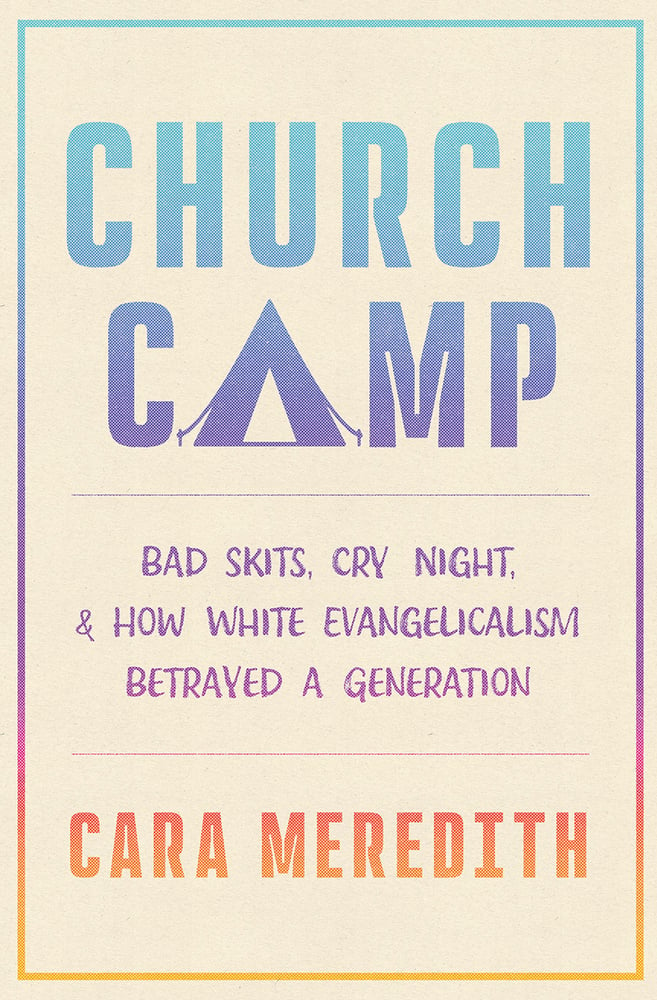 I consider myself a global evangelical, and my theology is orthodox. Cara is clearly more progressive. But as I read her words, I resonated with them.
I’ve seen the exclusion of minorities and LGBTQ campers and staff firsthand — even if it wasn’t intentional. I’ve watched the push to fit people into our mold. We used to do an Angel Tree week where inner-city children with incarcerated family members would come to camp for a week. They were challenging weeks because we did not understand their backgrounds, home lives or cultures. We expected them to be like us, and when they didn’t assimilate, we didn’t know what to do.
I also remember rumors about certain staff members’ sexuality. Again, we didn’t know what to do with people who were different than us. There didn’t seem to be room for them if they didn’t follow expected gender roles. Cara interviewed multiple people from the LGBTQ community about their experiences. We need to listen to these stories.
Fixation on numbers
I’ve experienced a fixation on conversions and numbers, and I know these numbers were important because we used them at the yearly banquet, golf outing and silent auction fundraisers. When I was a counselor, we would fill out huge surveys on our campers each week that would then be sent to their church and used to count salvations. The surveys asked children as young as first grade if they had trusted Jesus as Savior that week, committed to reading their Bible or going to church, or if they had rededicated their lives to following the Lord.
“Is there a way to share the good news of Jesus, trusting that he will draw campers to himself, without external pressure?”
It always felt awkward to me, especially if I hadn’t had a personal conversation about Jesus that week with these campers. There was pressure for them to answer positively since I was their counselor even if I wasn’t intentionally putting it on them. Cara wonders if we could have summer camps without the pressure to convert people. I wonder about this, too. Is there a way to share the good news of Jesus, trusting that he will draw campers to himself, without external pressure?
I’ve been part of emotionally driven chapel services with music and teachings focused on teens having an experience with God. I don’t believe these were deliberately manipulative, and yet I often wonder how many of the decisions were genuine and how many were a result of sleep deprivation, too much sugar and the right chord progression. If God is real and wants people to know him, why do we need to create a managed experience where people respond like we want them to? Is there a better way to teach children and teens about God? Mountaintop highs can be impactful, but what about the fruit and the long-term changes in people’s lives?
I’ve led purity talks for girls where I unfortunately focused on their bodies and gave lists of rules and expectations. I held up my own relationship as a model to be followed. I didn’t notice that I was focusing on behaviors or promoting a formulaic faith where God would bless if you behaved a certain way. Are we promoting one way of doing life that looks like our culture and experience or are we teaching the truth that will transform people from the inside out?
Some things need to change
We might see some things differently, but Cara Meredith and I share a love of Jesus, a love of camp and a desire for church camp to be better. We don’t need to be defensive about critique. We can listen to people who are different from us and learn from their perspective. We can humbly acknowledge that some things need to change rather than staying stuck in the status quo. It is time to step back and ask questions.
How can we better include and learn from marginalized people so they also can experience God in the beauty of nature? How do we share a gospel that is actually good news and not one that scares or manipulates people into choosing Jesus? What does it look like to make room for the Holy Spirit to work in a way that isn’t coercive? Can we teach children and teens about the characteristics of God and the truths of Jesus in a way that doesn’t try to indoctrinate and force them to assimilate? How do we avoid the behavior-driven traps of purity culture and outward morality and share truth in a way that transforms hearts?
I’m not saying all camps are a problem. But I’m pretty sure there are problems at all camps because camps are run by broken people. Cara didn’t even get into the spiritual, physical and sexual abuse that can and does happen in Christian church camp environments. I personally have encountered abusive situations at camp and also am aware of similar experiences reported by others. We can do better.
“We can trust in the Spirit to work without helping him using emotional manipulation.”
We can hold people accountable, including leaders, welcome everyone and make intentional space for learning from and including the marginalized. We can preach the gospel without fear and as good news. We can trust in the Spirit to work without helping him using emotional manipulation. We can listen to people we don’t agree with and humbly learn from their perspective. I think that’s what Cara was hoping for when she wrote her book.
Benefits of camp
Summer camp is a place like no other. It’s like being under a microscope and in a pressure cooker at the same time. Things happen fast. It’s intense. Relationships are real. Camp is an opportunity for children, teens and young adults to try new things, get out of their comfort zones, be ridiculous, have wild fun and discover a truer self without the inhibitions of normal life. Most of all, it’s a place where we can encounter God without distraction. A place of crackling bonfires, brilliant stars and wind that whispers in the trees. God feels close — mostly because we are looking for God. I still love the idea of summer camp, and so does Cara.
I ended up finding a little, classic-looking camp tucked into the trees where I sent my children. Camp Roger’s mission statement is “Encountering and celebrating God’s love for his children through relationships and experiences in creation.” They chant prayer poems before each meal, sing old hymns like “This Is My Father’s World,” and learn about God’s love. They hear the simple gospel of Jesus, learn to braid gimp and build fires to brew sassafras tea. My children don’t come home on spiritual and emotional highs, but when we pick them up, they seem more confident, brave and proud of what they have learned and accomplished. In my opinion, this is the essence of summer camp.
I look back on my own decade in camp ministry with fond memories even though they are mixed with troubling ones. There is nothing else like summer camp. Adventures happen at camps that never would occur anywhere else. We become a version of ourselves that is raw, authentic and free.
I hope there are summer camps for as long as there are children. But I also hope those of us who participate in them can help address problems instead of ignoring them. I hope we can listen to stories instead of becoming defensive. And I hope we can share a gospel full of good news that is focused on people connecting with Jesus and not on conversions and numbers.
Let’s start by listening to and collaborating with people we don’t totally agree with so we can have a broader and more inclusive perspective.
Christy Lynne Wood spent her teens and early twenties in a Christian cult, but Jesus found her anyway. More than 20 years later, she continues to pick apart legalism, twisted Scripture and lies in a search for the truth. As a speaker, podcaster, writer and author of Religious Rebels: Finding Jesus in the Awkward Middle Way of Grace and Truth, she is passionate about helping people to find a genuine relationship with Jesus. Christy lives in West Michigan with her husband and their two children. She writes weekly on Substack.
Related articles:
New book explores the good, the bad and the weepy about church camp
The seven-talk progression of church youth camps | Opinion by Cara Meredith