



The Justice Department has determined women no longer may cite gender-based violence as grounds for seeking asylum in the U.S.
The agency’s Board of Immigration Appeals ruled July 18 “that a particular social group defined by the alien’s sex or sex and nationality, standing alone, is overbroad and insufficiently particular to be cognizable under the INA (Immigration and Nationality Act).”
The case involves “K-E-S-G,” a Salvadoran woman seeking asylum in the U.S. after being threatened by gangs in her nation of origin. Gangs in El Salvador are notorious for targeting women and girls for violence and trafficking, and the nation recently was ranked first in female homicides, according to a study by the World Bank.
The 1951 Refugee Convention requires refugees and asylum seekers to demonstrate “a well-founded fear” of persecution based on political identification, race, religion, nationality or social group.
But the Trump administration claims the convention’s language is “ambiguous and quintessentially difficult to define” and that gender, coupled with nationality, does not constitute a “social group.” In this instance, claiming status as “Salvadoran women” and “Salvadoran women viewed as property” do not qualify applicants for asylum.
“We acknowledge that sex is an immutable characteristic. However, ‘not every “immutable characteristic” is sufficiently precise to define a particular social group,’” the DOJ board explained.
Civil rights organizations condemned the decision, which is binding on immigration courts, for discounting decades of precedent regarding the gender-based oppression women and girls suffer in many countries.
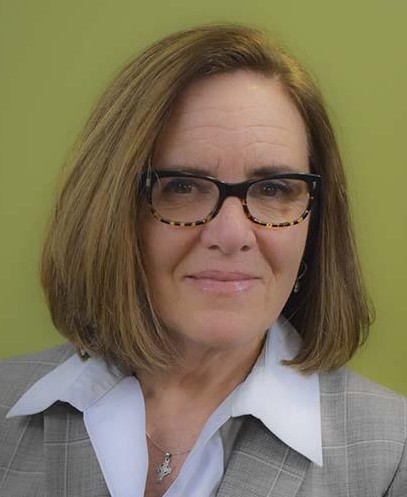
Anna Gallagher
“Women who face violence, oppression and social invisibility simply because of their gender must be protected — not turned away,” said Anna Gallagher, executive director of the Catholic Legal Immigration Network.
CLINIC Senior Attorney Elizabeth Carlson said the decision diminishes the humanitarian spirit of the asylum system.
“In many countries, including El Salvador, women suffer disproportionately from domestic abuse, sexual violence and societal structures that strip them of autonomy and agency,” she explained. “Asylum law must reflect this reality by allowing women to seek refuge when they face this persecution and when their governments are unwilling or unable to protect them.”
The Center for Gender and Refugee Studies, which represents the Salvadoran woman in this case, noted judges still will be required to evaluate asylum claims on a case-by-case basis, and those escaping gender-based persecution may still qualify for protection. “However, by singling out women’s asylum claims, the Justice Department’s transparent intent is to give immigration judges a basis to reject women’s claims without considering them fairly, sending a signal that they should not take these cases seriously.”

Blaine Bookey
Blaine Bookey, the center’s legal director, said the administration is attempting to pull the nation and asylum law into the past when violence against women and girls was considered inevitable and unimportant.
“Trump’s Justice Department cannot distort the law to achieve its political ends,” Bookey said. “We will continue to fight for our client and for all women and girls who turn to the United States for refuge, who have a legal right to seek asylum and have their claims considered fairly under our laws.”
Advocates also are protesting a new policy directing Immigration and Customs Enforcement to detain undocumented immigrants for the duration of their removal proceedings.
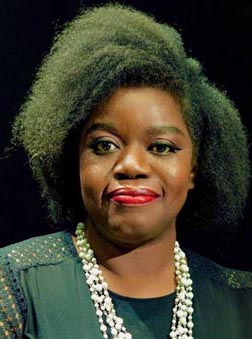
Guerline Jozef
“This policy, which denies bond hearings to undocumented immigrants, is a blatant violation of the fundamental principles of justice and due process,” said Guerline Jozef, executive director of the Haitian Bridge Alliance. “By stripping individuals of their right to a fair hearing before a judge, the administration undermines the core of our legal system and subjects vulnerable people to indefinite detention.”
A July 8 memo from Todd Lyons, acting director of ICE, instructed agents to hold undocumented immigrants “for the duration of their removal proceedings,” which can take months or years, the Washington Post reported. “Lawyers say the policy will apply to millions of immigrants who crossed the U.S.-Mexico border over the past few decades, including under the Biden administration.”
The policy follows recent congressional approval of a spending measure that included $45 billion to detain immigrants for civil deportation actions and to expand the government’s detention capacity to 100,000 people a day, the Post reported.

Benjamin Johnso
“This legislation is a blueprint for mass exclusion and fear,” said Benjamin Johnson, executive director of the American Immigration Lawyers Association. “It allocates tens of billions to walls, jails and agents, while leaving the humanitarian, legal and economic realities of our immigration system in the dust, all at the expense of Americans’ health care and other essential needs.”
National Public Radio, meanwhile, reported the ongoing firing of judges and other immigration court personnel, including 15 judges who learned they would be terminated July 22. Another 50 have been fired since January.
“It’s outrageous and against the public interest that at a time when the Congress has authorized 800 immigration judges, we are firing large numbers of immigration judges without cause,” a union official said in the NPR report. “This is hypocritical. You can’t enforce immigration laws when you fire the enforcers.”
But Vanessa Cárdenas, executive director of America’s Voice, warned Americans against thinking the administration’s actions are a threat to immigrants alone.
“Given the real and growing number of examples of U.S. citizens, mostly Latinos, who have been detained and even deported under this administration, these new policies will only lead to more abuses and more unlawful purges. No American should feel safe that their rights are protected when accountability and due process are lacking.”