

Now more than ever, America must confront a long-standing yet under-acknowledged public health and cultural crisis: Black Americans and water.
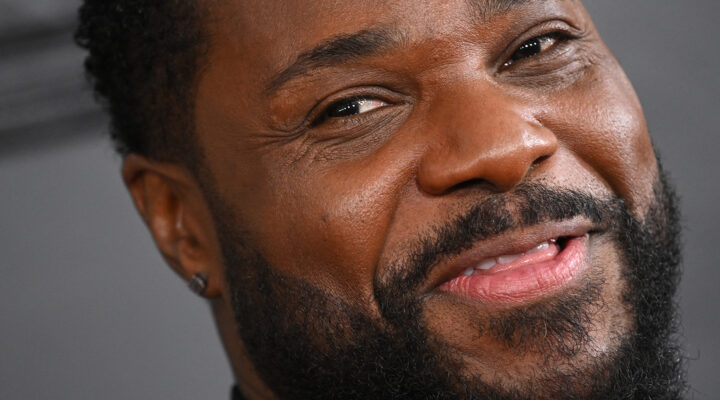
The sudden and tragic death of Malcolm-Jamal Warner — an actor beloved across generations — has cast a spotlight on an issue that has drowned in silence for far too long. Beyond his legacy as a cultural icon, Warner was a father and husband. His passing, now confirmed as due to drowning, is more than a personal or celebrity loss; it’s a national wake-up call. And it’s not just about public pools, but the broader disconnect Black America has had with natural waterways, beaches and even bathtubs, born from a legacy of racism, exclusion and systemic neglect.

Edmond W. Davis
According to the CDC, Black children between the ages of 5 and 19 are 5.5 times more likely to drown in swimming pools than white children. The numbers are even starker for adults, with Black Americans overall drowning at disproportionately higher rates than any other racial group in the U.S. for over five decades.
“Black children between the ages of 5 and 19 are 5.5 times more likely to drown in swimming pools than white children.”
Historically, Black Americans were barred from public swimming pools and beaches — either explicitly through segregation laws or implicitly through intimidation and violence. As late as the 1970s, some municipalities drained pools rather than integrate them. Others chose not to build pools in Black communities at all, leaving generations without access to safe, affordable places to swim. This wasn’t just social exclusion — it was infrastructural abandonment.
That same pattern of neglect has shown up in tap water, not just pools.
Take Flint, Michigan, where the state’s decision to cut corners on water infrastructure exposed a majority-Black city to toxic lead. Or Mississippi, where thousands of Black residents in cities like Jackson have gone weeks — even months — without clean running water. It is not coincidental. It’s calculated neglect, rooted in the same systemic racism that drained public pools rather than see Black children swim.
We are not just talking about a lack of swimming skills, we are talking about the consistent denial of clean water, recreational access and public investment in Black health.
This crisis doesn’t belong solely to the Deep South. It’s national. It’s structural. And it’s deadly.
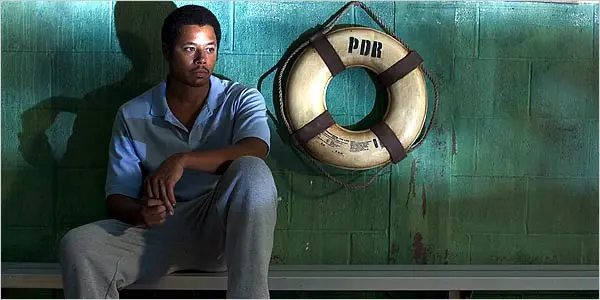
Terrence Howard plays Jim Ellis, a Philadelphia swimming coach, in “Pride.” (Saeed Adyani/Lionsgate Films)
The psychological scars of exclusion persist.
In the 2007 film Pride, actor Terrence Howard portrayed real-life coach Jim Ellis, who formed Philadelphia’s first all-Black swim team in the 1970s. The film is more than inspirational; it is instructive. It shows how water access and opportunity were systematically denied even in the urban North.
Racism didn’t stop at the Mason-Dixon line. From coast to coast, Black youth were told — explicitly or indirectly — that water wasn’t for them.
The movie’s overlooked message is this: segregation shaped swimming access everywhere. Whether it was in Memphis or Milwaukee, Houston or Hartford, racism kept Black America dry and dying.
That legacy shows up in every tragic story. A family picnic near a lake ends in panic. A child ventures too far in a hotel pool. An adult who never learned to swim drowns trying to save someone else.
What makes these deaths even more painful is that they are preventable.
Here are some possible solutions to this silent crisis:
- Mandatory water safety education in public schools. Every school system should implement age-appropriate swim lessons and water safety training. Especially in Title I schools with historically under-resourced Black student populations.
- Infrastructure investment in Black neighborhoods. Rebuilding trust with water requires investment in both clean drinking water systems and aquatic centers. That means federal and state funding for public pools, safe beaches and urban swim academies.
- Partnerships with faith institutions, HBCUs and community hubs. Culturally trusted places — like churches, HBCUs and barbershops — can normalize swimming through Black-led campaigns and group swim classes. Empowerment begins with familiarity.
- Public awareness campaigns featuring Black celebrities and families. National campaigns must reframe swimming as a birthright, not a barrier. Involve athletes, actors and survivors who can speak to the importance of learning to swim across generations.
- Healing the historical trauma. Community swim-ins, “Freedom to Float” days, and cultural healing events can break the generational cycle of fear. Black families deserve to reclaim the joy and healing that water provides.
The time for silence is over.
Black America must refuse to be bound by fear, exclusion or the myth that “we just don’t swim.” We must teach our children how to float, tread water and move confidently through every body of water — because knowing how to swim is not a privilege, it’s a matter of survival.
This is an American issue. A matter of life and death. A question of equity and history. To honor the legacy of Malcolm-Jamal Warner and the countless lives lost due to systemic exclusion, we must act.
Whether it’s enrolling your child in swim lessons, supporting Black-led aquatics programs, or demanding better infrastructure in underserved neighborhoods, your actions can save lives.
Let us no longer drown in silence.
Edmond W. Davis is a native of Philadelphia. He is an award-winning college and university history professor (retired), No. 1 new release author on Amazon, international speaker, licensed journalist and a globally recognized Tuskegee Airmen authority.