

More than 2,100 participants logged in July 17 to a United Methodist-sponsored webinar that gave 90 minutes of spiritual encouragement, prayer and information — but not legal counsel — on birthright citizenship and immigration enforcement.
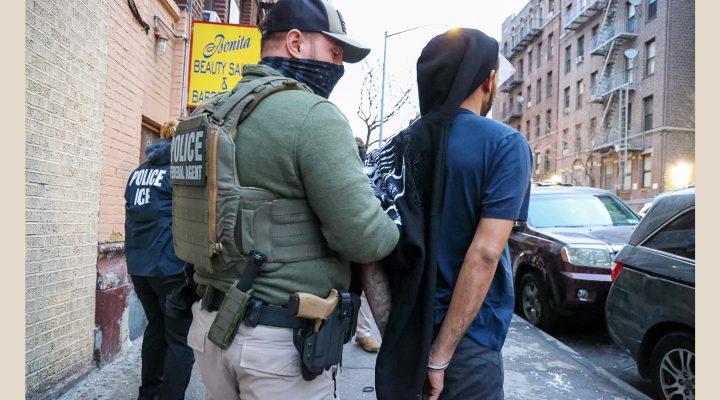
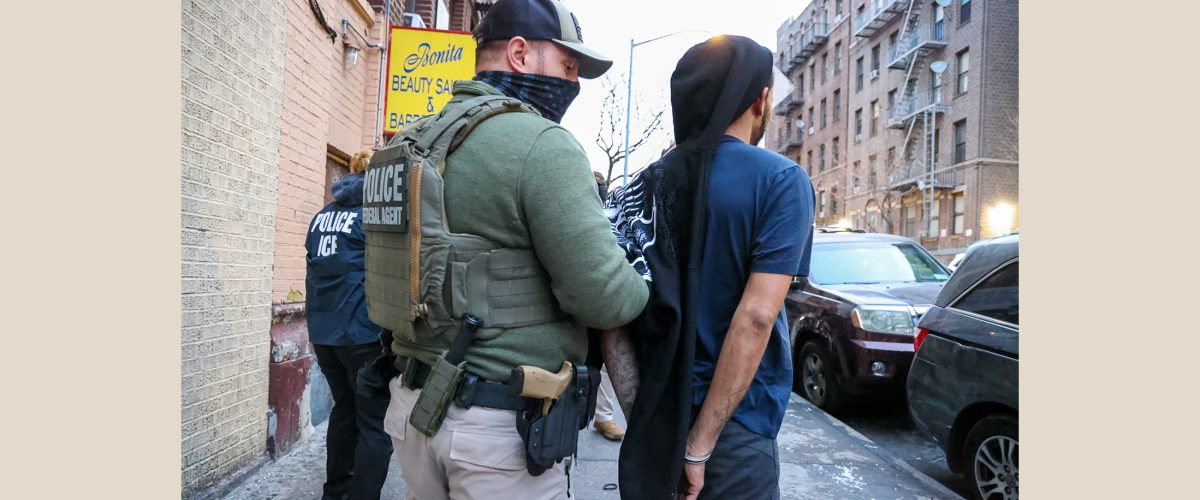
United Methodist leaders organized the webinar in response to the recent U.S. Supreme Court decision related to President Donald Trump’s attempt to outlaw birthright citizenship by executive order and to the harsh, possibly illegal, tactics employed by Immigration and Customs Enforcement (ICE) to arrest, detain and deport allegedly undocumented immigrants.
Churchwide boards and agencies sponsoring the unprecedented event included the Council of Bishops, United Methodist Committee on Relief (UMCOR), El Plan for Hispanic/Latiné Ministries, Church and Society, Religion and Race, United Women in Faith, and a partner agency Immigration Law and Justice (ILJ), which UMCOR funds. Live translation was provided in the official languages of the 11-million-member worldwide denomination: American Sign Language, Vosa Vakaviti (“Fijian language”), French, Korean, Portuguese, Spanish, Kiswahili, and faka-Tongan.
Giovanni Arroyo, Religion and Race top executive, and Lydia Muñoz, El Plan director, moderated the webinar, repeatedly emphasizing that speakers gave information, but not legal counsel, on immigration issues.
Three speakers presented updates:
- William Powell, a member of Foundry United Methodist Church in Washington, D.C., and an attorney with the Institute for Constitutional Advocacy and Protection at Georgetown University Law School
- Alba Jaramillo and Melissa Bowe, co-directors of Immigration Law and Justice, a nonprofit agency with 19 affiliates nationwide that provide low- and no-cost legal services to immigrants.
Powell opened his session explaining that ICAP serves as a public-interest law firm focused on civil rights, religious liberty and immigrants’ rights. ICAP has represented Catholic Charities of Rio Grande Valley over alleged harboring of undocumented immigrants; the Mennonite Church USA protesting the Department of Homeland Security rescinding its policy against immigration raids on “sensitive locations” including churches; and currently represents the Evangelical Lutheran Church’s Southeast Synod in litigation against a new Tennessee law that criminalizes sheltering undocumented immigrants.
Birthright citizenship
ICAP’s most significant case currently is its litigation over President Trump’s executive order to rescind birthright citizenship provided by the U.S. Constitution’s 14th Amendment, Powell said.
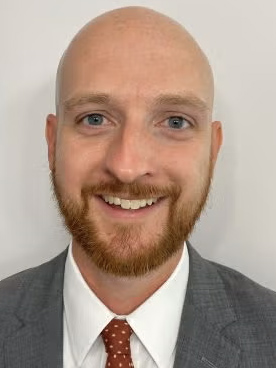
William Powell
Birthright citizenship is a legal concept stretching back to 1608, when James VI of Scotland succeeded Elizabeth I as king of England, Powell explained. A dispute over James’ right to the throne because of his Scottish birth was settled by the English Parliament, which decreed that anyone born on English soil and subject to English law was a citizen. Since James’ ascension to the English throne united England and Scotland into one kingdom, he was confirmed as king.
Birthright citizenship was inherent in U.S. law since the Declaration of Independence asserted that “all men are created equal,” Powell said. The 14th Amendment was enacted to give citizenship to all former slaves who were freed by the 13th Amendment.
“The idea of birthright citizenship has been law for more than 400 years,” Powell said.
Yet Trump wants to undo it by executive order.
A recent U.S. Supreme Court ruling on the matter has confused many because it centers on a legal technicality rather than the constitutional merits of the case, Powell continued. “The Supreme Court ruled that lower courts don’t have authority to institute nationwide injunctions against the president’s orders, not whether the order is constitutional — which we contend it isn’t.”
The high court decision makes it harder for plaintiffs to gain legal relief through lower courts, he noted. However, the decision left open the validity of class-action lawsuits, which can result in nationwide injunctions.
“We knew this might happen and got ready to file a class action right away and we did,” Powell said. A federal district court granted standing to that proceeding and issued a class-wide injunction preventing implementation of Trump’s executive order.
“In other words, Trump’s executive order removing birthright citizenship has been doubly blocked,” Powell said. “A child born in the United States whose parents are citizens of another country is still a U.S. citizen.”
‘Things are much worse now’
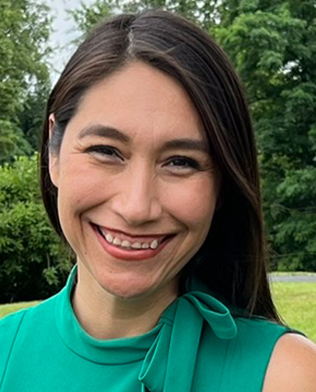
Alba Jaramillo
Alba Jaramillo of Immigration Law and Justice said she understands immigrants’ current anguish because she once was an undocumented immigrant herself, having come to the United States as a child with her family. She is now a naturalized U.S. citizen.
“Things are much worse now than when my family came to this country,” Jaramillo said. “ICE now has a quota of arresting 3,000 immigrants daily; their tactics are to rid the country of all immigrants, not just undocumented immigrants.”
The Trump administration’s assertion that it is rounding up “criminals” is spurious, Jaramillo said, because as of June 29, immigration records showed 71% of all detainees “had no criminal convictions, not even a traffic citation.”
“This is racial profiling,” she said. “This is state-sanctioned persecution. We denounce ICE’s cruelty that is perpetrating domestic terrorism.”
Her colleague Melissa Bowe described the fear that immigrants — no matter what their status — are experiencing because of enforcement tactics including masked agents not in uniform “disappearing” people off the streets.
Melissa Bowe
Bowe urged all immigrants, legal residents and even dark-skinned, Spanish-speaking U.S. citizens to carry documents attesting to their legal status when traveling both domestically and internationally. For example, airline travelers are now required to carry “Real ID” identification that includes a computer code, most often embedded in a driver’s license.
“At any port of entry, you may be confronted by Border Patrol, ICE, TSA or DHS agents,” she said. “Certain trains and buses are regularly boarded and searched by ICE.”
Bowe also advised immigrants to connect with their local communities, such as doctors, social workers and others who could provide protection and advocacy for them and their families in case of ICE arrest and detention.
During the question-and-answer segment, Muñoz, as moderator, declined several inquiries because they pertained to individual situations. However, one question — whether to get a newborn child a U.S. passport — got an enthusiastic affirmation.
“I think that’s a great idea,” said attorney Powell. “If Trump’s executive order on birthright citizenship goes into effect, it would only apply going forward, not back, so the child would still be a U.S. citizen.”
Scripture and prayer
Retired Bishop Minerva G. Carcaño, chair of the Council of Bishops Immigration Task Force, and Bishop Robin Dease, episcopal leader of the North Georgia and South Georgia regional conferences, bookended the factual presentations with Scriptures and prayer.
Bishop Minerva G. Carcaño (UMNS photo by Paul Jeffrey)
“We didn’t expect we in the United States would live in an authoritarian system,” Bishop Carcaño said after reading Deuteronomy 10:16-19, in which God commands the Hebrews to “befriend foreigners because you were foreigners in Egypt.”
“God calls for justice,” the bishop said. “You and I stand as people of justice, justice that pours itself out in pure love especially on those who suffer most. God’s compassionate and merciful love leads to real justice. Whether we’re here as immigrants or advocates, let us not be afraid; there is no need to fear. Always remember, God and God alone has the last word, a word of love and justice.”
United Methodists have publicly opposed the Trump administration’s anti-immigration campaign since it began on Inauguration Day in January. In addition to official statements from the Council of Bishops, Church and Society and Global Ministries condemning immigration and foreign aid policies, local churches and individual United Methodists have protested ICE activities during raids and at federal detention facilities. Before the current situation, when raids on “sensitive locations” were banned, some United Methodist churches served as sanctuaries, sheltering undocumented immigrants in dire situations facing deportation.
Four United Methodist units — the Council of Bishops, its immigration task force, Church and Society and ILJ — are currently under scrutiny by the U.S. House of Representatives Committee on Homeland Security. The committee has demanded to know whether the four UMC ministries have used federal funds to harbor undocumented immigrants. All four have denied receiving federal grants.