

In two separate but eerily similar events, America was again reminded of its two greatest modern failures: Untreated mental illness and racialized responses to violence.
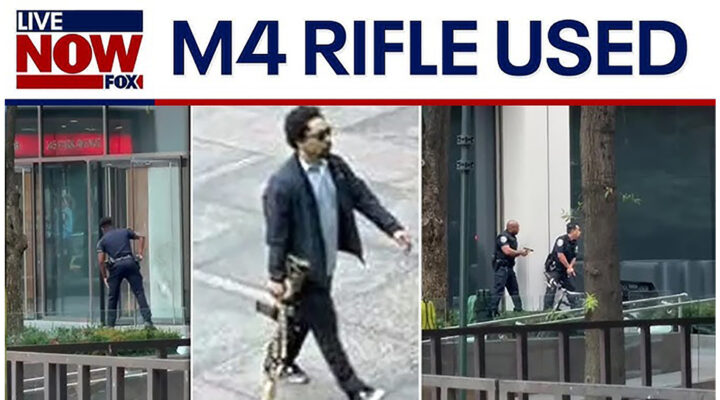
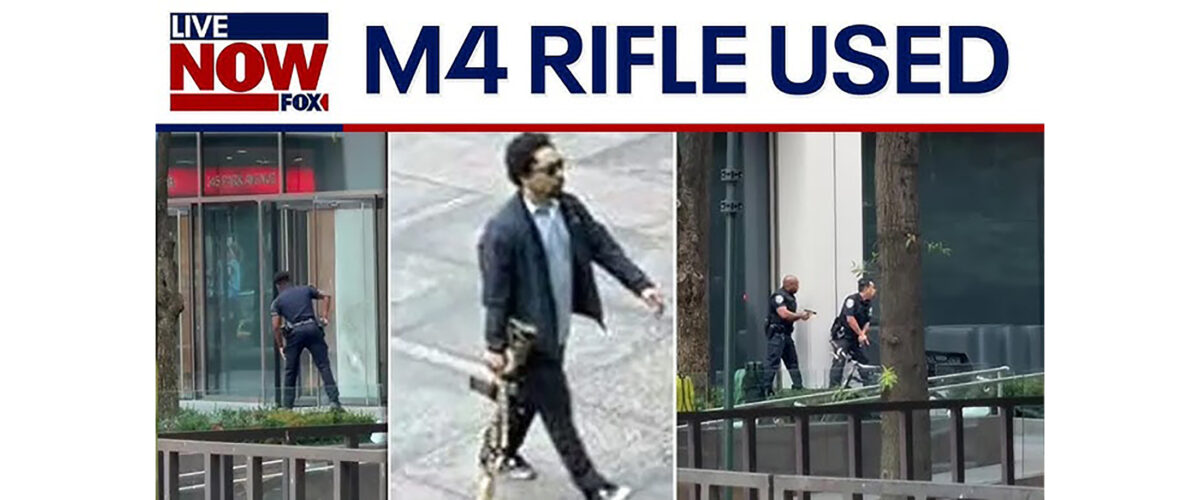
One suspect entered a Walmart in Michigan and stabbed 11 people in broad daylight. The next day, a man drove 2,500 miles from Las Vegas to New York City to commit a mass shooting in Manhattan, killing five — including himself — with a high-powered rifle. Both attacks were terrifying. Both were acts of domestic terrorism. But only one suspect lived to see the inside of a courtroom.

Edmond W. Davis
This is not just about public safety. It’s about how America interprets violence depending on the weapon, the race of the suspect and the mental health narratives society chooses to ignore or amplify.
Mass stabbings are often treated as isolated, irrational outbursts. Mass shootings, especially those involving semi-automatic rifles, are framed as political, even ideological. But increasingly, both emerge from the same root: unaddressed psychological trauma, emotional instability and societal neglect.
The Manhattan shooter reportedly left behind a letter referencing Chronic Traumatic Encephalopathy, known as CTE, a neurodegenerative disease linked to repeated head injuries common in athletes and military veterans. Although CTE can only be diagnosed posthumously, its symptoms — impulse control problems, paranoia, aggression — were evident. Still, this shooter, a former high school football star, navigated over across the country without intervention and walked into a high-rise office building brandishing a weapon. Not from family, not from friends, not from observers. A missed opportunity to stop a tragedy.
Meanwhile, in Michigan, the Walmart stabber — caught on camera lunging at innocent shoppers — was disarmed and subdued without being shot, thanks to the heroic actions of citizens Derrick Perry and Matthew Kolakowski. He was white. The restraint shown in that moment was admirable but rare in cases involving Black suspects.
A 2020 study in The Lancet confirmed what many communities of color already know: Black Americans are 3.5 times more likely to be killed by police than white Americans during encounters. When weapons are involved — especially in the hands of Black males — the likelihood of surviving the encounter plummets.
“Both the Walmart stabbings and the Manhattan shooting are proof that mental health is a public safety issue.”
Why are white mass attackers like the Michigan stabber often taken alive while many Black men are shot before they can even speak?
What message does this send to Black youth already navigating untreated trauma, racial bias and systemic barriers to mental health care?
Both the Walmart stabbings and the Manhattan shooting are proof that mental health is a public safety issue, not just a private one. And for Black males, it’s an existential one.
According to the Congressional Black Caucus’s 2023 report on youth suicide:
- Suicide rates among Black youth have risen faster than any other racial group
- Black youth under 13 are twice as likely to die by suicide as their white peers
- Black boys ages 5 to 11 are at the highest risk, often undiagnosed or misdiagnosed in schools
Why? Because mental illness in Black boys is often criminalized, not treated. Their pain is perceived as a threat. Their behavior is pathologized as aggression. And their silence is mistaken for strength, until it becomes fatal.
America cannot afford to address mass violence reactively anymore. Whether it comes via a blade or a bullet, the root cause — mental health failure — is the same. And so are the racial disparities in outcomes.
Here’s how we shift from tragedy to transformation:
- Fund early screening in schools, especially in underserved communities
- Train culturally competent therapists, educators and officers
- Build trauma-informed safe spaces in barbershops, churches and youth hubs
- Reframe mental health as strength — not weakness — in Black male communities
- Hold gun manufacturers and insurers accountable for enabling unrestricted weapon access during mental health crises
- Train police to neutralize threats with restraint, not reflexive fire
Derrick Perry, a Facebook friend, and Matthew Kolakowski’s nonlethal intervention should be studied nationwide. They proved that deadly threats don’t require deadly force when emotional control, courage and compassion lead the way. Imagine if our policing model followed that blueprint.
This isn’t about knives vs. guns. It’s about whether America finally will see the pain behind the violence and whether we will respond with solutions or just sirens.
The crisis already is here. Let’s not wait for the next mass stabbing or shooting to admit it.
Pain knows no party. Neither should healing.
Edmond W. Davis is a native of Philadelphia. He is an award-winning college and university history professor (retired), No. 1 new release author on Amazon, international speaker, licensed journalist and a globally recognized Tuskegee Airmen authority.