



Divides confront us daily. The digital divide, political divides, economic divides, class divides, educational divides. You can probably name some others.
I still have cable TV. I’m not into streaming. Cable TV has commercials. Most mornings the Today Show is on, either as audible wallpaper or actually being watched.
The divide that keeps catching my attention is between the news and the commercials. The news readers may report another near miss at an airport or another Russian drone strike in Kiev or another mass shooting or stabbing or flood or forest fire. Whatever, it’s mostly bad, dark, sad.
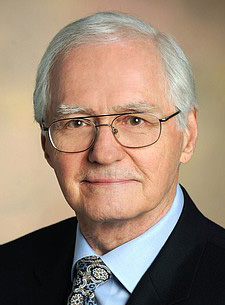
Richard Conville
But the commercials! They are just the opposite. There is a product out there that will grow your hair (and you’ll soon look like the models in the commercial). There is a product out there that will lower your A1C (and give you a slimmer you besides). There are people out there who want to sell you whiter teeth or a car or a hamburger.
And all those people who now have a full head of hair or who are skinnier than they once were — all those people are happy and smiling, just as if food were not being parachuted into Gaza for hungry, traumatized Palestinians. Those smiling people eating their new fast-food combo or sitting in their new pickup truck don’t seem to know that Paramount Global (CBS’s parent company) recently paid the U.S. president $16 million to settle his $20 billion lawsuit against them, which Steven Colbert called an out-and-out bribe on his Late Show, which soon thereafter was cancelled by CBS.
And then — and then — the FCC approved the sale of Paramount Global to Skydance Media.
Criticizing the president has consequences! Filing lawsuits works! Folding to the president works.
You get the point: Advertising, the lifeblood of capitalism, must go on. You have to sell your stuff in order to make the money to pay your overhead plus a little profit. You might own a local plumbing service or coffee shop; or you might be an officer in a large corporation. It’s the same — the way the system works.
“Criticizing the president has consequences!”
But the price we pay is that advertising projects the appearance of normalcy. As if everything is OK — as if life is going on as usual. The advertising jingles jingle on. Money is made, and everybody’s happy.
But the price is too high. Everybody’s not happy, and things are not OK! The Republican Congress is letting President Trump accumulate total control over federal government operations. If you want something, you must go to him. That’s the way of the dictator, tyrant, king or emperor. Not the American way. Not American democracy!
How do we deal with the divide between the happy, seemingly normal, world of advertising and the real world of actual events? How do we deal with the divide between American democracy and the tyranny of Trump and his billionaire friends?
That world of advertising is not just happy; it displays generally well-off people enjoying the things the advertising is trying to get them to buy. After all, you have to have financial means to buy them. But what if you are retired, for example, from the state highway department and live off your retirement plus Social Security, what they call a fixed income? What if you are a single mother with two kids and work at a fast-food place during the week and a nursing home on the weekends? That new car is out of reach, as are those pricey hair care products or that new apartment complex or those stylish clothes in the commercials.
“How do we deal with the divide between the happy, seemingly normal world of advertising and the real world of actual circumstances?”
How do we deal with the divide between the happy, seemingly normal world of advertising and the real world of actual circumstances?
Here’s one answer: Who finances political campaigns? People with disposable income —money left over at the end of the month, money they don’t need for necessities or even niceties. Who writes the tax code? The politicians whose campaigns are financed by people with disposable income. Who pays the lobbyists who lobby the politicians who write the tax code? Corporations, big ones. With very deep pockets.
Shift gears. In terms of the federal budget, a tax cut is an expense. A cost. Tax cuts give up money that otherwise would flow into the federal treasury. According to the U.S. Senate Finance Committee (Mike Crapo, Republican of Idaho, chair), U.S. citizens reporting a taxable income of greater than $1 million averaged a 3.3% tax cut in the recently passed tax bill. According to the Center on Budget and Policy Priorities, that amounts to an average tax cut of $70,000. Those reporting more than $5 million in taxable income will receive an average tax cut of $280,000.
The Congressional Budget Office estimates the loss to the U.S. Treasury over the next 10 years will be $4 trillion due to the tax cuts in the bill that passed the House 218 to 214 and the Senate 51 to 50.
What could we do with $4 trillion? NOT cut Medicaid, NOT cut USAID, NOT cut SNAP (food stamps), NOT cut the Affordable Care Act, NOT cut the VA, NOT shred the social safety net.
How about free community college? How about some high-speed rail (France has it; China has it; and so does Japan).
Richard Conville is professor emeritus of communication studies and service learning at the University of Southern Mississippi and a long-time resident of Hattiesburg, where he is a member of University Baptist Church.