

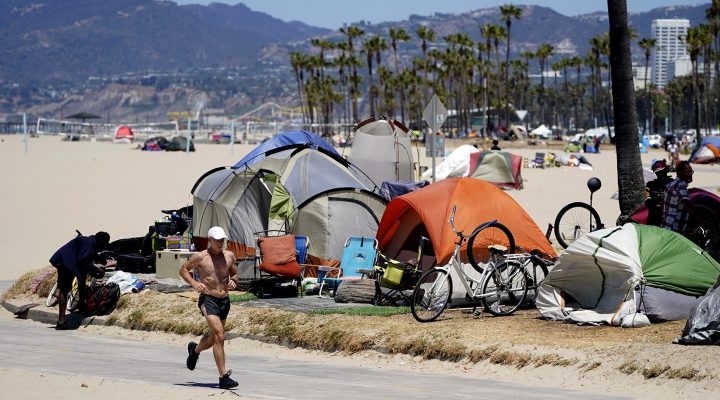
Claiming the nation is under threat from unhoused people, the Trump administration has announced “a new approach” to ending homelessness that includes expanded police powers and mass incarceration.
“Shifting homeless individuals into long-term institutional settings for humane treatment through the appropriate use of civil commitment will restore public order,” President Donald Trump proclaimed in a July 24 order titled “Ending Crime and Disorder on America’s Streets.”
“Surrendering our cities and citizens to disorder and fear is neither compassionate to the homeless nor other citizens,” the president said, adding that homeless people also need to be protected from themselves.
“Shifting homeless individuals into long-term institutional settings for humane treatment through the appropriate use of civil commitment will restore public order.”
The order calls for civil commitments of mentally ill or drug-addicted homeless people in outpatient centers and other “appropriate facilities … to the maximum extent under the law.” It demands the reversal of federal and state legal precedents that would bar such incarceration.
The order also calls for a crackdown on illicit drug users and others camping, loitering or squatting in public spaces. U.S. Attorney General Pam Bondi is directed to help law enforcement agencies access federal funds to remove encampments in areas where public safety is at risk.
Unhoused people suffering from “serious mental illness” are not to be released even if adequate bed space is unavailable in local, state or federal facilities, the order adds.
“Endemic vagrancy, disorderly behavior, sudden confrontations and violent attacks have made our cities unsafe,” the order claims. “The overwhelming majority of these individuals are addicted to drugs, have a mental health condition, or both.”
But some critics say the order is an extension of the president’s wider effort to expand federal control over states and local jurisdictions.
“By shifting the call on who should be forcibly hospitalized from local medical professionals to Attorney General Pam Bondi, Trump leaves no doubt that he wants homelessness and drug addiction treated as tough-on-crime policing issues,” Democratic strategist Max Burns said in an MSNBC opinion piece.
“The White House knows cash-strapped cities and states don’t have the money or the medical staff to rebuild the network of state asylums shuttered by President Ronald Reagan nearly 50 years ago. Trump’s executive order makes no provision for that problem because it isn’t really concerned with addressing homelessness or drug addiction.”
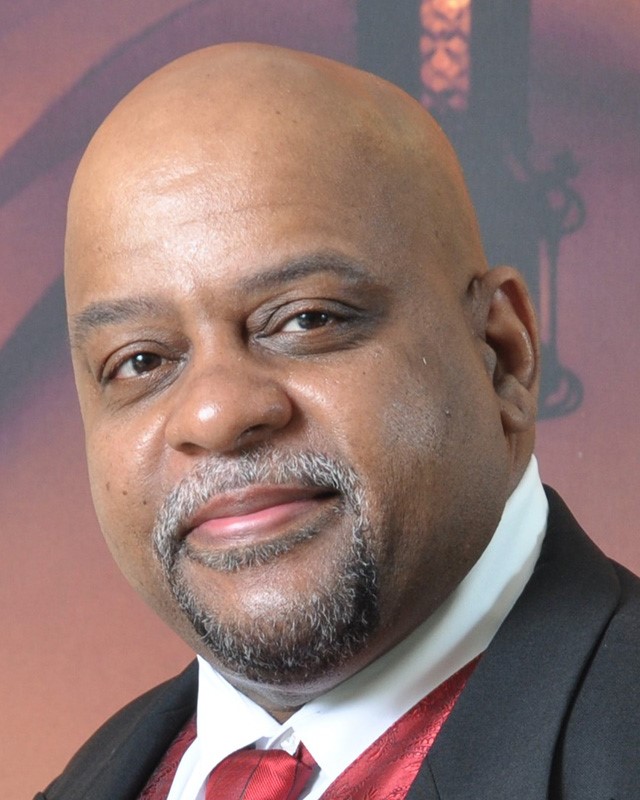
Donald Whitehead
The approach laid out in the executive order is “ineffective, wasteful and a grave violation of civil rights,” said Donald Whitehead, executive director of the National Coalition for the Homeless.
Trump’s order will be ineffective in addressing the root causes of homelessness because it ignores “decades of evidence-based housing and support” practices and offers “a punitive approach that has consistently failed to resolve homelessness and instead exacerbates the challenges faced by vulnerable individuals.”
The administration also has failed to grasp the realities faced by unhoused people, Whitehead added.
“The assertion that the majority of individuals experiencing unsheltered homelessness are ‘addicted to drugs, have a mental health disorder, or both’ is inaccurate. Furthermore, it disregards the reality that many individuals develop mental health or substance abuse issues after prolonged periods of homelessness due to the lack of safe and affordable housing.”
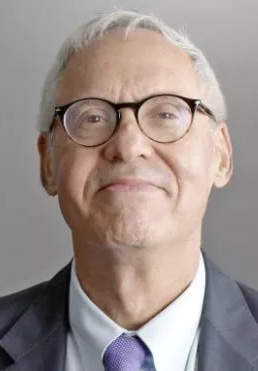
Paul Samuels
Paul Samuels, president of the Legal Action Center, condemned Trump’s order for casting homeless people as enemies.
“This order promotes the illusion of safety by criminalizing people for being visibly unhoused rather than addressing root causes like the dearth of affordable housing and accessible substance use disorder and mental health care,” he said. “The approach outlined echoes decades of failed ‘tough on crime’ strategies that have harmed already marginalized communities, especially Black and brown, and wasted huge amounts of money without making anyone safer.”
When combined with billions in cuts to social services programs in the recent Trump spending bill, the president’s executive order will actually increase the number of people sleeping in cars, tents and on the streets, according to the National Homeless Law Center.
“The order does nothing to lower the cost of housing or help people make ends meet. The safest communities are those with the most housing and resources, not those that make it a crime to be poor or sick. Forced treatment is unethical, ineffective and illegal. People need stable housing and access to health care. Rather, Trump’s actions will force more people into homelessness, divert taxpayer money away from people in need and make it harder for local communities to solve homelessness.”