

I was a fifth-year senior, which was one of the most embarrassing times of my life. It meant I hadn’t finished high school in the usual four years, and I would be required to go back to the same high school I did not finish and attempt to complete my high school diploma in front of educators and my peers questioning why I was there.
After dropping out, my mom worked it out for me to return for another year instead of completing a GED. That’s when I ended up in Ms. West’s 10th-grade geometry class.
Ms. West was a young, compassionate Black woman, and it was her first year teaching. Her classroom felt different. It was a sanctuary where I didn’t have to carry the weight of home. She noticed when I was tired, when I could not focus on schoolwork, when I was sad and when I felt unmotivated.
But she did not stop at noticing. She made an effort to see me, ask me how I was doing, and offer her classroom as a safe space in the school on days when I felt like not being there altogether.
She knew there would be times when I would not stay at home and other times when the trauma from my family conflicts caused a lot of emotional stress. But she never judged and always made space for me.
She’d call me “Black and brilliant” and tell me I was going to be a leader one day …
Some days, I was unmotivated, and out of the blue, she would call on me in class and engage me. And when I would answer a math problem, she’d call me “Black and brilliant” and tell me I was going to be a leader one day, finish high school — even when I struggled to believe it myself that additional year.
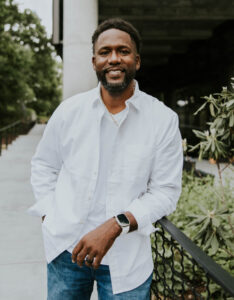
Terence Lester
Even after I finished her class that first semester, she was one of those teachers who kept rooting for me in the hallway when she would pass me. Alongside my mother’s tough love, Ms. West’s belief in me was a huge reason I ultimately graduated.
However, looking back, I realize my story wasn’t unique. Even as I was going through it, I had friends facing similar struggles.
At that age, you don’t fully grasp all the things you lack. You just feel it. In fact, in the most recent school year, public schools identified more than 1.3 million students experiencing homelessness — a 14% rise from the year before. Family homelessness also spiked, with the Department of Housing and Urban Development reporting a 39% increase in families living in shelters or on the streets.
Now, through my work with Love Beyond Walls, I can better articulate how poverty, trauma and systemic injustice can lead to students falling behind or dropping out. I’ve been in Title I schools and seen students struggle firsthand. Some families are transient; others are so burdened by poverty they are unable to wash their children’s clothes because they lack washers and dryers.
Struggling as a student is not just about not having enough financial resources. It’s about the constant emotional trauma of poverty, lack of communal health, shame and pressure that comes from not having the basic items to fit in like your peers. Sometimes, it’s also about not having a community of people — even adults — who also experience tiredness and stress from the struggle to survive.
This can impact a student’s motivation, growth and development. It can cause Post Traumatic Stress Disorder — PTSD — leading to challenges with mental focus when trying to stay present in class and connect with the lesson. I know, because I have been there.
When you’re a student dealing with homelessness or poverty, school isn’t just about the lesson.
When students are worried about where they’ll sleep or how they’ll eat, school becomes a backdrop to survival — not a place you focus on academic achievement. This is why educators like Ms. West are so important. When you’re a student dealing with homelessness or poverty, school isn’t just about the lesson. It’s about the story behind the student and their entire experience.
Educators like Ms. West know how to draw out that motivation when it’s hard to find it within yourself. Long before I understood the term, she was operating from a trauma-informed approach to teaching, recognizing the challenges students face outside the classroom impact their ability to learn inside it.
That’s why it is essential for educators to have a trauma-informed lens and pedagogy that help them understand and practice this approach. It can mean the difference between a student dropping out and a student finding the strength to keep going.
The support of people like Ms. West and a few close friends carried me when I couldn’t carry myself.
 I believe that is how God showed up — through community. It reminds me of verses like Luke 4:18, where Jesus declares he has been sent to “proclaim good news to the poor,” and why he was called Immanuel, meaning “God with us.”
Years later, not only have I been able to overcome the challenges I battled growing up in poverty and did therapeutic work to heal through trauma, but I finished high school and ended up earning five degrees, including a PhD.
I owe a huge part of that journey to people like my mother, Connie Walker, who overcame herself; Ms. West; my friends’ fathers, Mr. Moore and Mr. Shaw; and Mr. Eason, a fellow church member and deacon, who created moments of belonging that reminded me I was seen and not alone.
That experience fueled my passion to advocate for those who experience homelessness and poverty — a part of my own testimony. In 2013, I founded Love Beyond Walls, a nonprofit that advocates for people experiencing homelessness and poverty through access to essentials like showers, ID cards and housing support.
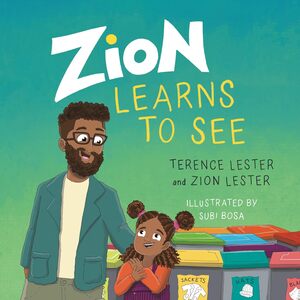
Inspired by my daughter’s passion for supporting students, we co-authored a children’s book, Zion Learns To See, and launched an initiative called Zion’s Closet. This initiative transforms classrooms in Title I schools into resource centers. It gives students access to essentials like uniforms, washing machines and dryers, shoes, healthy food and hygiene products. It also provides parents with computers to apply for jobs or seek housing support and offers a discreet space for counselors and social workers to meet with families.
Zion’s Closet bridges the gap for students who might otherwise struggle to focus on school because of unmet basic needs. It equips educators with immediate resources to support their students.
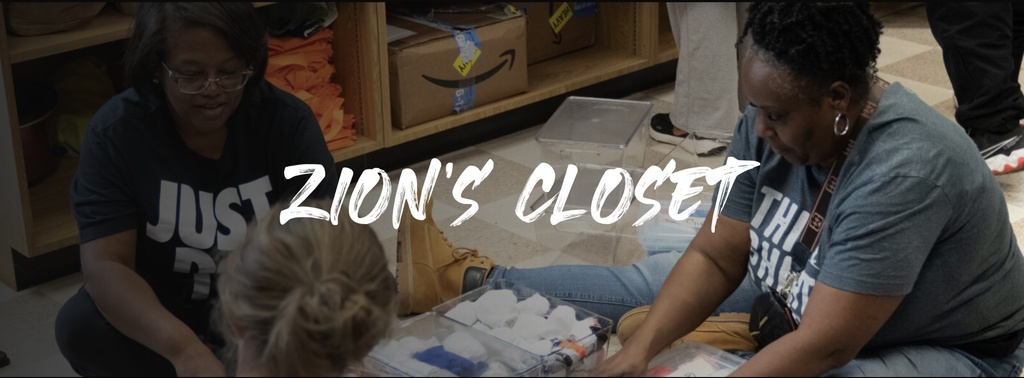
This isn’t just another nonprofit project. It’s a lifeline for students who show up with challenges. Not too long ago, we were in a school where we saw an educator walk a student into this resource closet to grab a pair of shoes for a student who could not focus on the classwork because their shoes were too small. It has become a school-based intervention rooted in dignity and urgency for students who need to be seen — just like I was.
Federal laws like the McKinney-Vento Act exist to protect students experiencing homelessness, but they’re often underfunded or unknown in practice.
Although education is accessible to all, not everyone is navigating the educational landscape from the same starting point or with the same resources across various school systems. Students who are impoverished face many more intersectional challenges than those from wealthier backgrounds or more supportive environments. True educational equity means more than access to classrooms. It means access to resources, safety and belonging in real time.
As people of faith, we shouldn’t see stories like mine as rare miracles or celebrated testimonies. We should ask what it would look like if our churches, schools and communities committed to making them more common for students who find themselves fighting multiple challenges.
When we stand with students who are unseen, underserved and struggling, we reflect the heart of Jesus. It takes faith to believe in what’s possible, but even more to act on it. Through that faith, we can help raise up not only survivors, but future scholars, leaders and people who will go on to impact others for Jesus.
Terence Lester (PhD, Union Institute and University) is a storyteller, public scholar, speaker, community activist and author. He is the founder and executive director of Love Beyond Walls, a nonprofit focused on raising awareness about poverty, homelessness, and community mobilization. He also serves as the director of public policy and social change and as a professor at Simmons College of Kentucky. He is the author of I See You, When We Stand, and All God’s Children, and he coauthored with his daughter, Zion, the children’s book, Zion Learns to See. His forthcoming book is titled From Dropout to Doctorate: Breaking the Chains of Educational Injustice.
Related articles:
Understanding the background to today’s battles over the Department of Education
Judge blocks Trump’s plan to dismantle Department of Education