


Change can feel like the hardest thing in the world. It brings forth tension — fear, anxiety, worry and even anger. We often see change as an enemy to fight, something to survive rather than embrace.
But some change is not destruction; some change is reform. Reform is change with purpose. It is the kind of change that shapes us, refines us and calls us toward something better than we were. Change should not be feared but walked through in faith.
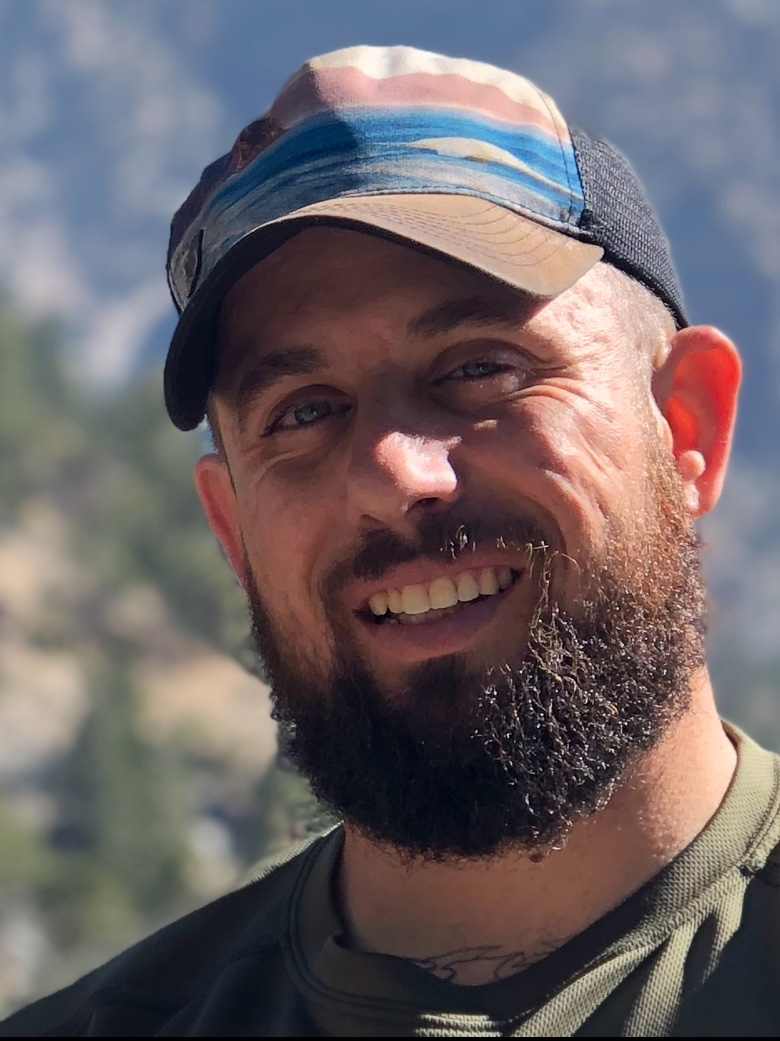
Marcus Lewis
The Southern Baptist Convention is facing such a season. I have watched friends and mentors — faithful, thoughtful leaders — depart our convention, some even leaving for other traditions.
I recently learned a respected professor of mine chose to leave the SBC for Anglicanism, citing our mishandling of scandals, ecclesiological weakness in baptism and membership, a lack of historical rootedness and inadequate accountability. I grieved his departure and read the public statements and response videos with a heavy heart.
“I am not called to leave. I am called to stay. To stay is not to ignore the pain.”
Yet in that moment, my calling became clear: I am not called to leave. I am called to stay. To stay is not to ignore the pain. To stay is to look at the stones that others have left behind, to recognize the cost of their departure and to resolve that our house must be repaired from within.
What we’ve inherited — strengths worth keeping
The SBC has many gifts worth protecting. They include:
Local-church autonomy
Autonomy has been a defining strength of the SBC. As affirmed in a 1992 resolution, “The local Baptist congregation is understood as autonomous, with full power and authority to conduct its own affairs and is thus free from any coercion by other local churches or general Baptist bodies.”
This freedom allows congregations to craft their own cultures under Christ’s lordship, accountable to the word rather than denominational hierarchy. Associations and state conventions exist to support and guide, not to control. This freedom is a Baptist treasure.
By granting such autonomy, each church is empowered to fulfill Christ’s Great Commission (Matthew 28:16-20). Christ is the head of the church (Ephesians 5), and through him the church functions as his body (Colossians 1).
The Baptist Faith and Message 2000 affirms this, stating the church is governed by Christ “through his laws, exercising the gifts, rights and privileges invested in them by his word, and seeking to extend the gospel to the ends of the earth.”
“Southern Baptists have a history of sending, supporting and sustaining those who carry the good news.”
A heart for missions
Baptists always have excelled in mission work. Our cooperative efforts birthed the International Mission Board, whose reach is global and whose passion is gospel-centered. From international fields to urban neighborhoods, Southern Baptists have a history of sending, supporting and sustaining those who carry the good news.
The missional heart is deeply embedded in the Baptist Faith and Message 2000: “It is the duty and privilege of every follower of Christ and every church of the Lord Jesus Christ to endeavor to make disciples of all nations. … The Lord Jesus Christ has commanded the preaching of the gospel to all nations. It is the duty of every child of God to seek constantly to win the lost to Christ by verbal witness undergirded by a Christian lifestyle, and by other methods in harmony with the gospel of Christ.”
The Baptist Faith and Message 2000
While some fear confessions, the BFM2000 has provided theological boundaries without suffocating autonomy. It protects churches doctrinally, offers guidance for healthy governance and signals to the world that our cooperation is built on shared convictions. It is not a chain, but a guardrail, given freely to guide churches toward faithfulness.
The SBC has flourished in part because it holds together local-church identity and theological foundation. The BFM2000 acts as a root system — deep, nourishing and unifying. It connects us to Scripture while allowing flexibility for local expression. It roots us to God while we live in the reality of this world. It keeps us gospel centered.
What cannot be ignored — cracks in the foundation
Love for a house does not blind us to its cracks in the walls. The SBC has faults that demand honest reckoning:
- Mishandling of abuse and scandals has marred our witness.
- Ecclesiological drift has left membership, baptism and discipline often neglected.
- Minimal historical rooting has made us functionally ahistorical, vulnerable to trends.
- Perceived political entanglement has confused cultural allegiance with gospel mission.
- Weak denominational accountability allows churches and leaders to operate without meaningful oversight when crisis comes.
These realities have driven some to other traditions, seeking historical continuity, visible accountability and pastoral stability. We must acknowledge their reasons without resentment if we hope to reform.
If you search recent SBC history, you’ll find article after article on leadership abuse, sexual misconduct, financial scandals and institutional silence. What if instead of being secret about the human condition — sin — we choose a path of openness and transparency? What if we were honest with the moves we made and conscious to the decisions of both the local church and convention?
“Until we draw a hard line against secrecy and excuse-making, we risk destroying ourselves from within.”
Transparency cannot be conditional. It must be a commitment, regardless of risk or reputation. Until we draw a hard line against secrecy and excuse-making, we risk destroying ourselves from within.
Yet before we throw stones, we must reflect (John 8:7-11). Every denomination has cracks. We are imperfect people attempting to do the work of a perfect God. But we cannot excuse failure. We must confront it. We must be accountable to our congregations, our convention and, above all, to Christ. Christ Jesus, full of mercy and grace — our High-Priest King who is the head of our homes, our church and our lives.
Why I am staying — a call to reform from within
Leaving would be easier. Staying requires courage, humility and perseverance. But reform is biblical. Nehemiah stayed to rebuild Jerusalem’s walls. Paul corrected Corinth from within. Josiah tore down idols and renewed the covenant without leaving Judah. Scripture’s pattern is clear: God calls his people to remain and rebuild.
I am staying because:
- Reform is possible when conviction meets perseverance.
- The SBC’s foundations are still biblical.
- The local church remains the engine of change.
- Abandoning the convention abandons a mission field still entrusted to us.
Rebuilding is hard, but it fosters deep joy. Those who rebuild believe again in what they’re building. Reform calls us back to the wisdom of the saints, the roots of our fathers, the truths of the early church. There is nothing new under the sun (Ecclesiastes 1:9). We are not inventing the church. We are recovering it.
“We are not inventing the church. We are recovering it.”
Let us be like Nehemiah. Let us rebuild. Let us reclaim a robust classical, historical and theological vision of the church. Let us be rooted not only in Scripture, but in the wisdom of those who came before us. Let us be what we say we are — a convention committed to Christ and his gospel.
A roadmap for renewal
If we stay, we must do more than observe. We must act. Here is my simple framework for reform:
- Recover historical and confessional depth. Reconnect to the great confessions of the church and of our Baptist forebears to anchor our theology.
- Rebuild accountability and transparency. Create and support real systems that protect the vulnerable, encourage reporting and model repentance.
- Restore robust ecclesiology. Reinforce meaningful membership, biblical baptism and church discipline in our local congregations.
- Renew pastoral and theological training. Raise up leaders who love Scripture, value church history and reject the idolatry of pragmatism.
- Refocus on gospel mission. Lift our eyes from political identity and root our churches in the mission of Christ alone.
This roadmap does not rob local church autonomy. It honors it. These are not mandates but mile-markers — signposts for a journey of renewal. Let us be formed not by our fears but by the word of God. Let us cry out, like the disciples in the storm: “Even the winds and waves obey him” (Mark 4:35-41). Let that awe move us — not into comfort but into conviction.
God has torn the veil to dwell among his people. He didn’t need to, but he did. That tells us who he is. And who we are — his.
So, let us walk faithfully through this season. Let us be the church — the convention — God has called us to be, one that is willing to walk through the valley of shadow and death until we get home.
Let us embrace change, not as compromise, but as sanctification. Change equals growth. Loss brings wisdom. Let us not fear change. Let us steward it.
Staying to rebuild
I am not staying because I am content. I am staying because I believe the SBC can once again be a witness of holiness, humility and hope. Reform will cost us pride, convenience and comfort. But if we are willing to face our sins and embrace our heritage, the SBC can stand not as a monument to human effort, but as a vessel for gospel renewal.
Let us not merely count members but cultivate disciples. Let us take the Great Commission with fresh fire and faithful obedience. Let us be his hands, feet and voice in this generation and into the next.
I choose reform over retreat.
Marcus Lewis is a Ph.D. student in systematic theology, a lay pastor at First Baptist Church in Los Osos, Calif., and a committed member of the Southern Baptist Convention. He writes from a conviction that reformation and accountability must rise from within the local church.
Related articles:
Why won’t the SBC be more financially transparent?
SBC annual meeting may be déjà vu all over again
Yet another group forms to turn the SBC in a more conservative direction
High-profile TheoBro confesses to crating fake social media accounts