



Great crowds came to him, bringing with them the lame, the maimed, the blind, the mute and many others. They put them at his feet, and he cured them. (Matthew 15:30)
As a parent of a person with special needs, I decided long ago this brief New Testament verse is for me one of the most powerful statements in Matthew’s Gospel. Many of the biblical accounts of Jesus as healer are of single events offered to individuals who are struggling with physical needs. This verse sounds like multitudes!
“And he cured them!” Two millennia later, the special needs listed therein are with us yet, and in today’s world there are indeed “many others.”
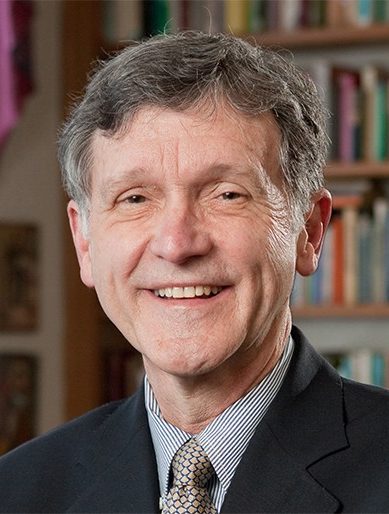
Bill Leonard
That’s why this week I was particularly moved to read a Common Dreams account of North Carolinian Sloan Meek, who brings his cerebral palsy into his work in the disability rights movement. The article notes that at a recent protest against the government’s “big beautiful bill,” Meek warned its Medicaid reductions of $1 trillion would threaten the lives of thousands of disabled individuals.
Said Meek: “My whole life — not just my health care — is supported by Medicaid. The way I move around in the world. The way I communicate. The people who help me do all the things I want to do in my life. … Without Medicaid support, I will be forced into a nursing home to spend the rest of my life in a hospital bed.”
He cautioned the Republican-sponsored bill is a “death threat” to people with special needs.
Karina Smith, author of the Common Dreams article, describes Meek’s conclusion: “While corporations and the ultra-wealthy are afforded millions in tax breaks, disabled people and caregivers are neglected, defunded and treated as disposable.”
And therein lies one of the great governmental dilemmas of the present moment. How is it that the Congress, president and Supreme Court that work hard to protect the rights of the unborn seem so callous when it comes to protecting the rights of the born?
In a June 24, 2022, NPR essay (Remember NPR?), Nina Totenberg and Sarah McCammon reported on the overturning of Roe v. Wade and cite the opinion written by Justice Samuel Alito who insisted, “We hold that the Constitution does not confer a right to abortion,” and demanded “respect for and preservation of prenatal life at all stages of development.” Totenberg and McCammon added that Alito noted states are entitled “to regulate abortion to prevent discrimination on the basis of race, sex or disability, including barring abortion in cases of fetal abnormality.”
If that is the case, then why, three years later, did Congress approve a budget that cuts funds for those with physical abnormalities “at all stages of (childhood) development?” Are those born with “fetal abnormality” on their own once they enter the world?
More than one in five people on Medicaid has a disability. Half those with disabilities struggle to live independently. Many, like Sloan Meek, require full-time caregivers or skilled nursing. What will the now-mandated budget cutbacks mean to their futures? Are tax cuts for the wealthy that essential?
“Are tax cuts for the wealthy that essential?”
And then there’s the gospel of it all. Matthew names certain specific disabilities of those who came to Jesus for healing including the lame, the maimed, the blind, the mute, and many others. Apparently, care for such individuals was and remains an intricate element of the “good news” of Jesus. Such care is a continuing responsibility of the body of Christ, the church, and any nation that dares to call itself “Christian.”
By the way, did Jesus say something like: “It is easier for a camel to go through the eye of a needle than for a rich man to get into the kingdom of God?” (See Matthew 19:24)
Early in his term, the current U.S. president established a commission to seek out and address “anti-Christian bias” in American culture. Surely one of the greatest signs of such bias is a failure to fund care for those whose special needs are left unattended. You’d have thought a “Bible-believing Christian” like the speaker of the House would have known that.
But this is nothing new. Forty-three years ago, in an article for Christian Century titled, “The Rights of the Born,” I wrote: “When pro-life advocates support measures that threaten or ignore the rights of the born to adequate life, they create a tragic contradiction to the ‘prophetic’ dimension of their crusade. If society must take responsibility for the lives of persons in utero, how can it neglect responsibility for the lives of infants and children after birth?”
At that time I wondered: “If Christians ignore responsibility for those children who inhabited the womb for only nine months, but who will live in the world for ‘three score and 10’ years, they will surely undermine the high calling they profess. For what does it profit a nation if it balances the budget at the expense of its own children?”
I’m still asking that question.
Forty-three years later, I’d add this thought: For what does it profit a nation if it gives tax breaks to the wealthy at the expense of its most vulnerable daughters and sons?
God help us help the born (and the born again). Amen and Amen.
Bill Leonard is founding dean and the James and Marilyn Dunn professor of Baptist studies and church history emeritus at Wake Forest University School of Divinity in Winston-Salem, N.C. He is the author or editor of 25 books. A native Texan, he lives in Winston-Salem with his wife, Candyce, and their daughter, Stephanie.